This guide is for homeowners replacing a door, DIY renovators, and professional installers who want accurate door jamb measurements the first time.
If you’ve ever ordered a door that didn’t quite fit—or struggled during installation—chances are the door jamb wasn’t measured correctly. Below, you’ll learn how to measure a door jamb step by step, understand standard door jamb sizes, and avoid the most common mistakes we see on real job sites.
At George’s Door and Wall Panels, we work daily with custom doors and fitted frames for residential and commercial spaces, and we consistently see installation issues caused by incorrect door jamb measurements taken over trim instead of the actual frame.
Measuring a door jamb isn’t complicated, but it does require care and attention to detail. From our experience working on door replacements and custom installations, most problems start with one simple mistake: measuring over trim or finished surfaces instead of the actual frame.
Before measuring anything, remove all casing or molding so you can see the bare jamb. This gives you the true jamb width and depth—numbers you can actually rely on.
Getting these measurements right matters because it:
Allows the door to open and close smoothly
Prevents gaps between the wall and the frame
Makes installation easier, especially with thicker or older walls
Key points for a proper installation
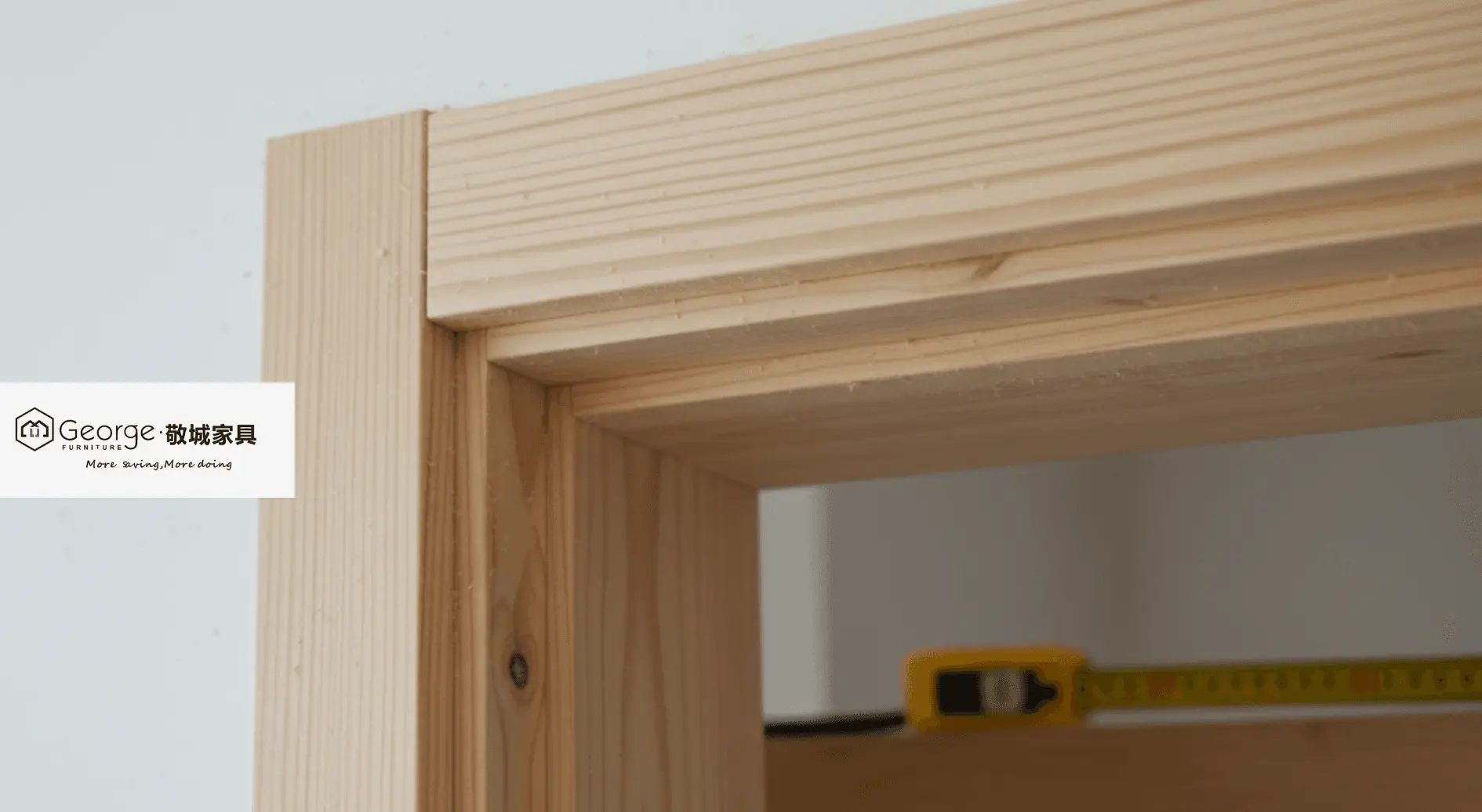
Never measure over trim – always measure the exposed frame
Match jamb depth to wall thickness for a clean, finished look
Write measurements down immediately and double-check them
On professional jobs, we measure twice before ordering anything. That habit alone prevents most installation issues.
What is a door jamb and why is it important?
A door jamb is the vertical part of the frame that supports the door, hinges, and lock. While the door itself gets most of the attention, the jamb is what determines whether everything lines up correctly.
In practice, even a high-quality door won’t perform well if the jamb dimensions are wrong.
When designing and supplying made-to-measure doors at George’s Door and Wall Panels, we always review jamb dimensions before finalizing any order, as even premium doors can fail to perform if the frame measurements are off.
Technical glossary of the jamb
| Term | Definition |
| Jamb | The vertical frame members on each side of the door opening |
| Blank jamb | A jamb without hinge or lock prep |
| Hinge jamb | The side of the frame where hinges are installed |
| Strike jamb | The side that holds the latch strike plate |
Why accurate measurements matter
Correct door jamb measurements ensure smooth operation and a clean finish. When the jamb depth doesn’t match the wall thickness, installers often have to force trim into place or hide gaps—both signs of poor planning.
We’ve seen brand-new doors look “off” simply because the jamb was too shallow by less than half an inch.
Anatomy and components of a door jamb
To understand how to measure a door jamb, you need to know the parts that make it up. Each component affects the interior door jamb dimensions and overall fit.
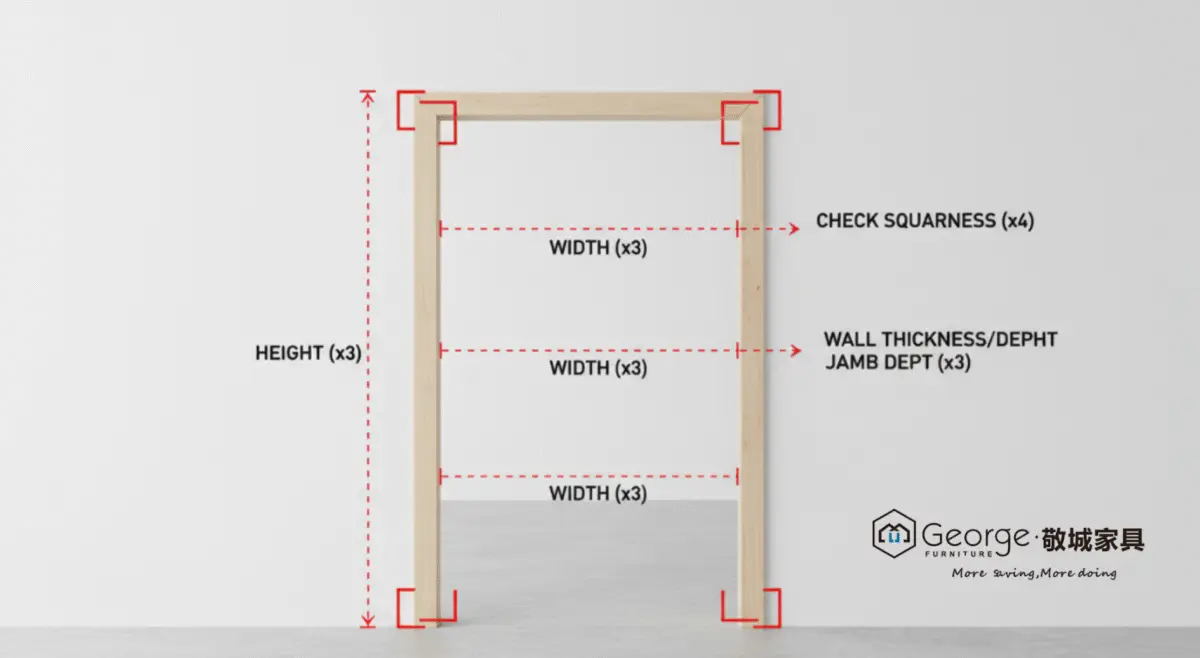
Understanding the parts of a door jamb helps you measure it correctly. Each piece affects the final fit, especially when dealing with interior door jamb dimensions in older homes or renovations.
Material choice also matters. Wood, engineered wood, steel, and fiberglass jambs all behave differently and may require slight adjustments in depth.
Parts of a door jamb
A standard door jamb includes:
Hinge jamb: Supports the door’s weight and holds the hinges
Strike jamb: Houses the strike plate where the latch engages
Head jamb: The horizontal top piece connecting both sides
Analysis of construction materials
| Type of material | Description |
| Solid wood | Appreciated for its solidity and natural aesthetics, perfect for those seeking elegance and warmth. |
| Engineered wood | A versatile, economical solution that is particularly resistant to deformation caused by humidity. |
| Steel | Characterized by extreme resistance, it is the choice of preference for contexts where security is a priority. |
| Aluminum | Lightweight and resistant to corrosion, it fits perfectly with the clean lines of contemporary design. |
| Fiberglass | A technical material that is easy to maintain, capable of withstanding different climates and temperature swings. |
| Vinyl | Extremely convenient and waterproof, it represents the ideal option for the more humid rooms of the house. |
Interior and exterior door jambs: what are the differences?
Interior door jambs are usually slimmer and made of wood or engineered materials. Exterior jambs must handle weather and security, so they’re often thicker and made from fiberglass, steel, or treated wood.
Exterior installations also require extra attention to jamb depth, especially when walls are thicker than standard interior partitions.
How to measure a door jamb: step by step

Step 1. Measure the width of the door jamb
Remove any casing or trim to expose the structural frame. Measure from the inside edge of one jamb to the other—not over decorative finishes.
DIY tip: Hold the tape at eye level to get a straight, accurate reading.
Pro tip: Measure in at least two places to check for framing irregularities.
Measure the bare frame only
Keep the tape straight and level
Even small errors can affect final fit
Step 2. Find the height of the jamb
Measure from the finished floor to the underside of the head jamb. If floors are uneven (common in older homes), measure both sides and use the larger number.
Step 3. Checking the depth of the jamb (wall thickness)
Measure from one finished wall surface to the other, including drywall or plaster. Take measurements at multiple points if the wall isn’t perfectly straight.
Step 4. Registering accurate measurements
Write every measurement down immediately. On larger projects, we often label door openings and cross-check measurements digitally to avoid inconsistencies across multiple doors. On professional projects—such as hotel, office, or custom residential installations handled by George’s Furniture—this careful process is standard practice.
Quick Measurement Checklist (DIY & Pro)
Before ordering or installing a door, confirm:
✅☐ Jamb width (frame opening, no trim)
✅☐ Jamb height (from finished floor)
✅☐ Jamb depth / wall thickness
✅☐ Floor level differences
✅☐ Interior vs exterior door type
✅☐ US or UK standard sizing
Standard jamb dimensions
Most homes use standard door jamb sizes, which vary slightly by region.
| Jamb depth | Typical wall type |
| 4 9/16″ (US) | 2×4 stud wall with 1/2″ drywall |
| 5 1/2″ (US) | 2×4 wall with thicker plaster |
| 6 9/16″ (US) | 2×6 stud wall |
| 114–140 mm (UK) | Solid masonry or stud partitions |
If your wall thickness falls outside these ranges, split jambs or extensions are common solutions.
Types of jambs and applications
Single rabbet: Standard residential use
Double rabbet: Thicker or specialty walls
Two-piece jambs: Ideal for renovations
Flat jambs: Modern look, may require extensions
Final thoughts
Learning how to measure a door jamb properly saves time, money, and frustration. Take your time, measure the actual frame—not the trim—and double-check everything before ordering.
FAQ
What’s the difference between a door jamb and a rough opening?
A rough opening is framed before finishes are installed. A jamb is measured after walls are finished.
Can I install a new jamb in an existing opening?
Yes—accurate jamb width and depth measurements are the key to a secure fit.