Acacia wood has established itself as one of the most valuable and versatile choices for high-quality furniture. Thanks to its extraordinary hardness, unmistakably rich grain, and natural resistance to atmospheric agents, this material offers a long-lasting solution for both indoor spaces and outdoor furniture. This article explains in detail what acacia wood is, providing a clear and captivating overview, exploring its composition, properties, and practical applications, giving you all the necessary information to understand its value and growing success.
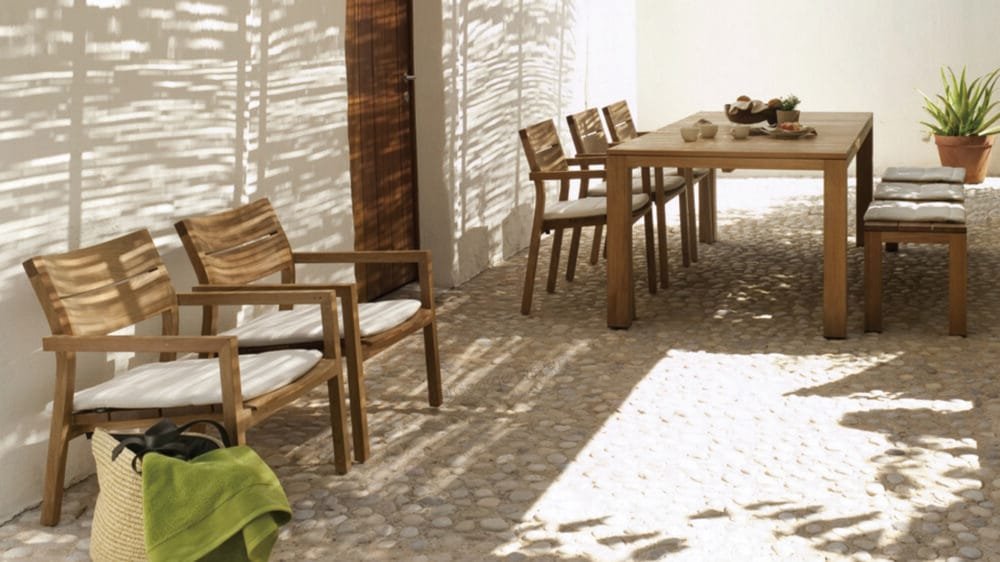
Table of Contents
Part 1. What is Acacia Wood?
Acacia wood is a collective term referring to several hundred species of trees. The best known of these in Europe is Robinia pseudoacacia, commonly called False Acacia. Although exotic species such as Australian Blackwood or Acacia Mangium are referred to in some regions, the essence remains the same: a hard, dense, and extraordinarily durable wood.
The question “what is acacia wood and why is it valued” is answered by its superior physical properties. Acacia is universally esteemed for its hardness, which in many cases exceeds that of oak. What’s more, it comes with a natural resistance to rot and insects, making it a preferential choice for artifacts intended to last over time. The appreciation is also due to its peculiar aesthetic beauty, characterized by a richness of colors and grains that add warmth and character to any environment.
1.1. What Acacia Wood Looks Like
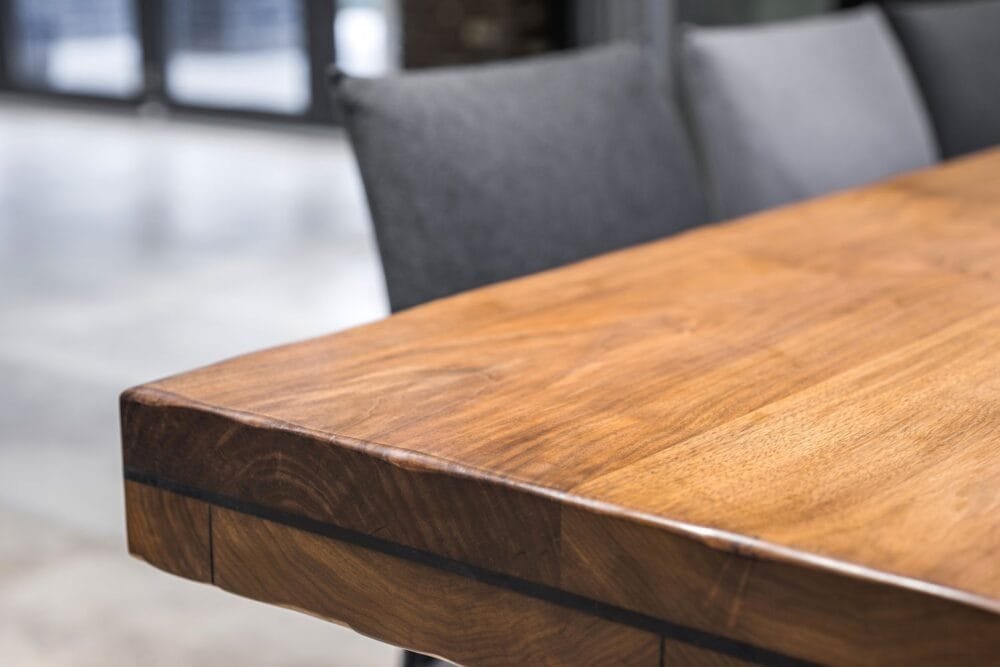
Acacia wood has a distinctive, textured appearance, characterized by a texture ranging from coarse to very coarse. Instead of a uniform look, its surface presents an appealing visual contrast between the internal heartwood and the external sapwood. This lively appearance is enhanced by the grain, which is distinctly patterned, giving each piece a rustic and elegant character.
1.2. Where Acacia Wood Comes From
As we have seen, acacia wood is a matter of species. True acacias predominantly come from regions such as Australia, Africa, and Asia. However, the most widespread acacia in European trade is Robinia ($Robinia$ $pseudoacacia$), which is native to North America but widely cultivated in Europe, particularly in Hungary, making it a sustainable and locally available source of hardwood.
Contact Us for a Project Consultation
Why pay more? At George’s Furniture, we cut out the middlemen to bring you premium furniture, flooring, doors, windows,marble and tiles and more—all at prices up to 40% below retail. With 19+ years of experience and 600 consultants, we provide complete, custom project solutions, from initial design to final delivery.
1.3. Acacia Wood Grain
The acacia wood grain is typically straight or slightly irregular. The fibers can be interlocked or intersected, offering types and variations ranging from simple and elegant patterns to richer, “flamed” designs. This inherent variety means the wood never appears flat, significantly contributing to its aesthetic value in large design pieces.
1.4. What Color is Acacia Wood?
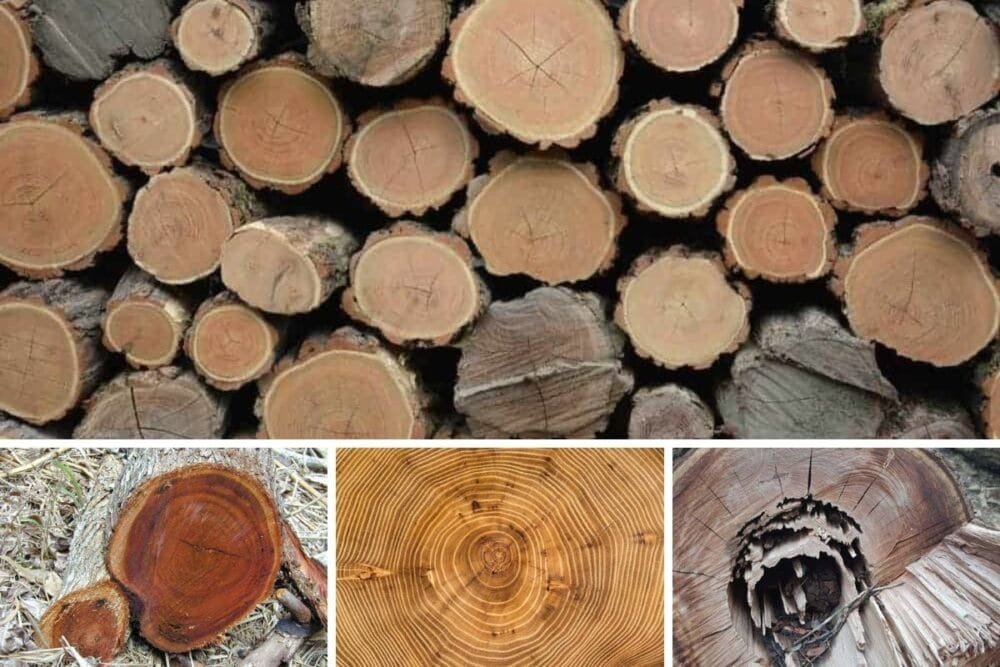
Regarding color, acacia wood features heartwood (the central part of the trunk) that varies from golden brown to deep amber, with shades that can tend towards olive or reddish. The sapwood, however, is lighter, often pale yellow. This variation in tone represents one of the main properties of acacia wood: over time and exposure to sunlight, the color tends to deepen, developing into a rich, warm, dark patina that further enhances the material’s natural beauty.
1.5. Properties of Acacia Wood
The main properties of acacia wood include its extreme hardness and high density, which make it particularly resistant to scratches, wear, and impacts. It is known for its dimensional stability when properly dried and for its remarkable natural resistance to moisture, insects, and decay. Simply put, these characteristics make acacia a durable and reliable material, ideal for furniture, flooring, kitchen utensils, and outdoor furnishings intended to last.
Part 2. What is Acacia Wood Used For?
Acacia wood’s remarkable blend of durability and beauty makes it a highly desirable material across many industries. However, its most prominent role is undoubtedly in the creation of long-lasting and stylish furniture.
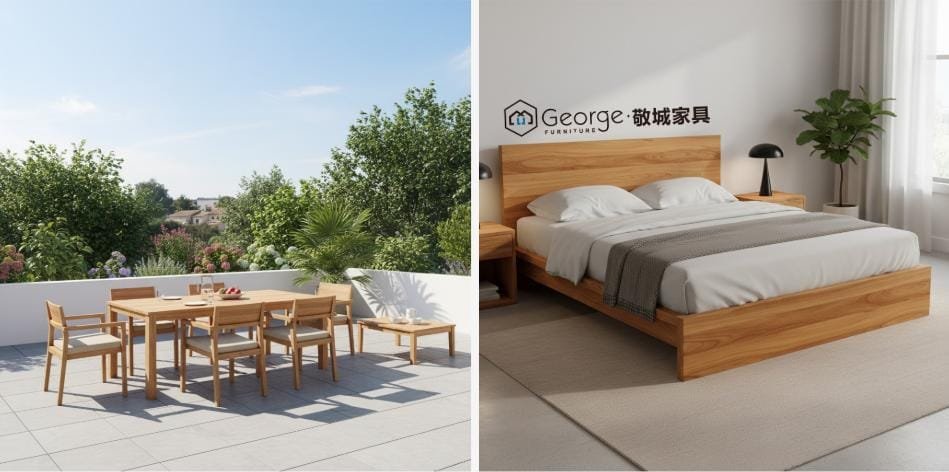
2.1 Furnishings: Indoor and Outdoor
The robustness and aesthetics of acacia wood make it extremely versatile in furnishings. Indoors, it is used for high-traffic furniture such as dining tables, chairs, sideboards, wardrobes, and coffee tables, easily adapting perfectly to modern or industrial styles.
Thanks to its natural properties, acacia is also ideal for making acacia wood outdoor furniture, which is weatherproof yet elegant, perfect for patios, terraces, gazebos, and outdoor spaces.
2.2 Why is it suitable for making furniture?
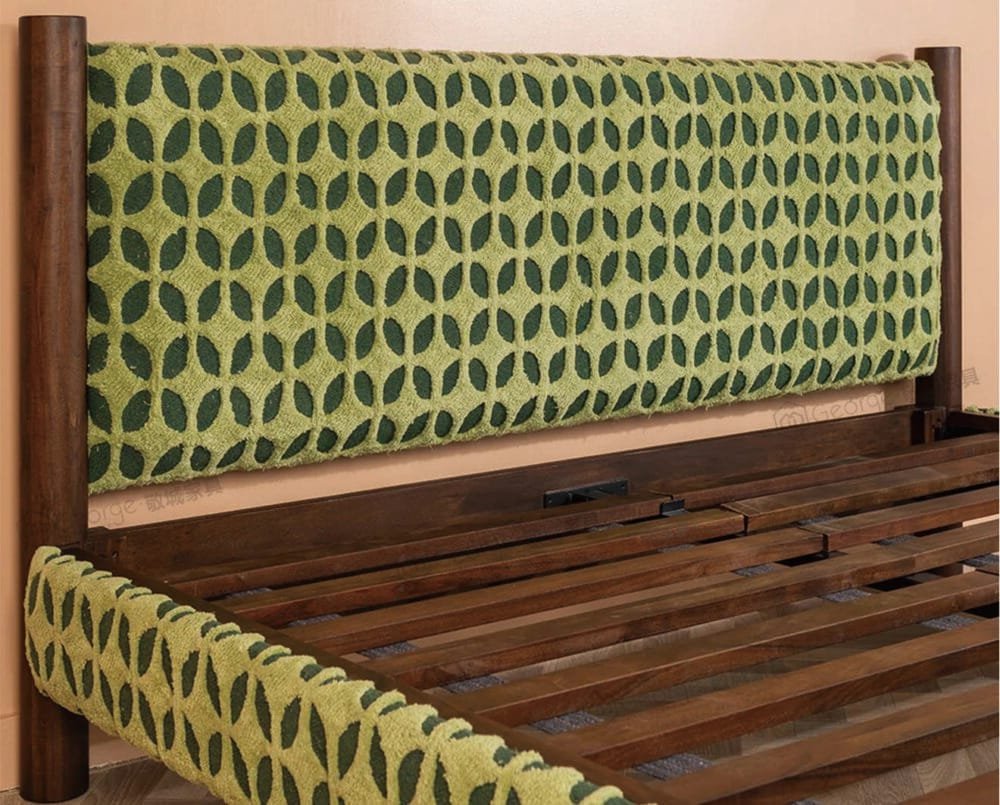
Acacia wood is perfect for furniture thanks to its high hardness, which guarantees durability and long life. If you’re wondering if acacia wood is suitable for furniture, the answer is a confident yes: it resists daily wear while maintaining its natural appeal. An acacia wood 140 cm headboard, for example, combines elegance and functionality: the warm grain and the material’s robustness ensure a piece that remains beautiful and resistant over the years, enhancing any environment.
2.3 Why is acacia wood suitable for home and kitchen furniture?
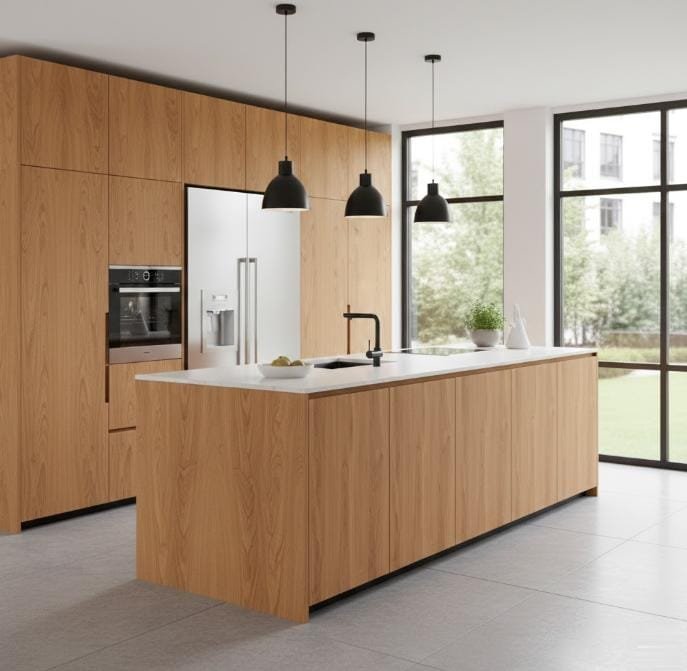
Acacia is particularly suitable for home and kitchen furnishings thanks to its natural hardness and moisture resistance, characteristics that ensure hygienic, durable, and high-performance surfaces. Thanks to these qualities, acacia wood is perfect for home and kitchen furniture, making it ideal for countertops, utensils, and solutions that require robustness and longevity, without sacrificing the elegant style and natural beauty of the material.
Part 3. How Much Does Acacia Wood Cost?
The price of acacia wood depends on various factors, including quality, grade, origin, drying, and type of processing, and can vary significantly. In general, raw timber intended for export is available on the international market at around $180 per cubic meter for basic quality.
For higher quality variants, ideal for furniture, worktops, or refined furnishings, the cost can increase significantly, to over $1000: the “furniture grade” version, with a uniform grain and no knots, generally has a higher price than raw wood.
For those who buy in large quantities, wholesale acacia wood becomes a relatively affordable option compared to rarer or more valuable woods. In this context, George’s Furniture represents an interesting solution: thanks to its agreements with suppliers and manufacturers, it offers high-quality acacia wood at affordable prices, especially for wholesale purchases or custom-made furniture, making it accessible even to those aiming at international export or resale.
Contact Us for a Project Consultation
Why pay more? At George’s Furniture, we cut out the middlemen to bring you premium furniture, flooring, doors, windows,marble and tiles and more—all at prices up to 40% below retail. With 19+ years of experience and 600 consultants, we provide complete, custom project solutions, from initial design to final delivery.
Part 4. What are the Disadvantages of Using Acacia Wood?
Despite its many advantages, the use of acacia wood has some disadvantages. Mainly, due to its high hardness, it can be difficult to work with in carpentry, requiring specific tools and increasing production costs. Furthermore, if it is not dried properly, there is a medium-high risk of shrinkage and deformation. Its high density can also make acacia furniture heavier and more difficult to move than furniture made from less dense woods.
Table: Pros and Cons of Acacia Wood for Furniture
| Pros (Advantages) | Cons (Disadvantages) |
| Exceptional durability and longevity. | Difficult to work with due to its high hardness. |
| Very high natural resistance to water, rot, and insects. | Potential risk of shrinkage or cracking if not perfectly dried. |
| Unique aesthetics with rich grain and warm color. | Heavy weight, making large pieces difficult to move. |
| Great for both outdoor and indoor use. | Can be expensive (though often less than Teak). |
Part 5. Is Acacia Wood Sustainable?
Acacia wood is a sustainable choice for furniture and furnishings, particularly the Robinia variety. Robinia is valued for its rapid growth and for not being classified as an endangered species. It also grows in difficult terrain and helps improve soil fertility, making it more ecological than slow-growing tropical woods.
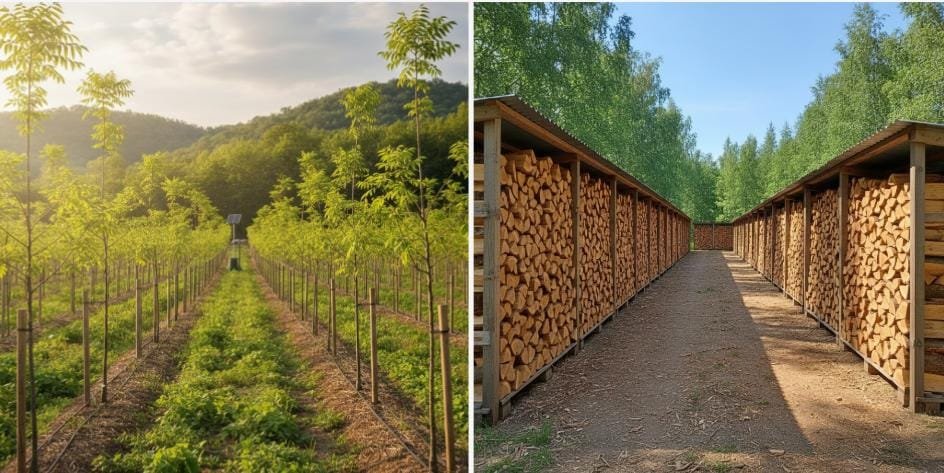
Its high durability makes acacia ideal for flooring, kitchen furniture, countertops, acacia wood utensils, and acacia outdoor furniture, ensuring long-lasting products that reduce the need for frequent replacement.
Thanks to its amazing resistance, natural aesthetics, and sustainability, acacia wood combines functionality and beauty, truly becoming the perfect choice for those seeking durable and responsible furnishings.
Part 6. How to Care for Acacia Wood Furniture
The maintenance of acacia wood furniture is simple but fundamental for preserving its beauty and resistance over time.
For daily cleaning, simply wipe with a damp cloth and neutral detergent, drying the surface immediately to prevent streaks.
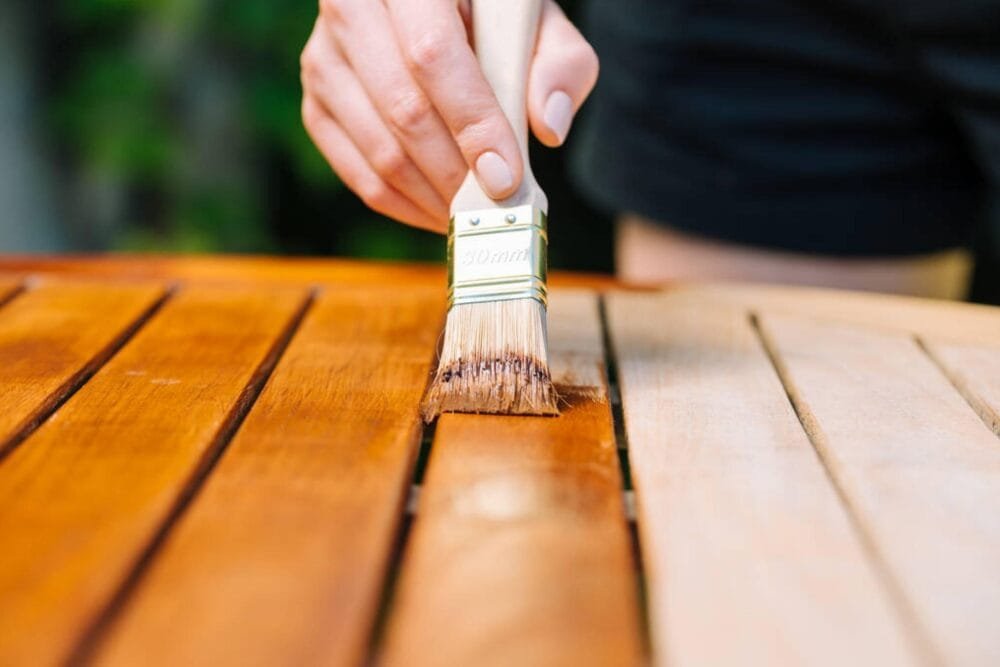
Acacia outdoor furniture, however, requires periodic treatments: applying a specific outdoor wood oil once or twice a year is recommended to protect the warm color and prevent the graying caused by sun and water. In case of scratches or stubborn stains, light sanding followed by a new oil application allows the finish to be restored to its original splendor, keeping the furniture elegant and functional.
Acacia Wood Furniture Maintenance:
Daily cleaning with a damp cloth and neutral detergent; dry immediately.
For outdoor furniture, apply specific oil 1–2 times a year.
Restore by light sanding and new application of oil for scratches or stains.
General protection to avoid direct sunlight and standing water.
Contact Us for a Project Consultation
Why pay more? At George’s Furniture, we cut out the middlemen to bring you premium furniture, flooring, doors, windows,marble and tiles and more—all at prices up to 40% below retail. With 19+ years of experience and 600 consultants, we provide complete, custom project solutions, from initial design to final delivery.
FAQ on Acacia Wood
Q1. Acacia Wood vs. Teak Wood for Outdoor Furniture
If we compare acacia and teak, teak is historically known for its exceptionally high content of natural oils. However, acacia wood offers an almost comparable resistance to water and decay, especially Robinia, at a typically lower cost. Both are excellent for outdoor furniture, but acacia offers a high-quality solution with a better cost-benefit ratio.
Q2. Is Acacia Wood Expensive?
Compared to common softwoods, the price of acacia wood is in a higher range. However, it is not among the most expensive woods overall. It is positioned in a medium-high price range, and its cost is fully justified by its longevity and excellent resistance, making it a very worthwhile investment over time.
Q3. Is Acacia Wood Waterproof?
No wood is truly 100% “waterproof,” but acacia is highly water resistant. Thanks to its density and oil content, it has a low moisture absorption rate and is naturally resistant to water-caused decomposition. If properly sealed and treated, it can be used without issues in humid environments and outdoors.