Most people don’t regret their kitchen design because it looks bad. They regret it because it doesn’t work—tight walkways, poor flow, or not enough usable space. And this is exactly where U-shape kitchens can feel incredibly efficient.
If you are planning one, the question should not be “does it look good?” but “will it work for how I cook and move daily?”
To help you make the right choices, we will break down the U-shaped layout, share design ideas, spacing rules, and real mistakes people make. It will help you design a functional and beautiful kitchen. Let’s get into it.
Quick Answer
It is the best choice for people who want maximum counter space and efficient workflow. It is not ideal for very tight spaces or for homes that need open flow. It works best when clearances and layout planning are done right.
U-Shaped Kitchen Layout Explained
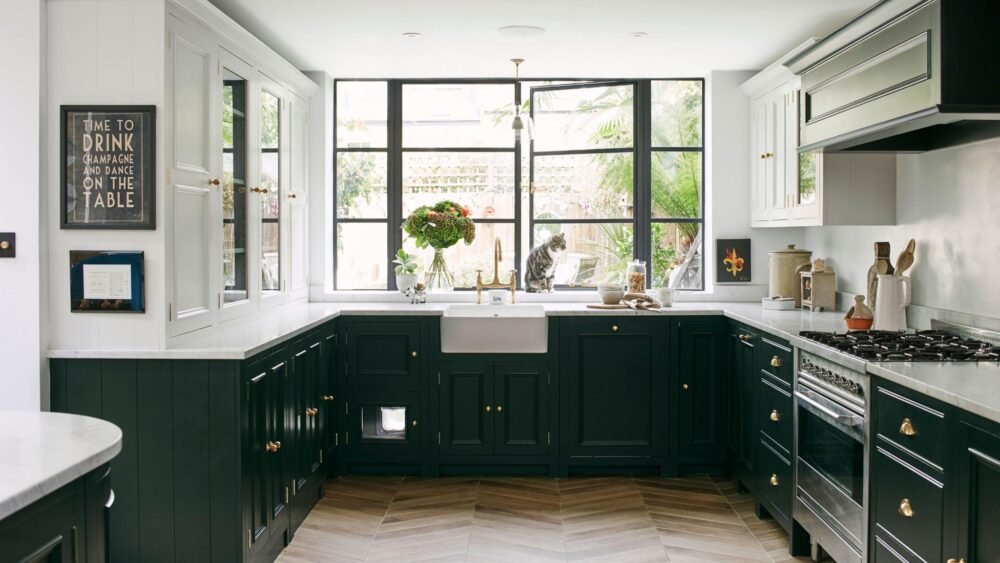
A u shape kitchen layout uses three connected walls to create a “U” or horseshoe shape. It is considered a practical design because it keeps everything within reach while working. You can easily move between the sink, stove, and fridge.
However, you need to plan the spacing wisely. Poor spacing can quickly turn it into a cramped setup instead of an efficient one. Here is what makes this setup work:
What makes this layout work:
- Three-wall workspace setup
- Clear zones for cooking, prep, and cleaning
- Short movement distances
- High storage capacity
- Works in both open and closed kitchens
Contact Us for a Project Consultation
Why pay more? At George’s Furniture, we cut out the middlemen to bring you premium furniture, flooring, doors, windows,marble and tiles and more—all at prices up to 40% below retail. With 20+ years of experience and 600 consultants, we provide complete, custom project solutions, from initial design to final delivery.
Best U-Shaped Kitchen Design Ideas
Different layouts suit spaces. Below are some practical U-shaped kitchen design ideas. Choose what suits your needs:
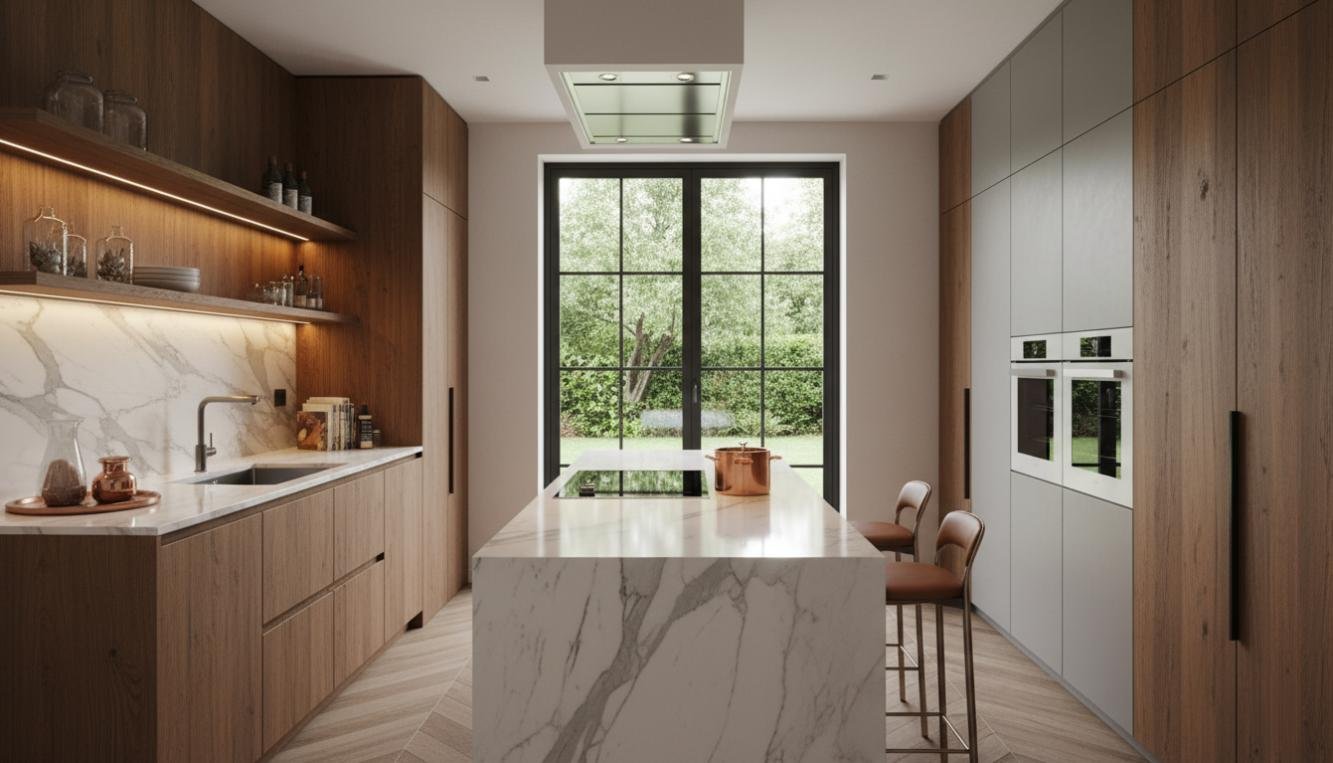
Window-Centred Layout
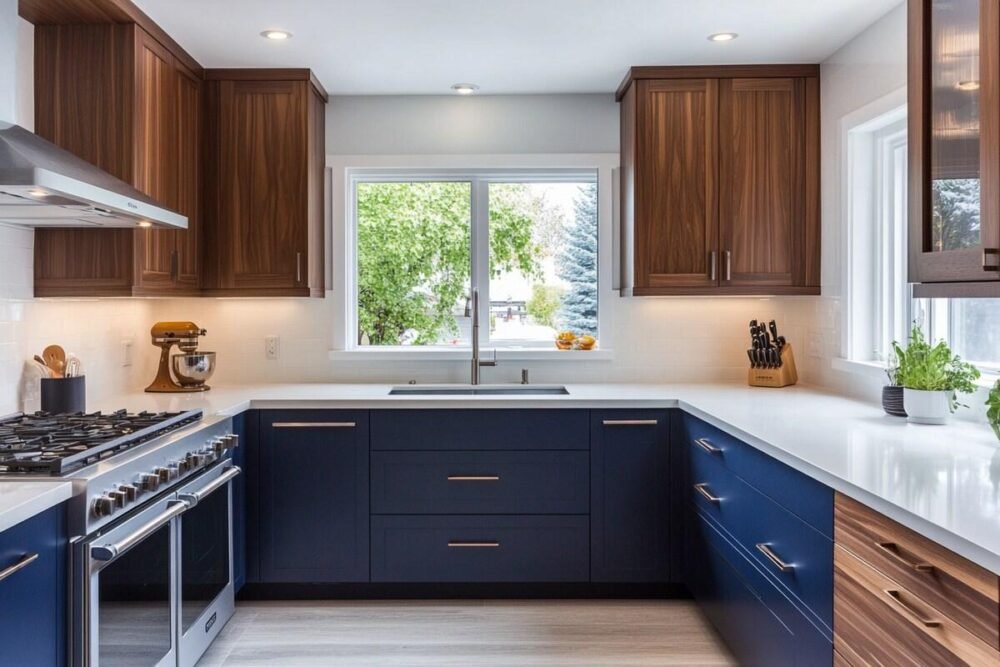
This design places the sink or main prep area under a window. It works well for homes that get natural light and want a brighter feel. Not ideal if your wall space is limited or you need more upper cabinets.
Peninsula Extension Design
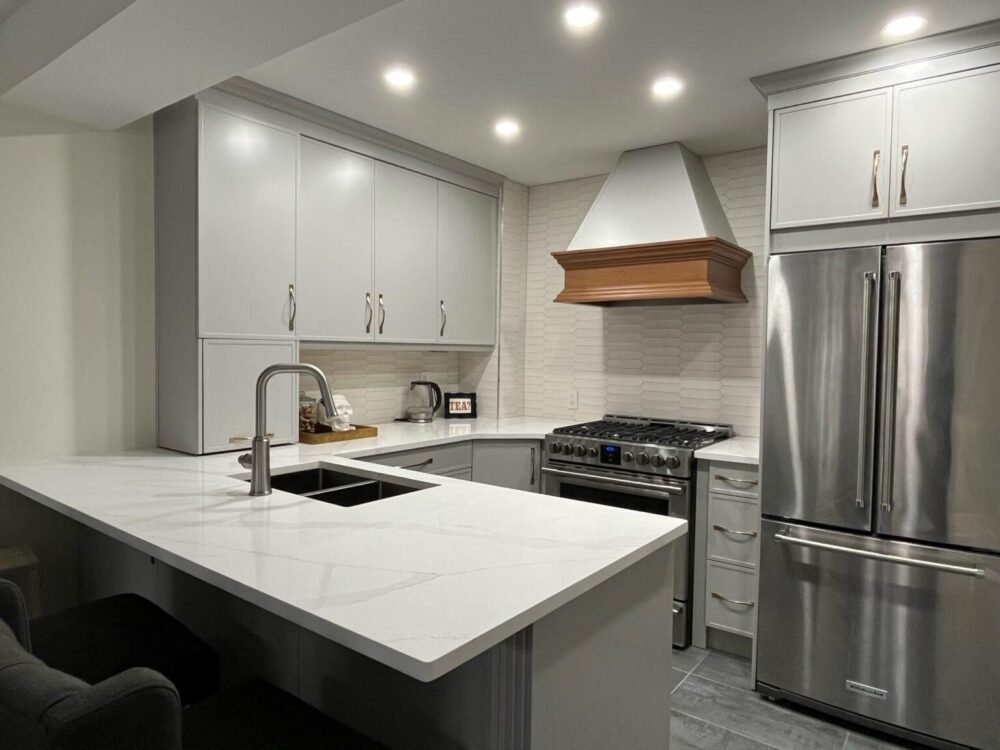
Instead of closing all three sides, one end extends outward as a peninsula. This is great for semi-open homes and works well if you want seating like a U-shaped kitchen with a breakfast bar. Avoid it if your kitchen is already tight.
Contact Us for a Project Consultation
Why pay more? At George’s Furniture, we cut out the middlemen to bring you premium furniture, flooring, doors, windows,marble and tiles and more—all at prices up to 40% below retail. With 20+ years of experience and 600 consultants, we provide complete, custom project solutions, from initial design to final delivery.
Compact Minimal Layout
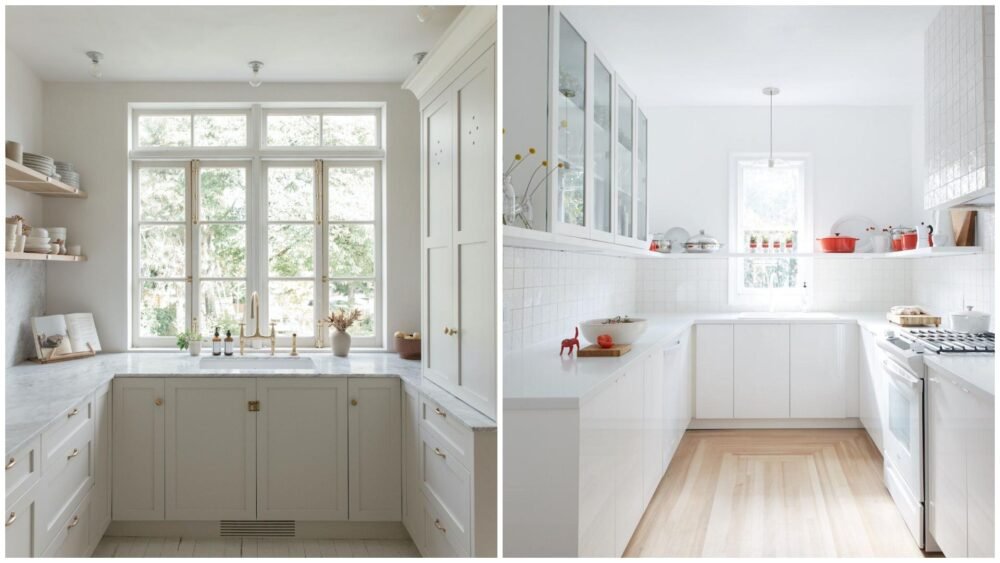
It is more suited for smaller homes where space is tight. You need to avoid heavy cabinets, mostly only lowers. Get open shelves used instead of uppers. Just try to keep things simple for this design. It is not ideal if you need lots of storage.
Island-Compatible Layout
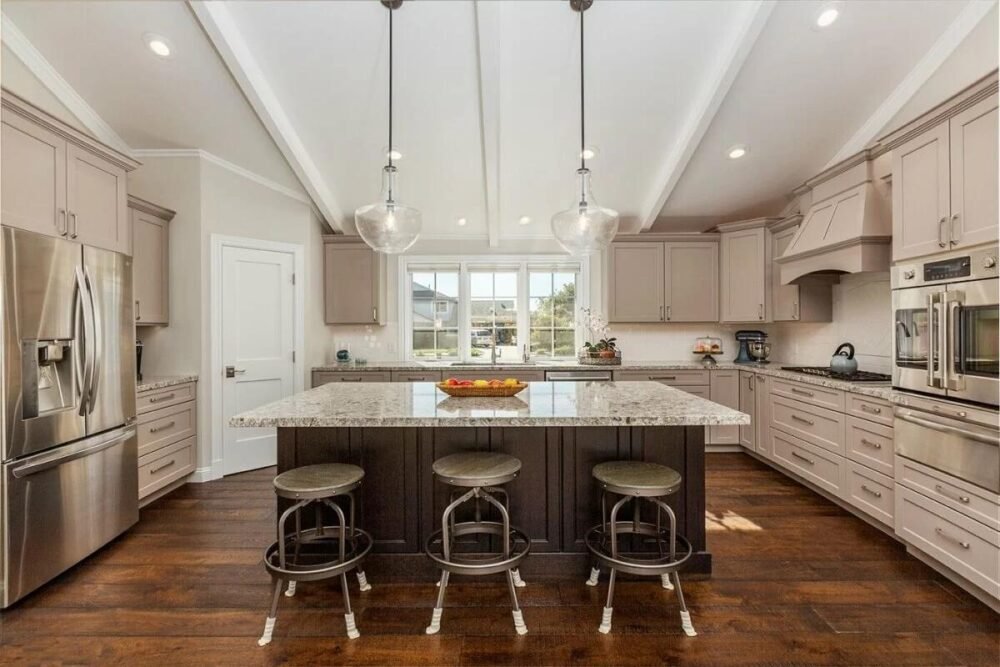
Only larger kitchens can handle this layout properly. A U-shaped kitchen with an island often looks better in theory than in real use if spacing is not right. Consider it only if you have enough width.
But if you do consider it, check out these types of kitchen islands before the purchase. These will help you pick the right design according to your space.
Storage-Heavy Design
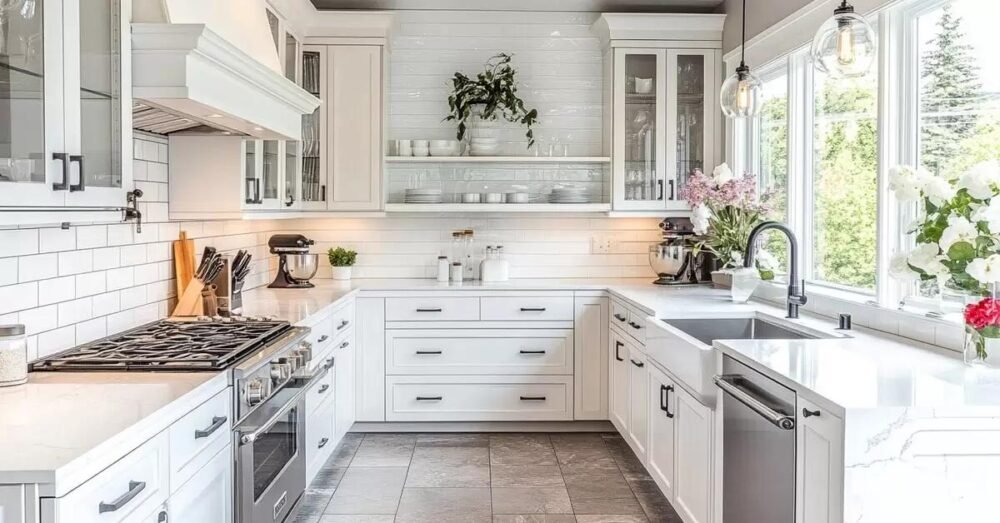
It focuses on maximum cabinets and drawers across all three sides. It is ideal for families or heavy cooking use. Not recommended if you prefer an open, airy feel.
Once you pick this design, the next step is cabinet research. One of the most common comparisons is between cedar and knotty alder kitchen cabinets. Do check it out to make the right material choice.
Pros and Cons of U-Shape Kitchens
Key Advantages | Real Limitations |
Maximum counter space | Can feel closed |
Efficient workflow | Limited entry points |
High storage capacity | Corner access issues |
Clear work zones | Needs proper spacing |
Multi-user friendly | Easy to clutter |
For spaces where a U-shaped design is not suitable, the George’s Furniture L-shaped kitchen cupboard is a better solution. It is a more functional and beautiful layout for most spaces.
When to Choose and Avoid a U-Shape Kitchen?
It works really well in the right conditions. However, it can cause a lot of problems when forced where it is not suitable. Let’s check out some scenarios in which you need to choose and avoid it.
Best Use Cases
Here is when it makes more sense:
- Works best in medium to large kitchens.
- Great for people who cook frequently.
- Ideal when storage is a priority.
- Suitable for defined kitchen areas.
- Works well with proper lighting.
- Good for multi-person cooking.
When It’s a Bad Choice
Below are some situations in which you need to avoid U shape kitchen layout:
- Very narrow kitchen spaces.
- Homes needing open flow design.
- Heavy foot traffic layouts.
- When you must add an island.
- Poorly planned corner usage.
- Limited natural light situations.
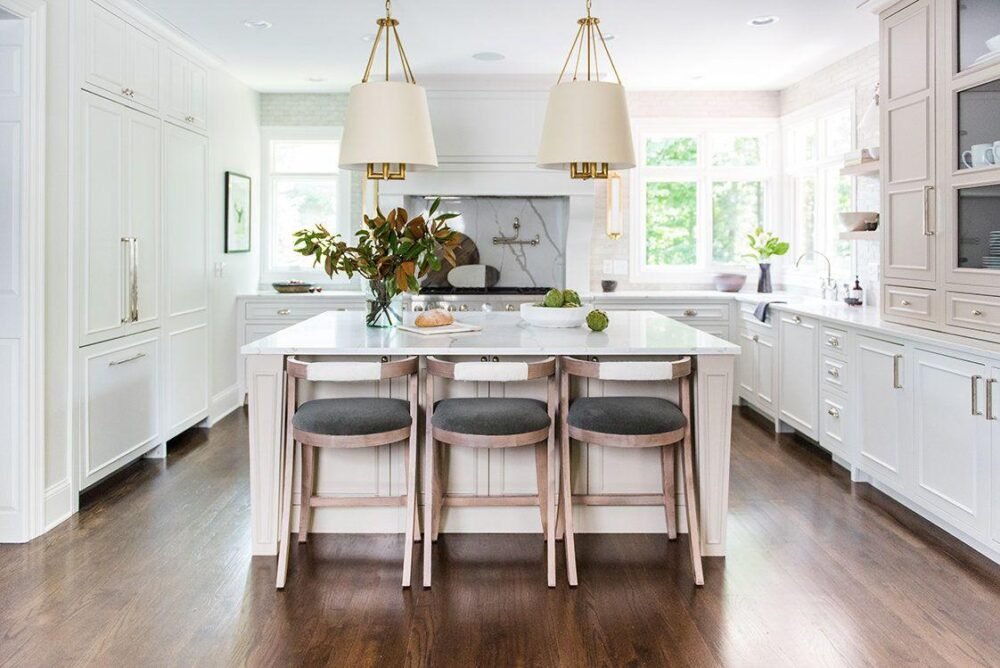
Island or Peninsula: Which One is Better For U-Shape Kitchen?
Most people assume adding an island will improve functionality. In reality, it often does the opposite if space is tight.
Feature | Island | Peninsula |
Space requirement | High | Moderate |
Workflow impact | Can block movement | Maintains flow |
Best for | Large kitchens | Medium kitchens |
Flexibility | Fixed | Semi-open |
Practicality | Risky in tight spaces | Safer option |
In real projects, we’ve seen people try to force an island into a U-shape kitchen and regret it. It blocks movement, makes cooking awkward, and creates constant friction. To get an estimate of whether it will fit in or not, read this kitchen island dimensions guide.
A U-shaped kitchen with a peninsula makes more sense, especially in small spaces. It gives you extra space without affecting the layout. Some people even try a temporary setup first, and it often saves them from expensive changes later.
U-Shape Kitchen For Different Spaces
The same layout behaves very differently depending on space. That’s why design decisions should always start with size, not style.
Kitchen Size | Area | Design Ideas |
Small U-Shaped Kitchens | 70–100 sq ft | Use light colours, handleless cabinets, and keep counters as open as possible |
Medium U-Shaped Kitchens | 100–180 sq ft | Add a breakfast bar or peninsula, and keep a smooth work triangle |
Large / Open Concept U-Shaped Kitchens | 180+ sq ft | Open it to living/dining areas, use an island if possible, and keep sightlines clean. |
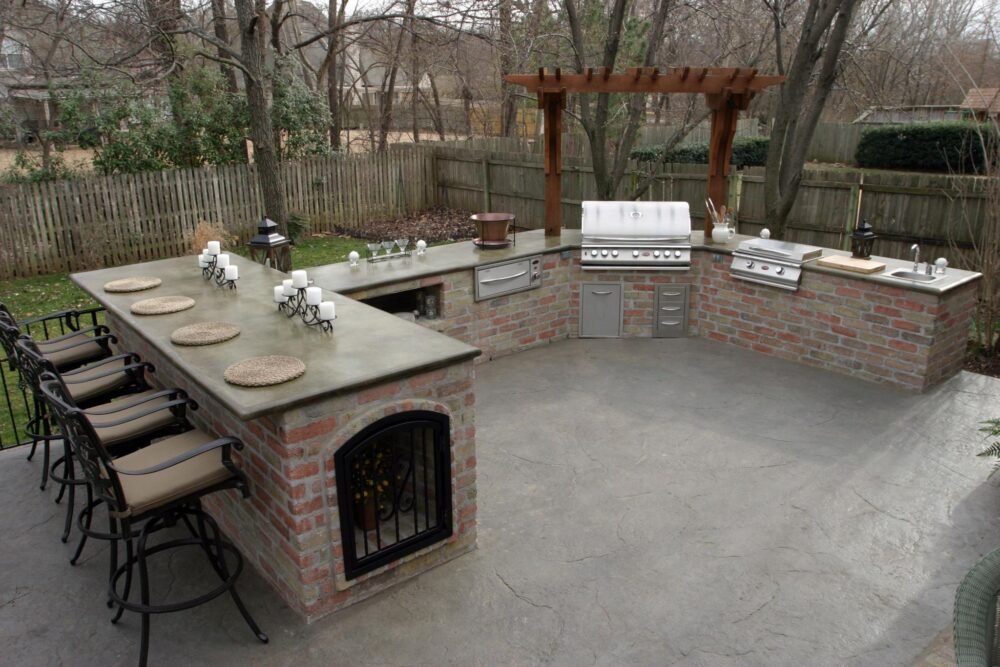
Outdoor U-Shape Kitchens
This layout isn’t just for indoor use. It also works well in outdoor cooking setups where defined zones are important.
Why Does U-Shape Work Outdoors?
It creates separate areas for prep, cooking, and serving. Choose it if you cook outdoors often and need structure. Avoid it if you have harsh weather conditions or limited space outside.
Ideal Measurements
The following are the recommended outdoor kitchen measurements:
- Walkway: 36–48 inches
- Counter depth: ~24 inches
- Clearance for appliances: 42 inches
U-shape Kitchen Cost, Maintenance and Lifespan
A lot of people focus only on design and forget long-term planning. But with u shape kitchens, cost and maintenance can vary a lot depending on how you plan it.
U-Shape Kitchen Cost
Most kitchens fall between $5,000 to $25,000+. It is influenced by multiple factors, especially size and materials. A simple setup costs less, while custom work and premium finishes add up quickly.
Cost depends on:
- Cabinet material and finish
- Countertop type (laminate vs stone)
- Kitchen size and layout complexity
- Hardware and fittings
- Custom storage solutions (corner pull-outs, etc.)
Tip: Don’t overspend on looks and ignore functionality. A well-planned layout always outperforms an expensive but poorly designed kitchen.
U Shape Kitchen Lifespan And Maintenance
A properly built kitchen can last 15–25 years, but only if maintained well.
Maintenance tips:
- Keep countertops clutter-free to avoid wear.
- Use corner storage solutions to prevent damage.
- Clean spills early, especially near edges.
- Check hinges and fittings regularly.
- Avoid overloading cabinets beyond capacity.
Common Mistakes People Make With U-Shape Kitchens
At George’s Furniture, we’ve seen people get this layout wrong in very predictable ways. It’s rarely about design; it’s almost always about planning.
Forcing an Island Into a Tight Space
Islands look great in plans, but in a U-shaped kitchen, they can mess up movement. We’ve seen setups where even two people can’t pass without bumping into each other.
Ignoring Clearance Requirements
It’s easy to overlook spacing, but you feel it every day while using the kitchen. You need room to open doors and still walk freely. Around 42 to 48 inches is generally enough. You can also check kitchen cabinetry clearance guidelines to understand it better.
Poor Corner Planning
Corner cabinets often become wasted space. Without pull-outs or smart storage, they quickly turn into dead zones.
Overloading Countertops
More counter space doesn’t mean more clutter. Too many items make the kitchen feel messy and reduce actual usability.
Choosing Layout Without Considering Movement
A kitchen might look perfect on paper, but fail in real life. Movement between the fridge, sink, and stove should feel natural, not forced.
Conclusion
U-shape kitchens are one of the most practical layouts when done right. They offer excellent storage, efficient workflow, and clearly defined work zones. But they are not forgiving—small planning mistakes can quickly turn them into tight, frustrating spaces.
If you are considering this layout, focus on spacing, movement, and real usability first. Design comes later. And if you are unsure, it’s always better to test layouts or get expert opinion.
At George’s Furniture, we help you get this right from the start. From layout planning to materials, design choices, and installation, we handle everything so you don’t have to deal with costly mistakes later. Ready to get a U shape kitchen? Contact George’s Furniture now.