A wrong stair stringer choice doesn’t just look bad; it can be dangerous. It can lead to safety problems, unnecessary spending, and rework right in the middle of construction. Whether it’s a villa staircase or a commercial build, the impact is real.
And with so many design and material options, it can quickly get confusing. Below, you will learn how to choose the right stair stringer type and material based on your project needs. Let’s begin! This guide also briefly explains how stair risers, step stringers, and overall staircase structure work together, so you can avoid common design mistakes early.
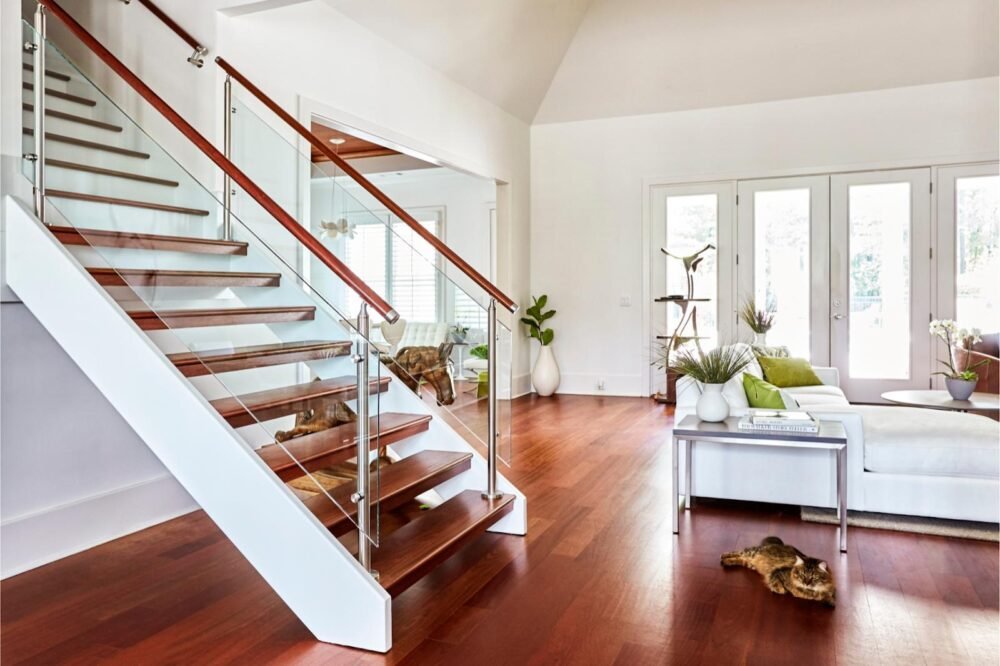
Table of Contents
Quick Answer
If you want a simple answer, closed wood stringers are ideal for most residential projects because they are safe, affordable, and easy to build. Mono stringers are the best choice for modern designs, and steel double stringers for commercial use because of their strength.
Stair stringers vs stair risers: what’s the difference?
Stair stringers are the structural supports that hold the entire staircase, while stair risers are the vertical boards between each step. Stringers carry the load, and risers mainly affect safety, spacing, and appearance. In most projects, both must work together to meet building codes and ensure long-term durability.
Stair Stringers Materials
The strength, durability, and maintenance of the staircase depend on the material you are using. At George Living, we have been engaged in a wide range of staircase work, from straightforward residential projects to more elaborate custom projects.
Below are the materials we recommend for different use cases:
Stair Stringer Types Quick Comparison
Type | Approx Cost | Strength | Design Style | Best For | Avoid If |
Closed Stringer | $300 – $800 | High | Traditional, clean | Most homes, budget builds | You want a modern, open look |
Open Stringer | $500 – $1,200 | Medium-High | Modern, exposed steps | Stylish residential stairs | You can’t ensure precise cutting |
Mono Stringer | $2,000 – $6,000+ | High (engineered) | Minimal, floating | Modern interiors feature stairs | Budget is tight, or the install is DIY |
Double Stringer | $1,500 – $4,000+ | Very High | Functional, industrial | Commercial, high-traffic areas | You want a slim or sleek design |
Center Beam | $2,500 – $7,000+ | High | Modern, open | Offices, showpiece stairs | The stairs are very wide |
Twin Stringer | $3,000 – $8,000+ | Very High | Modern, balanced | Wide modern staircases | You need a simple prefab option |
Cantilevered | $5,000 – $15,000+ | High (if engineered well) | Premium, floating | Luxury, statement designs | Wall support is weak, or the budget is limited |
In real-world builds, both stair stringers and stair risers must be considered together, especially when calculating stair stringer dimensions and load distribution.
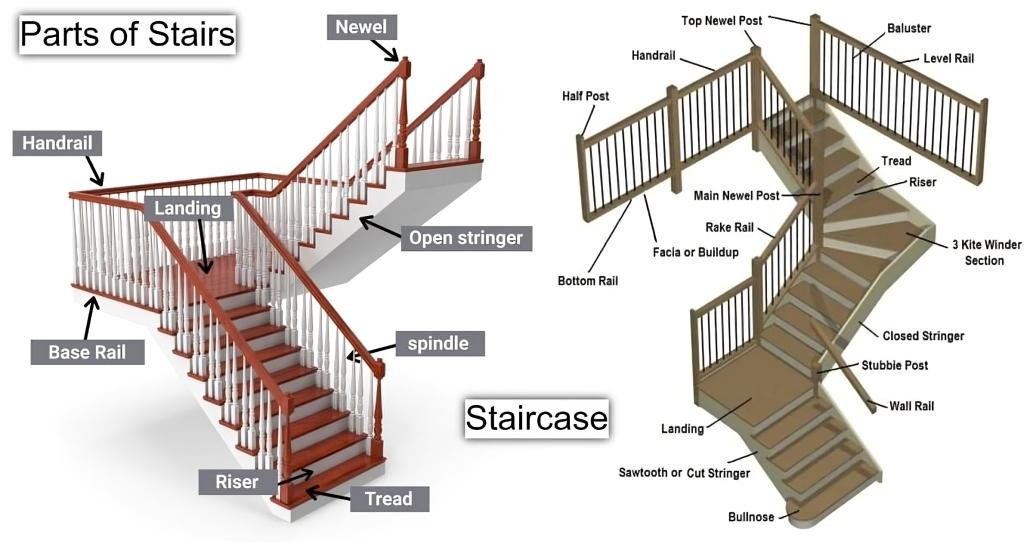
Before we move on to the stair stringer types, if you want to learn about other staircase parts as well, read this detailed article on the parts of a staircase. It will help you understand the structure and make better decisions.
Contact Us for a Project Consultation
Why pay more? At George Living, we cut out the middlemen to bring you premium furniture, flooring, doors, windows,marble and tiles and more—all at prices up to 40% below retail. With 20+ years of experience and 600 consultants, we provide complete, custom project solutions, from initial design to final delivery.
Stair Stringer Types Quick Comparison
Each type also works differently with open or closed stair risers, which can affect both safety and visual style.
Type | Approx Cost | Strength | Design Style | Best For | Avoid If |
Closed Stringer | $300 – $800 | High | Traditional, clean | Most homes, budget builds | You want a modern, open look |
Open Stringer | $500 – $1,200 | Medium-High | Modern, exposed steps | Stylish residential stairs | You can’t ensure precise cutting |
Mono Stringer | $2,000 – $6,000+ | High (engineered) | Minimal, floating | Modern interiors feature stairs | Budget is tight, or the install is DIY |
Double Stringer | $1,500 – $4,000+ | Very High | Functional, industrial | Commercial, high-traffic areas | You want a slim or sleek design |
Center Beam | $2,500 – $7,000+ | High | Modern, open | Offices, showpiece stairs | The stairs are very wide |
Twin Stringer | $3,000 – $8,000+ | Very High | Modern, balanced | Wide modern staircases | You need a simple prefab option |
Cantilevered | $5,000 – $15,000+ | High (if engineered well) | Premium, floating | Luxury, statement designs | Wall support is weak, or the budget is limited |
Types of Stair Stringers
Staircases are built in different ways depending on where they’re used. The right stringer type depends on your space, the look you want, and how much weight the stairs need to handle. Let’s explore these types and find the suitable one for yourself.
Commercial And Industrial Stair Stringer Styles
Business structures are friendly, safe, and strong. Here, metal stair systems are used.
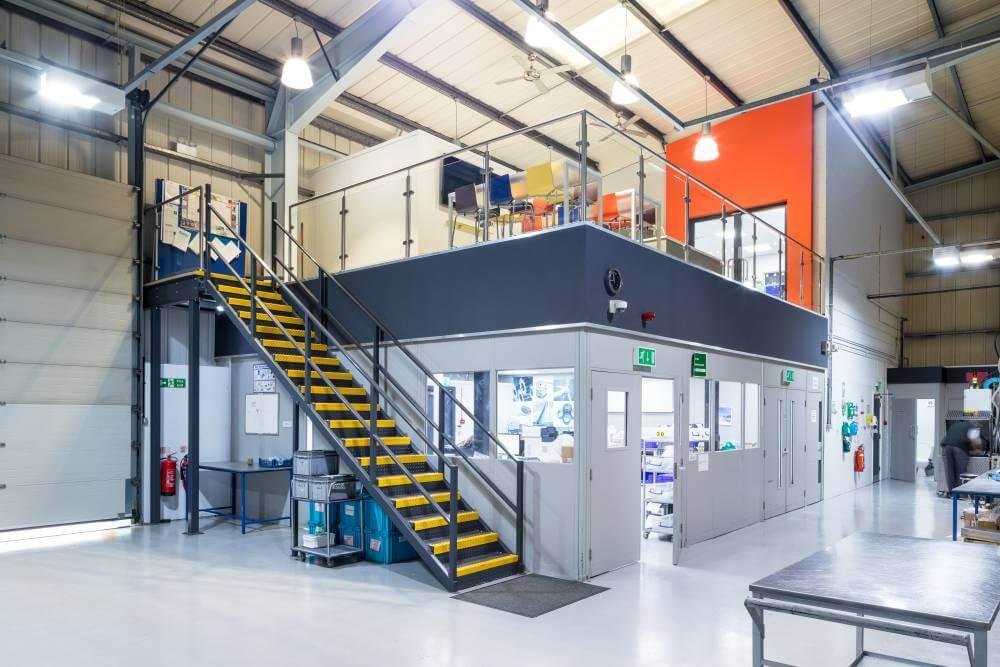
It is among the most widespread applications. These mezzanines are common installations in warehouses to store inventory, supplies, or equipment. Instead of expanding the building footprint, companies build upward to create additional space.
Double Stair Stringers
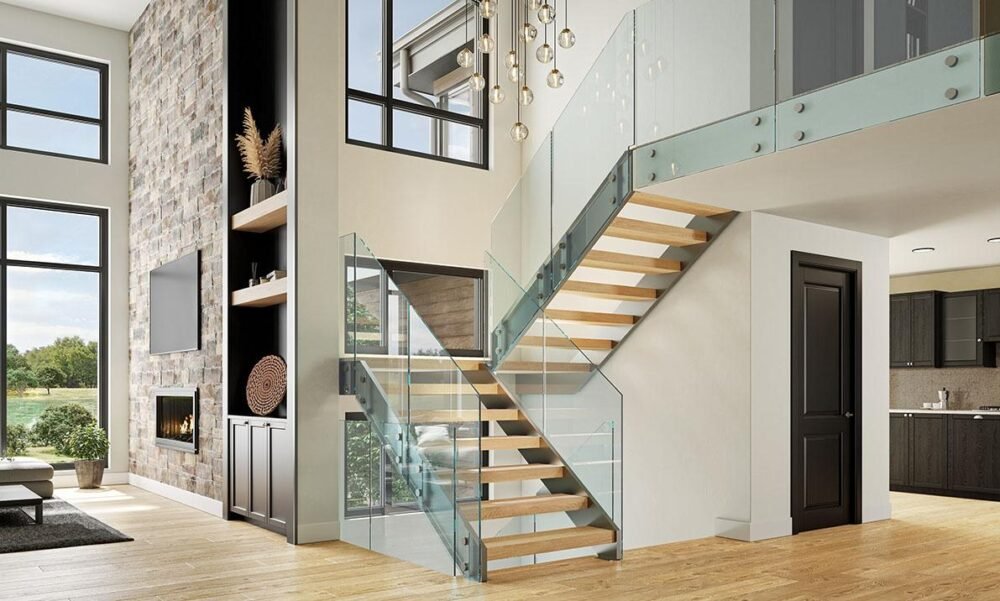
In double stair stringers, you have two structural supports on either side of the stair treads. These supports make it really stable. It is commonly used in factories, warehouses, and office buildings. It is not recommended for projects that need a slim, modern look or work with a tight budget.
Pros | Cons |
Very strong support | Uses more material |
Handles heavy traffic | Slightly higher cost |
Meets safety codes easily | Bulkier look |
Works with prefab stairs | Needs careful alignment |
Contact Us for a Project Consultation
Why pay more? At George Living, we cut out the middlemen to bring you premium furniture, flooring, doors, windows,marble and tiles and more—all at prices up to 40% below retail. With 20+ years of experience and 600 consultants, we provide complete, custom project solutions, from initial design to final delivery.
Center Beam Stringer
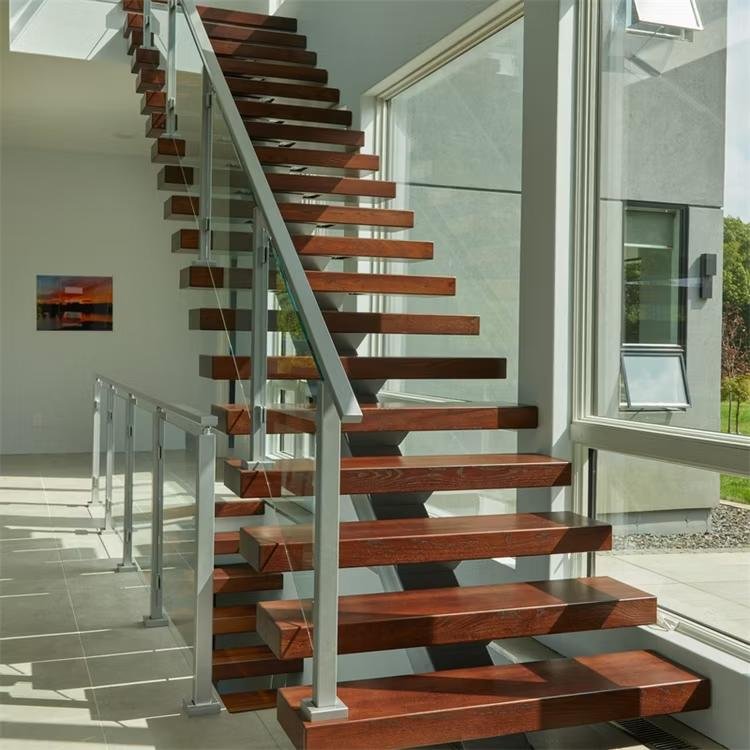
A center beam stringer uses a single structural beam running underneath the middle of the staircase. The treads extend outward from that beam. You will usually see this design in modern offices, hotels, or large architectural staircases. It is not suitable for wide staircases.
Pros | Cons |
Clean modern look | Expensive |
Open space around the stairs | Custom fabrication |
Strong central support | Harder to repair |
Good for feature stairs | Not ideal for wide stairs |
Residential Stair Stringer Types
Homes offer much more flexibility in stair design. The structure can either stay hidden or become a design feature.
There are smaller movable mezzanines. Such small units can be moved around when storage capacity changes or when firms change venues.
Closed (Routed, Housed, Box or Side) Stringer
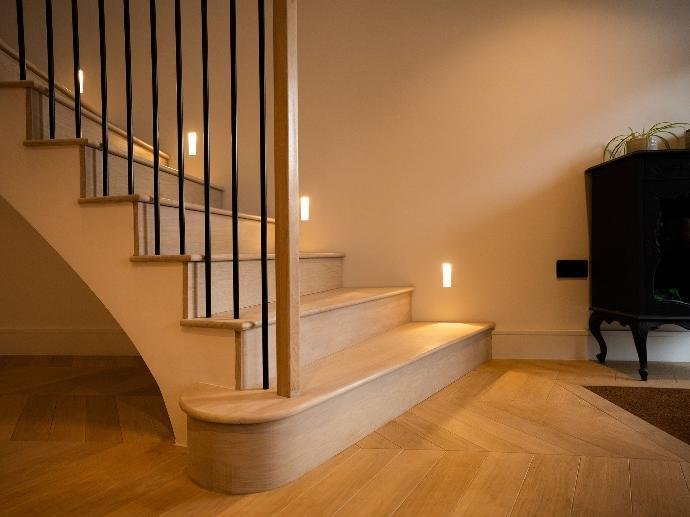
It is one of the most traditional staircase designs used in homes. With closed stair stringers, the edges of the steps are hidden between two side boards. The treads and risers fit into routed grooves inside the stringer. It is not suitable for modern open designs.
Pros | Cons |
Strong and stable | Basic appearance |
Easy to build | Less design flexibility |
Budget friendly | Steps look heavier |
Pre-cut options available | Hard to modify later |
Contact Us for a Project Consultation
Why pay more? At George Living, we cut out the middlemen to bring you premium furniture, flooring, doors, windows,marble and tiles and more—all at prices up to 40% below retail. With 20+ years of experience and 600 consultants, we provide complete, custom project solutions, from initial design to final delivery.
Open (Cut or Sawtooth) Stringer
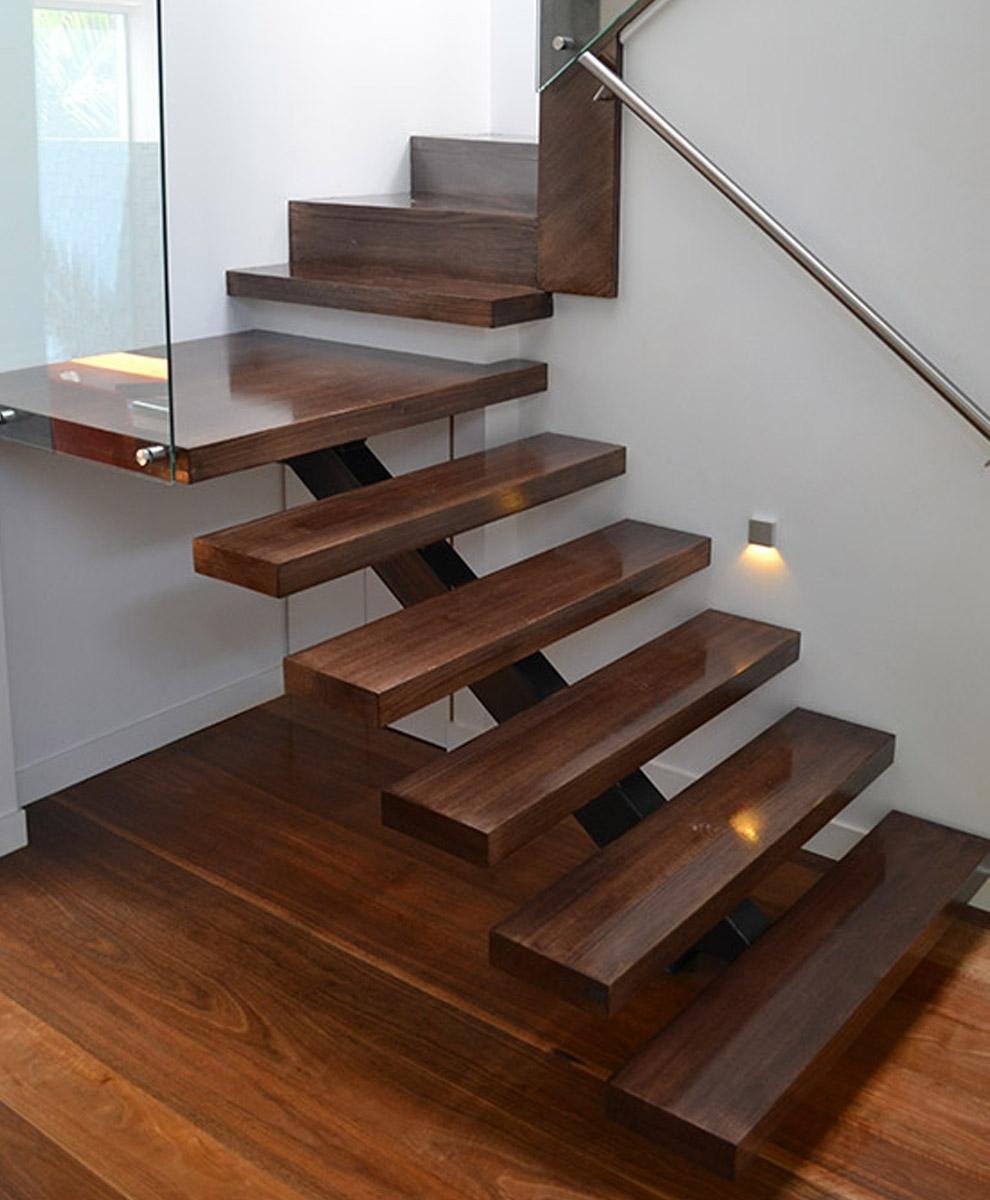
Open stair stringers are easy to recognize. The top edge has a zigzag cut that holds the treads in place. It is ideal for modern houses because it showcases the beautiful steps and stair stringer trim.
However, open stringers require more precise cutting, so it is not recommended for DIY installations. Any mistakes in the sawtooth pattern can affect the entire staircase.
Pros | Cons |
Stylish exposed steps | Requires precise cutting |
Popular in modern homes | Slightly higher cost |
Lighter visual look | Edges need finishing |
Works with open risers. This type is commonly paired with open stair risers, creating a more modern and airy staircase design, but it may not meet code requirements in all regions. | Cutting mistakes ruin the board |
Mono Stringer
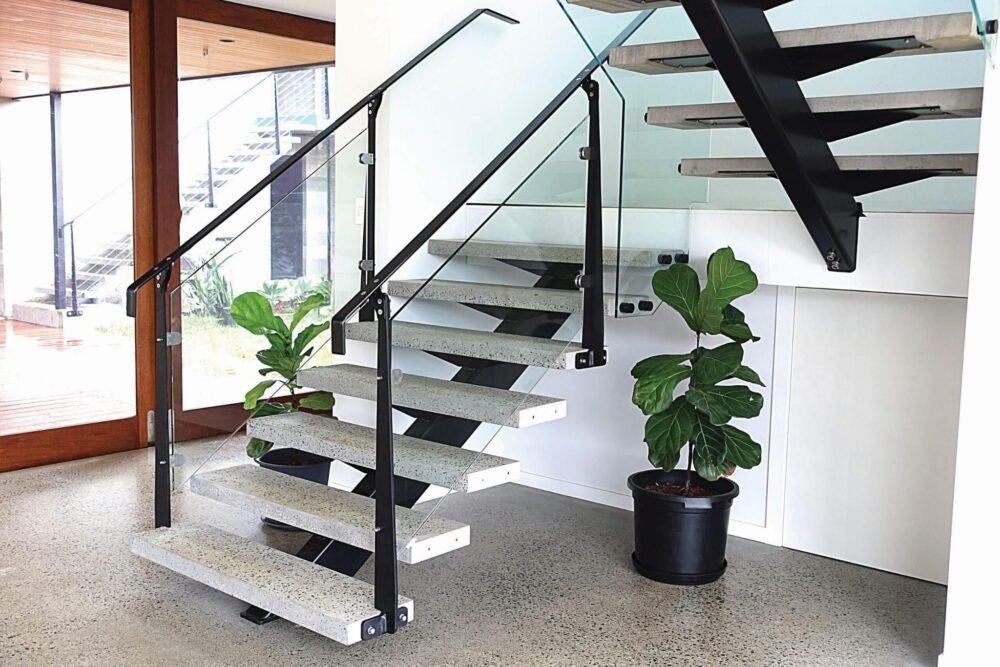
A mono stringer staircase has a single structural support in the middle of the stairs. Each tread attaches directly to the central beam, creating an open, floating effect. It is not recommended for long staircases without proper engineering support.
Pros | Cons |
Modern floating look | Expensive |
Minimal structure | Custom design needed |
Works in contemporary homes | Professional installation |
Strong when engineered | Not for long stair runs |
Twin Stringer
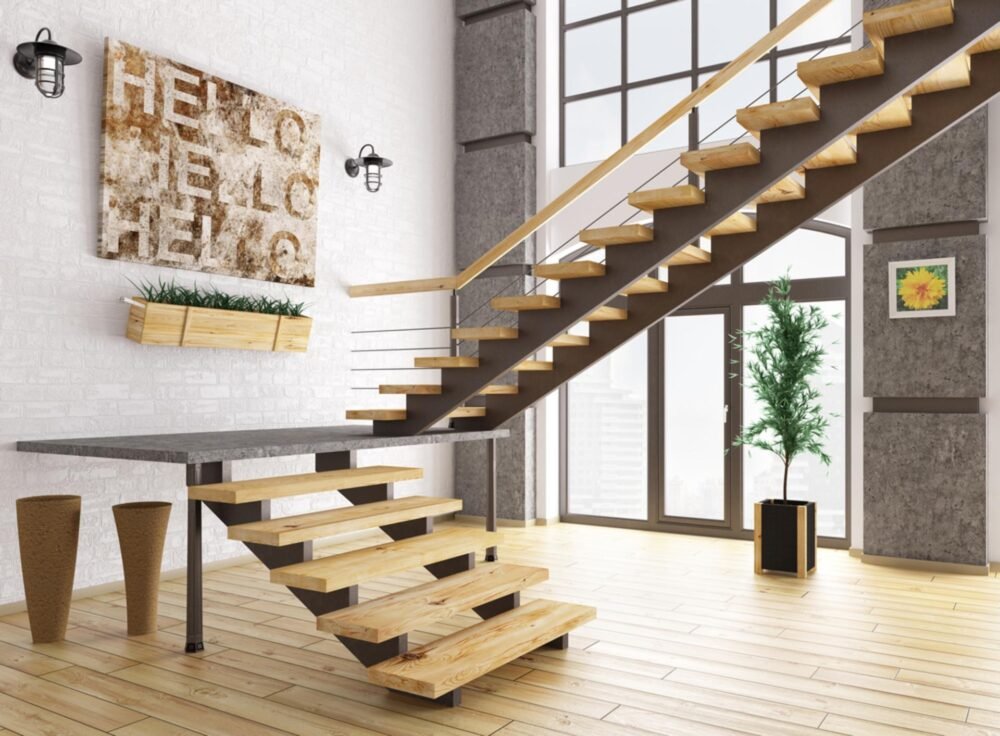
The mono stringer design is modified to form twin stringers. Two slender beams are running beneath the staircase instead of the single one.
Twin stringers are most commonly used in modern houses and offices, where design is the key factor. These are not suitable for small staircases and low-budget projects.
Pros | Cons |
More stable than mono | Higher fabrication cost |
Modern appearance | Needs precise installation |
Supports wider treads | Limited prefab options |
Balanced design | Not ideal for long stairs |
Cantilevered Stringer
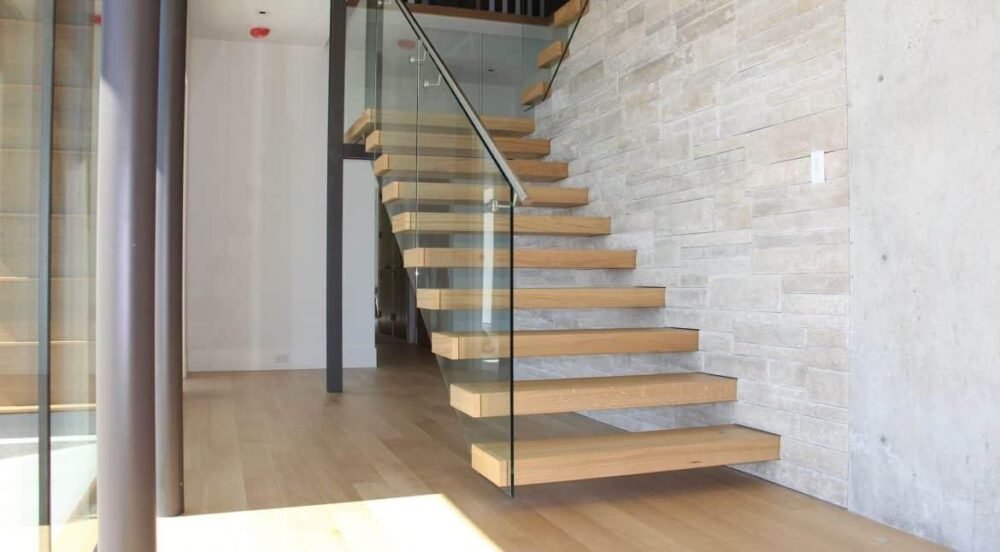
Cantilevered stairs are the most theatric staircase. The stair stringer is built within the wall in this design. The treads project outwards from the wall and appear to float in mid-air. It looks cool, but keep in mind it is not suitable for weak wall structures or projects with limited budget and engineering support.
Pros | Cons |
Dramatic floating effect | Very expensive |
Makes space look larger | Needs strong wall support |
Clean minimalist design | Complex installation |
Unique architectural feature | Safety needs careful planning |
Once you have found the right type of stair stringers, the next step is to purchase them. Most home and business owners choose George Living solutions due to their modern designs and higher safety standards.
Contact Us for a Project Consultation
Why pay more? At George Living, we cut out the middlemen to bring you premium furniture, flooring, doors, windows,marble and tiles and more—all at prices up to 40% below retail. With 20+ years of experience and 600 consultants, we provide complete, custom project solutions, from initial design to final delivery.
Stair Stringers Recommendations Based on Needs
The selection of the appropriate structure is based on the usage of the stairs. Here is what experienced designers and contractors recommend for different needs.
Need | Recommended Stair Stringer Type | When to Choose it? | When to Avoid it? |
Outdoor deck stairs | Pressure-treated wood deck stringer | You want a budget-friendly, weather-ready option | You want low maintenance long-term |
High-traffic commercial stairs | Double steel stringers | You need maximum strength for heavy use | You want a sleek or low-cost design |
Modern interior design | Mono stringer | You want a clean, floating look | You’re on a tight budget or DIY |
Budget residential staircase | Closed wood stringer | You want simple, affordable, and reliable | You want a modern, open style |
Decorative statement staircase | Cantilevered stringer | You want a premium floating effect | Budget or wall support is limited |
Narrow staircases | Center beam stringer | You need to save space with good support | Your stairs are wide or standard |
To illustrate, a 16 step stair stringer system would typically support a load without steel support when the stringers are pressure-treated and the spacing is correct. In these cases, correct stair stringer dimensions and spacing are critical to prevent structural sagging.
Cost, Lifespan & Maintenance of Stair Stringers
Choosing the right stair stringer is not just about design. Cost, lifespan, and maintenance play a big role, especially in commercial projects and long-term builds. Here is a practical breakdown based on real-world use.
Cost Ranges
The cost of stair stringers varies based on material, design complexity, and fabrication.
- Wood stringer:The average cost is between $300 and $ 1,200; however, it can increase with hardwood and custom cuts. It is budget-friendly and widely used in residential projects. Costs.
- Steel stringers:It costs between $1,500 – $4,000+. It has a higher upfront cost but is very durable, so it’s ideal for commercial and high-traffic areas.
- Mono stringers (custom steel):can cost $2,000–$6,000+. It is a premium option due to custom fabrication, welding, and professional installation requirements.
In most projects, what looks cheaper initially may cost more later if maintenance and lifespan are ignored. When estimating total cost, remember that stair risers, finishes, and stair stringer trim can also significantly affect the final budget.
Which stair stringer type lasts the longest?
In most cases, steel stair stringers last the longest, often exceeding 30–50 years with proper coating. Wood stringers are more affordable but typically require maintenance and may need replacement sooner, especially in outdoor environments.
Lifespan (Indoor vs Outdoor)
The lifespan of stair stringers depends on where and how they are used.
- Indoor wood stringers:They last 15–30 years with proper care.
- Outdoor wood (pressure-treated):They last 10–20 years, depending on the weather.
- Steel stringers (indoor):They can last 30–50+ years.
- Steel stringers (outdoor):They last 20–40 years with protective coating
Wood is more sensitive to moisture and temperature changes, while steel performs better over time. You just need to protect it from corrosion.
Maintenance Requirements
Different stair stringers have different kinds of maintenance requirements. Wood and steel are the most popular ones, so we have shared their maintenance needs below.
- Wood maintenance: It needs to be sealed or painted to protect against moisture, cracking, and warping. Outdoor wood requires more frequent upkeep.
- Steel maintenance:You will need to coat or galvanize it to prevent rust. If it’s placed outside or you are in a coastal region, keep checking it for signs of corrosion as well.
No matter what material you pick, the sun and rain will wear it down if you don’t take care of it. Just keep inspecting once a month; catching a small problem now is much easier than fixing a big one later.
Common Mistakes When Choosing Stair Stringers
At George Living, we have learned from real projects that even small mistakes in choosing stair stringers can lead to bigger, more costly problems later. Avoiding them can save you time, money, and stress.
- Focusing only on design. A staircase can look good but still fail if it doesn’t fit the structure or space properly.
- Overlooking load capacity. Stairs carry weight every day. Ignoring this can result in weakness, movement, or long-term damage.
- Using the wrong materials outdoors. Indoor materials break down faster than outdoor materials due to moisture and weather exposure.
- Taking installation lightly. Complex stringer types require proper skill. Without it, mistakes become expensive.
- Focusing only on the upfront cost. You need to think beyond that. Cheap materials have higher maintenance needs and cause earlier replacements. It increases the total cost higher than quality materials at the beginning.
What We Consider Before Choosing Stair Stringers?
At George Living, we base our decisions on real project experience, not just design ideas, because we have seen how small practical factors can affect performance over time.Real Project Insights
We rely on what we’ve actually seen on-site, where small early decisions often lead to either smooth installation or costly fixes later.Practical Constraints
Every project has limits, such as space, structure, and how it can be installed. Ignoring these can cause problems later, even if the design looks right.Environmental Factors
The location matters more than people expect. Outdoor conditions, especially moisture, can damage untreated materials much more quickly than indoor conditions.Load Capacity
Stairs need to handle the expected use. Commercial spaces, like mezzanine floors, often require steel stringers, while residential stairs usually perform well with wood.Building Codes
Local codes regulate stair stringer dimensions, spacing, and maximum stair height. For more information, read this detailed article about inspecting stair stringers.High-Traffic Wear
Stairs that are used every day by many people wear out faster. Without the right material and support, signs of damage can appear much earlier than expected.These factors will reduce rework and the need for expensive rebuilding in the future.FAQs
What Is A Stair Stringer?
A stair stringer is the structural backbone of a staircase, acting as the diagonal support beam that carries the weight of the treads and risers. It is the central support that anchors your stairs in place and keeps them safe.
How Many Stringers For A 16-Step Staircase?
For a 16-step staircase, you should typically use at least four to five stringers, especially if the staircase is wider than 36 inches, to prevent sagging. Generally, stringers must be spaced no more than 16-18 inches apart on center.
What Size Stair Stringer Do I Need?
For most residential staircases, you will need 2×12 lumber for your stringers to ensure they are strong enough to support the load. You can also use 2×10 lumber for shorter, lighter staircases.
Are Metal Stringers Better Than Wood?
Metal stringers are often superior to wood in durability, offering higher resistance to moisture, pests, and rot, making them ideal for exterior, commercial, or modern applications.
What Is A Deck Stringer?
A deck stringer is a structural component made of pressure-treated lumber that supports the stair treads leading down from your deck. It is designed to bear outdoor weather and must be properly calculated to support the weight of the stairs and traffic on your deck.
Can Stair Stringers Be Customized?
Yes, stair stringers can be fully customized in design, size, and material. You can choose open or closed styles and tailor them to fit your exact layout and look.
What Are Stringers In Construction?
Stringers are the slanted structural beams that support the weight of a staircase by running along both sides of the steps. They act as the primary framework, holding the treads and risers in place to ensure the entire structure remains stable and safe.
What Are The Rules For Stair Stringers?
Stair stringers must typically be cut from 2×12 lumber, spaced no more than 16 to 18 inches on center, and provide a rise between 7-7.5 inches and a run of 10–11 inches per step. At least three stringers are required for a 36-inch-wide staircase, and they must have a minimum 5-inch throat.
Is There A 7-Step Stringer?
Yes, a 7-step stringer simply refers to a pre-cut or custom stringer designed for seven steps. The number of steps depends on the total height of the staircase, not a fixed standard.
Contact Us for a Project Consultation
Why pay more? At George Living, we cut out the middlemen to bring you premium furniture, flooring, doors, windows,marble and tiles and more—all at prices up to 40% below retail. With 20+ years of experience and 600 consultants, we provide complete, custom project solutions, from initial design to final delivery.
Final Words
Choosing the best stair stringer really comes down to use. In most residential setups, closed wood stringers are the practical choice. They hold up well, cost less, and don’t complicate installation.
For a more modern design, mono stringers create that open look, but they need a bigger budget and skilled work. In spaces with heavy use, double steel stringers tend to perform better and last longer.
When your selection matches your space, load, and budget, you avoid costly mistakes later. Lastly, if this decision is feeling too complicated, contact a trusted supplier like George Living with your layout and usage needs and get it right the first time.