If you’ve ever panicked after spilling wine on a suede couch, you’re not alone.
Suede leather, with its soft texture and luxurious appearance, can transform any living room into a cozy and refined space. But its porous surface also makes many homeowners wonder how to wash a suede couch without ruining it.
In reality, suede behaves very differently from most fabrics. It absorbs moisture quickly. It shows stains easily. And once damaged by water, it can be difficult to restore. Learning how to clean a suede leather couch properly is essential to preserving its beauty over time and preventing everyday accidents from becoming permanent damage.
In this guide, we’ll explain how to wash a suede couch safely (and what “washing” really means). You’ll learn practical, natural cleaning methods for common stains, what never to do, and how to protect suede fibers from long-term wear.

Table of Contents
Suede Leather Sofa: The Basics of Material Care
Before using any cleaner or moisture, understand the surface you’re working with. Suede leather is extremely sensitive to water. Excess moisture can stiffen fibers, cause dark water marks, or permanently alter texture.
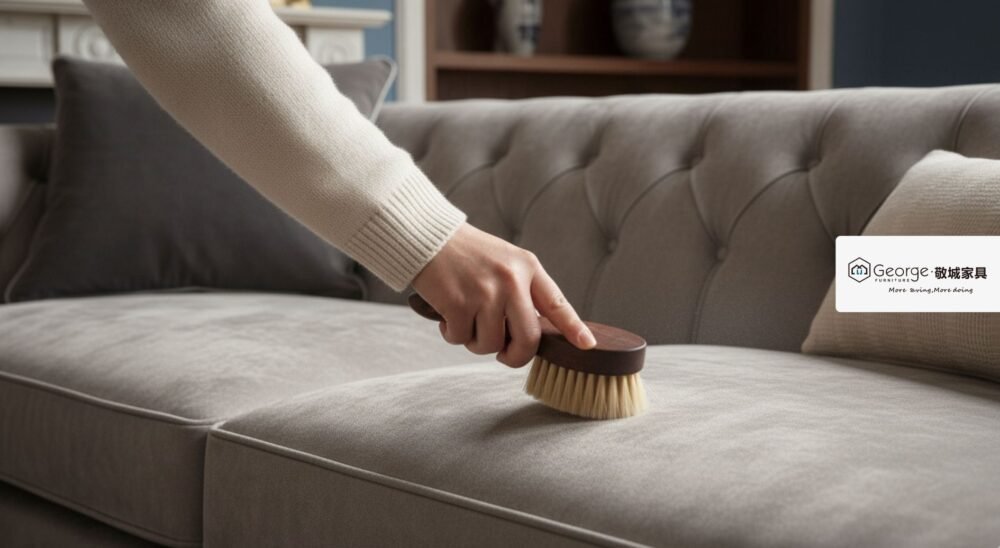
Start with dry maintenance. Brush regularly using a soft-bristle suede brush. This lifts the nap and removes surface dust before it settles deep into the fibers.
Many homeowners make the mistake of treating suede like standard fabric. That usually leads to damage. The same caution applies to synthetic alternatives. Microsuede is more durable than natural suede, but it still requires careful handling to avoid flattening its signature “peachy” texture.
Choosing the right cleaning method is often the difference between a sofa that lasts decades and one that deteriorates after a few improper cleanings.
Specific Techniques: How to Remove Stains from a Leather or Suede Sofa
Everyday life puts our furniture to the test. Whether it’s an afternoon relaxing with children or a moment of distraction, stains are always lurking. Here’s how to tackle common situations with a DIY sofa stain removal strategy.
How to Remove Chocolate Stains from the Sofa
Chocolate is tricky due to its fat content, making it one of the most common greasy stains. The key is to wait until the chocolate hardens completely (speed it up with an ice cube in a plastic bag). Once solid, gently scrape off the bulk with a spatula. Then blot with a cloth dampened in a water and mild soap solution—one of the best DIY remedies—working from the outside in to avoid spreading the stain.
How to Clean a Microsuede Sofa
Microsuede (or suede microfiber) tolerates water better than genuine suede. For gentle cleaning, use a specific dry foam or a lightly sprayed mix of water and denatured alcohol. Use a soft sponge in circular motions, and once dry, brush the fabric to restore softness.
Always test on a hidden corner first.
How to Remove Urine Stains from the Sofa
With small children or pets, urine stains are common. Timing matters: blot immediately with absorbent paper. Then apply an equal-parts mix of water and white vinegar. Vinegar lifts stains without damaging suede color. Blot repeatedly until gone.
How to Eliminate Urine Odors from the Sofa
To neutralize odors, baking soda is your best ally. After cleaning the stain, sprinkle baking soda generously and let it sit for at least 6–8 hours (overnight is better). Baking soda absorbs odor molecules and helps sanitize. Finally, vacuum thoroughly using the crevice attachment.
How to Remove Red Wine Stains from the Sofa
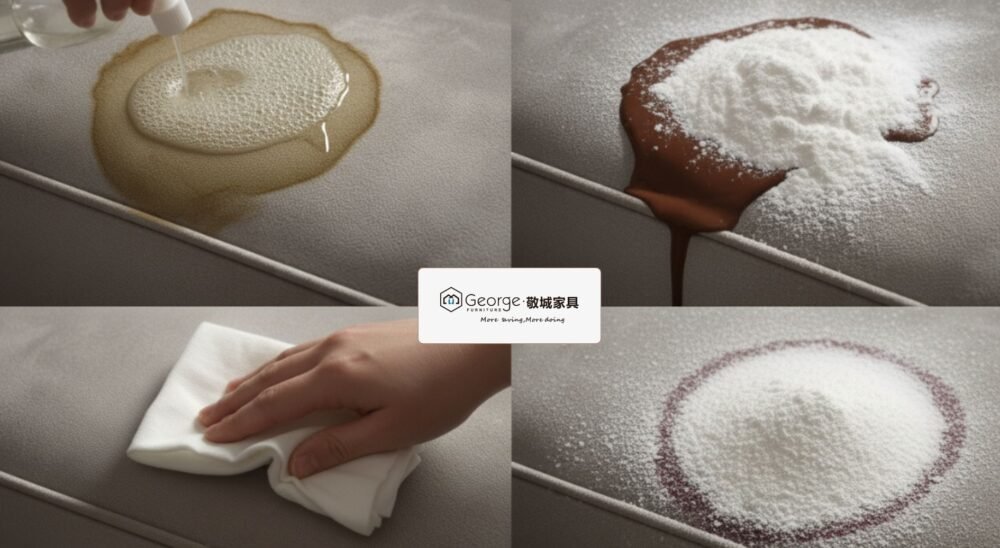
Red wine stains are among the most feared, but with the right approach, they can be managed. If the stain is fresh, blot immediately with absorbent paper without rubbing. Next, cover the area with fine salt or baking soda to absorb residual liquid and prevent halos on the fabric. After about 30 minutes, vacuum up the powder and blot with a cloth slightly dampened with lukewarm water and a few drops of neutral soap.
How to Eliminate Coffee Stains from the Sofa
Coffee often leaves a dark halo due to tannins. To treat it properly, start by blotting the stain with a dry cloth. Then prepare a solution of lukewarm water and white vinegar for natural cleaning, and gently blot the area. Once the stain is gone, wipe with a clean cloth dampened only with water and let it air dry.
How to Remove Grease or Oil Stains from the Sofa
Oily stains penetrate fabrics quickly; therefore, it’s essential to act using natural absorbents. Immediately sprinkle the stain with talcum powder, cornstarch, or baking soda and let it sit for at least an hour. These powders will absorb the grease deeply, helping clean the fabric without damage. Avoid excess water, which could set the stain further.
How to Eliminate Ink Stains from the Sofa
Ink stains from pens or markers are among the hardest to remove. Slightly dampen a cotton ball with denatured or isopropyl alcohol and blot the stain without rubbing. The ink will transfer onto the cotton. Once the stain fades, wipe with a cloth dampened only with water and let it dry naturally.
Can You Wash a Suede Couch? What You Should Never Do
Many people search how to wash a suede couch assuming water is involved. This is where most damage happens.
Can you wash a suede couch with water?
No. Suede should never be washed with water like regular fabric. Water penetrates the fibers and dries unevenly, causing stiffness, dark spots, and permanent marks.
What happens if suede gets wet?
Fibers flatten and harden
Water stains remain visible after drying
Texture becomes uneven
Color may fade or darken permanently
Dos & Don’ts for Washing a Suede Couch
DO
Blot spills immediately
Use dry or low-moisture methods
Test products on hidden areas
Brush after drying
DON’T
Soak the surface
Use steam cleaners
Scrub aggressively
Dry with heat or hairdryers
Following these rules significantly reduces long-term damage risk.
Comparison of Cleaning Methods: Effectiveness and Gentleness
Stain Type | Recommended Method | Difficulty |
Surface dust | Vacuum cleaner and soft brush | Low |
Liquids (water, soft drinks) | Immediate blotting and natural drying | Medium |
Fats and oils | Cornstarch or talcum powder (to absorb) | High |
Organic stains | White vinegar or enzymatic detergents | High |
FAQ
Q1. Can I Use Steam on Suede Leather?
Direct steam is not recommended, as high heat and moisture can shrink the leather or permanently alter its texture. It’s better to opt for dry cleaning methods or low-moisture foam cleaners.
Q2. How Often Should I Brush the Sofa?
To keep the fibers lifted and prevent dust buildup, which acts as an abrasive, weekly brushing is ideal. This simple routine significantly prolongs the aesthetic life of the suede.
Q3. What Should I Do If the Sofa Looks Faded After Cleaning?
Often, the color isn’t faded; the fibers are just flattened. Use a suede brush or a special rubber sponge to lift the nap, and you’ll see the color regain its original depth.
Conclusion: Consistency Is the Best Cleaner
Knowing how to wash a suede couch doesn’t mean using water. It means understanding limits. Gentle methods. Fast reactions. Consistent care.
If you’ve ever panicked after spilling wine on a suede couch, remember this: most damage comes from overcleaning, not stains themselves. Regular brushing, dry absorption, and patience preserve suede far better than aggressive washing ever could.
Investing in high-quality construction and fabrics, like those found in well-crafted sofas, also plays a role in long-term durability. With the right habits, suede can remain soft, elegant, and resilient for years.