Choosing between custom cabinets vs prefab cabinets involves more than comparing prices. The right choice depends on your design needs, timeline, budget and space requirements. Choosing the wrong option can lead to extra costs, delays, or cabinets that do not fit your space properly.
This guide helps homeowners, designers, contractors and builders understand the key differences between both options. By the end, you will know which cabinet type suits your project and when to choose one over the other.
Quick Answer: Prefab cabinets offer faster installation and lower costs for standard layouts. Custom cabinets cost more but provide better flexibility, fit and design control for unique spaces.
Contact Us for a Project Consultation
Why pay more? At Georg’s Furniture, we cut out the middlemen to bring you premium furniture, flooring, doors, windows,marble and tiles and more—all at prices up to 40% below retail. With 20+ years of experience and 600 consultants, we provide complete, custom project solutions, from initial design to final delivery.
Table of Contents
What Are Prefab Cabinets?
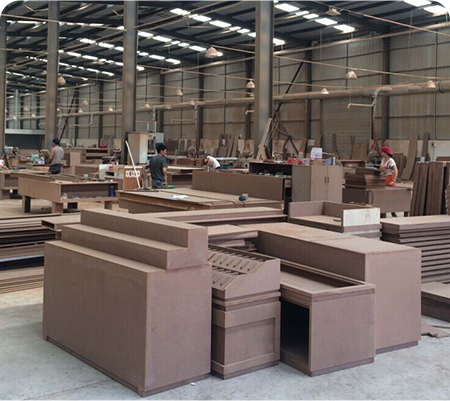
Prefab cabinets are factory-made in standard sizes, styles and finishes, then shipped ready to install. Their common dimensions fit most layouts, reducing both cost and lead time.
They typically come in a few forms:
- Stock cabinets – the most basic tier, limited sizes and finishes, fastest to get
- Semi-custom cabinets – standard boxes with more flexibility on finish, hardware and minor size adjustments
- Ready-to-assemble (RTA) – flat-packed and assembled on-site, often the most budget-friendly option
Prefab cabinets offer ready-made designs, which work well for standard kitchens and bathrooms but may have limits in irregular spaces. Our Foshan showroom features Shaker, slab, and beadboard-style options for clients who need faster turnaround without a full custom process.
Custom Cabinets vs Prefab: Key Differences
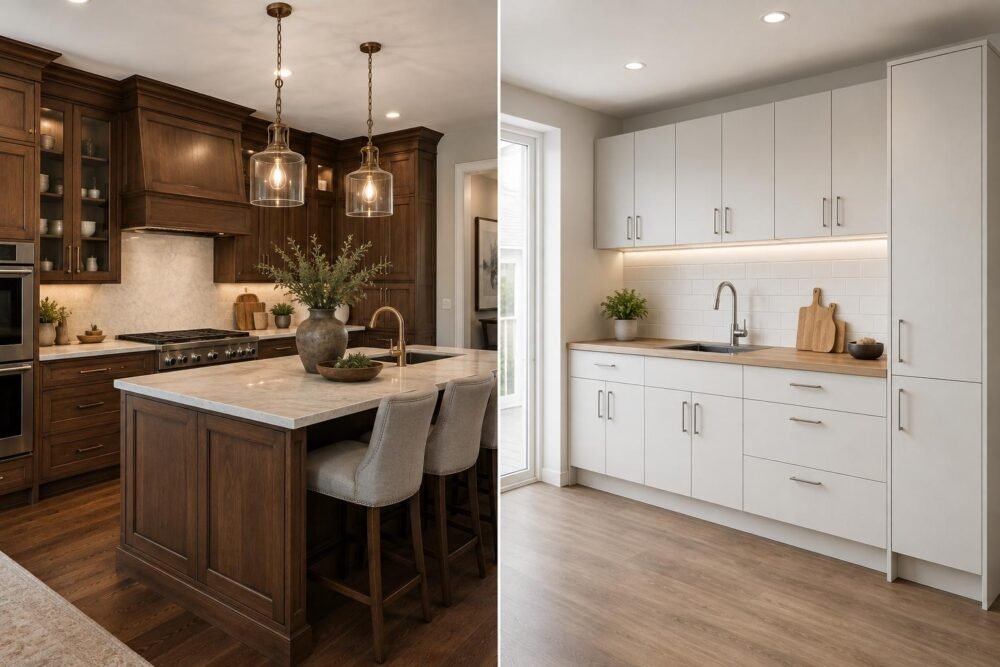
Beyond price, custom and prefab cabinets differ in how much control you have over design, materials and long-term performance. Here is a side-by-side look.
| Factor | Prefab Cabinets | Custom Cabinets |
| Lead time | 1–4 weeks | 6–12 weeks |
| Design flexibility | Limited to standard sizes and finishes | Fully customizable to your layout |
| Material quality control | Consistent, factory standard | Can be matched to project needs |
| Lifespan | Around 10 to 15 years | Often 20 years or more with proper care |
| Best for | Standard layouts, tight budgets, fast timelines | Irregular layouts, specific design needs |
Contact Us for a Project Consultation
Why pay more? At Georg’s Furniture, we cut out the middlemen to bring you premium furniture, flooring, doors, windows,marble and tiles and more—all at prices up to 40% below retail. With 20+ years of experience and 600 consultants, we provide complete, custom project solutions, from initial design to final delivery.
Choose prefab for standard spaces and quick projects, or custom cabinetry solutions for unique designs requiring greater control. A single supplier simplifies projects needing both options — George’s Furniture One-Stop Solution provides one contact for prefab, custom, or combined cabinet needs.
How Much Do Custom Cabinets Cost vs Prefab?
Price is usually the first question people ask, and it is also where most people get confused. The real answer depends on the material you pick and the type of project you are doing.
Cost by Material (per linear ft)
| Material | Prefab Cost | Custom Cost |
| MDF | $70 to $150 | $300 to $400 |
| Plywood | $100 to $250 | $400 to $700 |
| Solid wood | $200 to $400 | $500 to $1,200 |
MDF is the cheapest option and works fine for most homes. Plywood costs more but holds up better in kitchens and bathrooms where moisture is an issue. Solid wood costs the most, but it lasts the longest and looks the best.
Cost by Project Type
| Project Type | Prefab Cost Range | Custom Cost Range |
| Residential (average kitchen) | $3,000 to $12,000 | $12,000 to $30,000 |
| Commercial / Hotel | $15,000 to $50,000+ | $40,000 to $150,000+ |
Commercial and hotel projects cost more because they use more units, need to meet stricter durability standards and often involve tighter deadlines.
What actually drives the price, no matter which option you choose:
- Materials – the type and quality of wood, finishes and construction materials used
- Hardware – hinges, handles, drawer systems and other fittings
- Installation complexity – difficult designs or installations increase labor costs
- International logistics – shipping, transportation and import costs for cross-border projects
Real Project Example: On a Middle East villa project, custom cabinetry cost 30% more than prefab, but durable materials and climate-ready hardware reduced long-term repairs. Higher upfront costs can pay off through better performance and lower maintenance. For project-specific estimates, explore our interior design pricing guide based on space and materials.
Prefab Kitchen Cabinets vs Custom Kitchen Cabinets
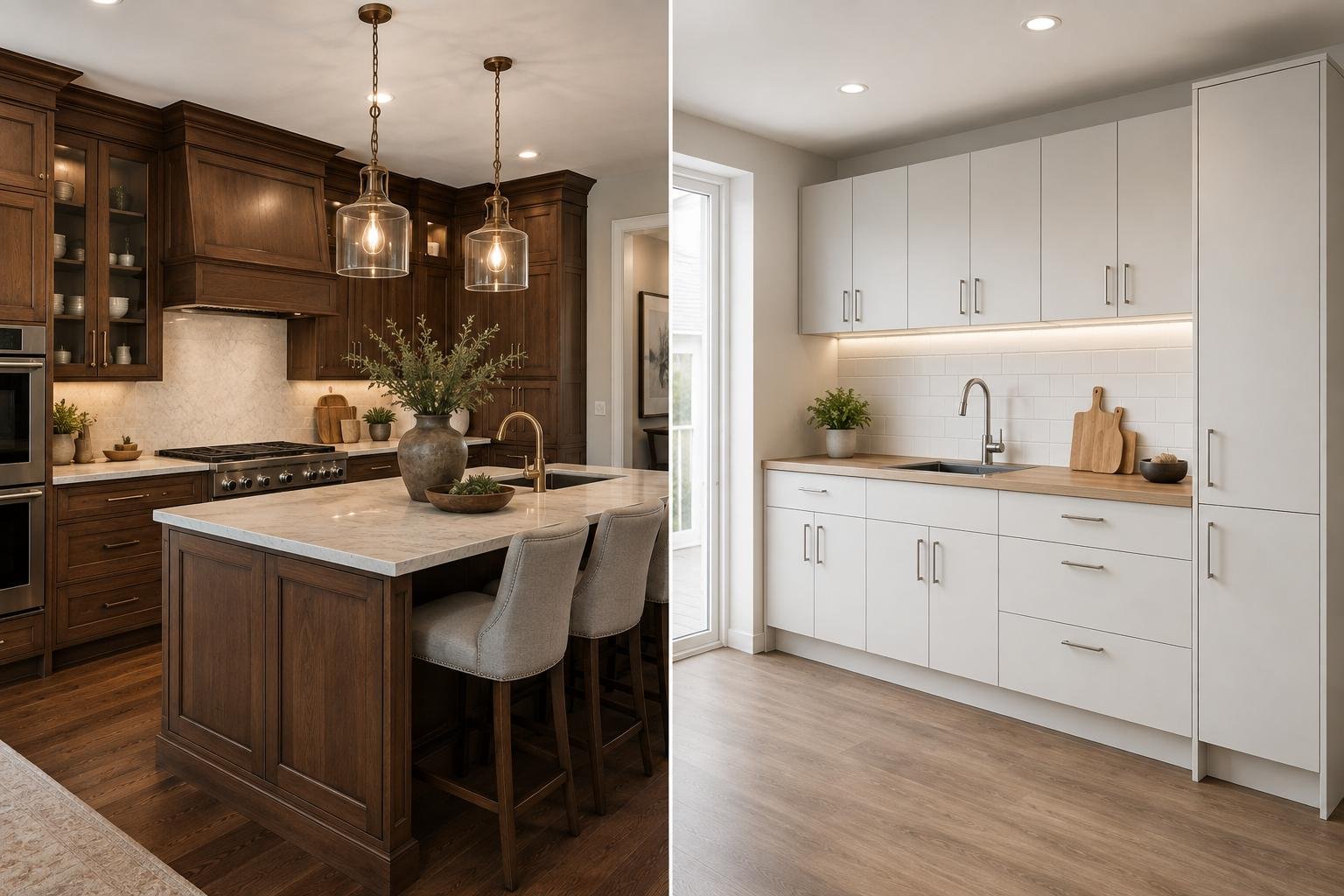
Prefab kitchen cabinets are commonly available in Shaker style, featuring simple framed panels that suit modern to farmhouse designs and are easy to mass produce. Slab and beadboard options also exist, but Shaker remains the most versatile choice.
A custom kitchen becomes necessary when:
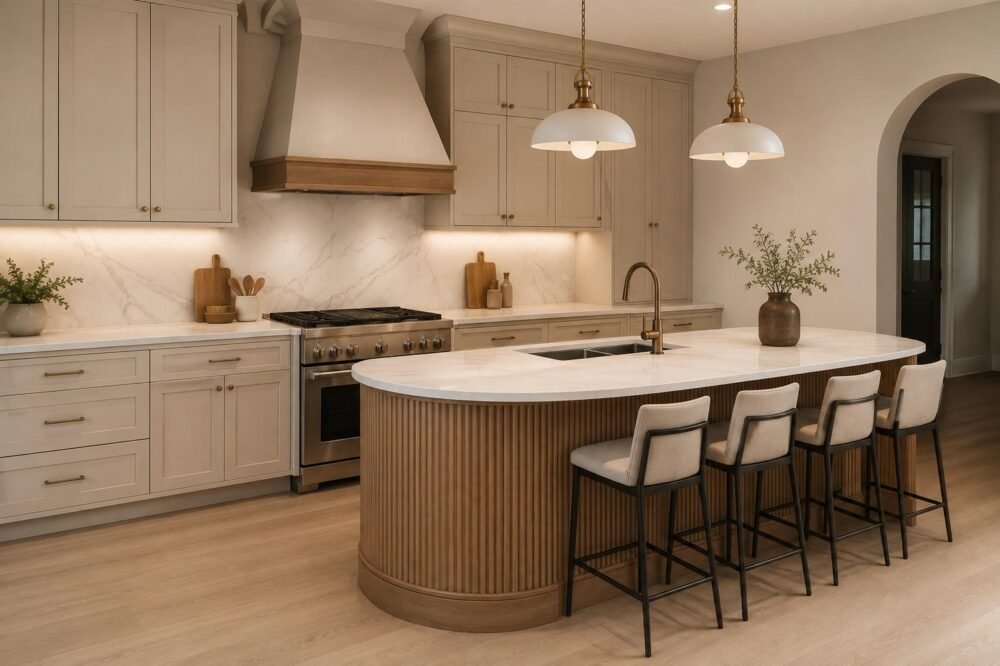
- Irregular islands – curved, angled, or waterfall-edge islands require cabinets built to exact shapes
- Non-standard dimensions – low ceilings, narrow walls, or awkward openings need a custom fit
- Commercial kitchens – ventilation systems, exhaust hoods and safety equipment require custom builds
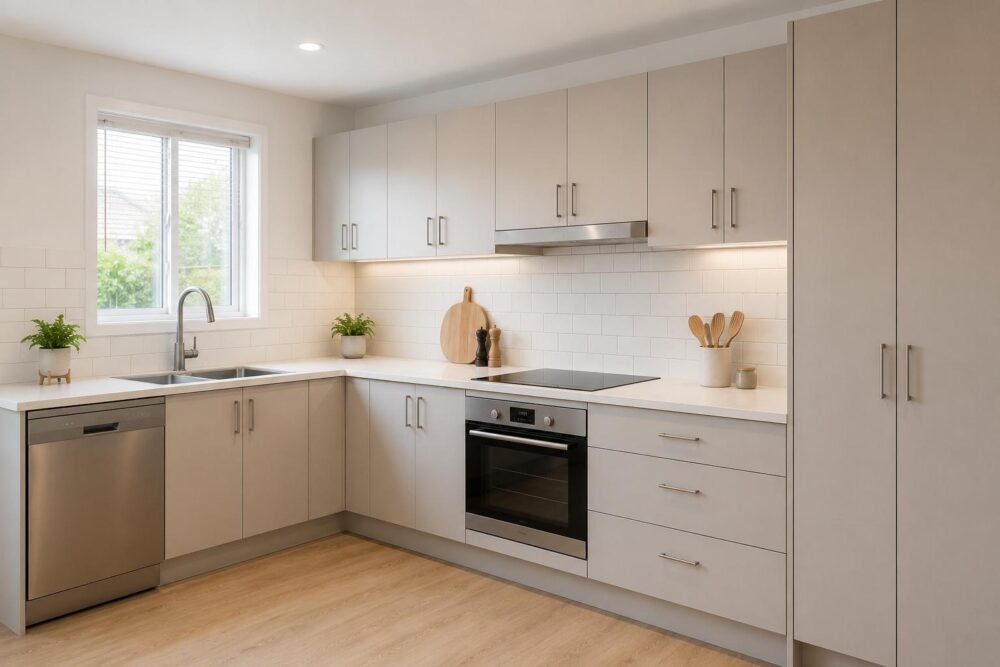
If your kitchen is a standard shape and size, prefab Shaker cabinets are a fast, reliable choice. If your layout has any of the issues above, custom is worth the extra cost and time.
Beyond the Kitchen: Prefab vs Custom for Other Rooms
Custom Laundry Room Cabinets
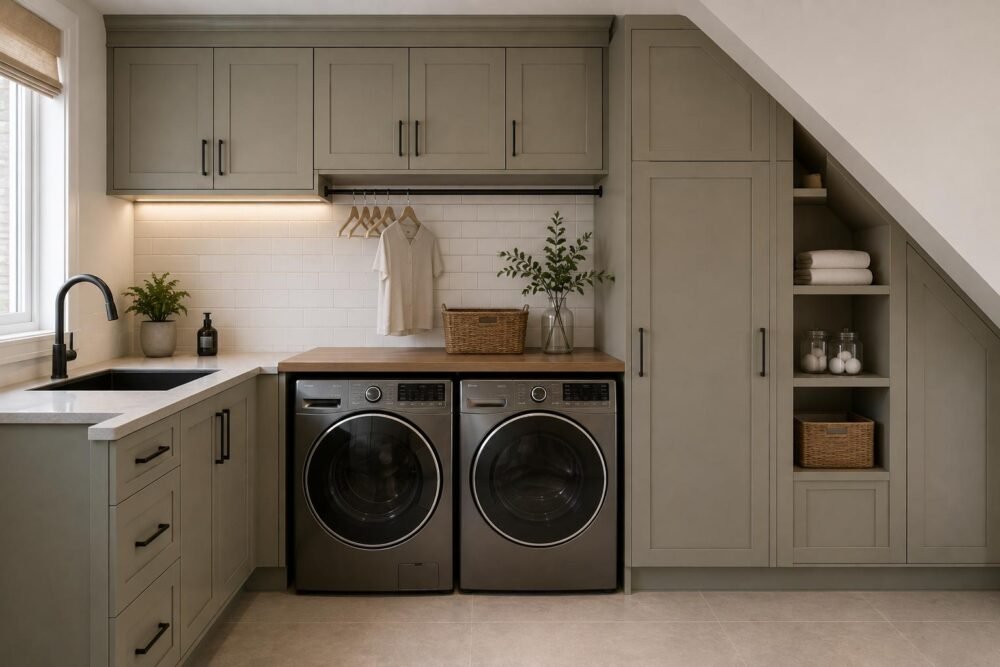
Laundry rooms are often small, irregular, or placed in tight spaces, making standard cabinet sizes difficult to fit. Custom cabinetry works better by adapting to the exact layout and functional needs.
- Irregular spaces – narrow laundry rooms, low ceilings, or areas near stairs often need custom cabinets to avoid gaps
- Appliance fitting – custom cabinets can be built around washers and dryers with the right space for sizes, vents, hoses and outlets
Simple laundry rooms suit prefab cabinets, but unusual layouts or built-in appliances usually need custom solutions.
Prefab Bathroom Cabinets
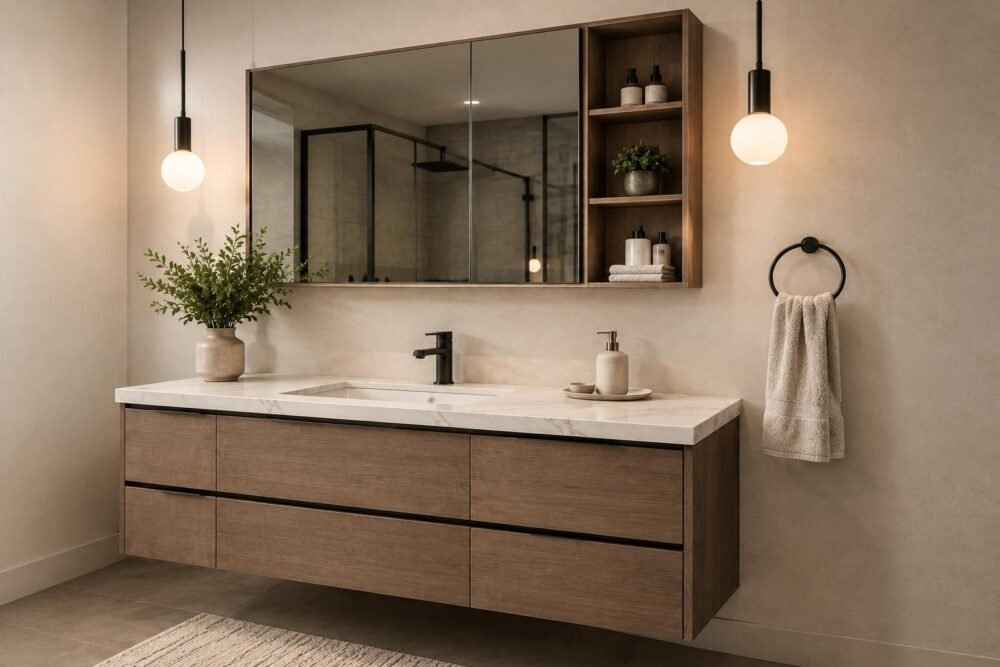
Bathrooms suit prefab cabinets because standard sizes and moisture resistance are key priorities.
Prefab cabinets use materials like sealed MDF or moisture-resistant plywood to handle steam and water. Common vanity and storage sizes also make prefab options easy to find and install quickly.
Custom cabinets are needed for heavy countertops like marble and unusual layouts, such as corner vanities or angled powder rooms, to ensure proper support and space use.
Prefab Outdoor Kitchen Cabinets
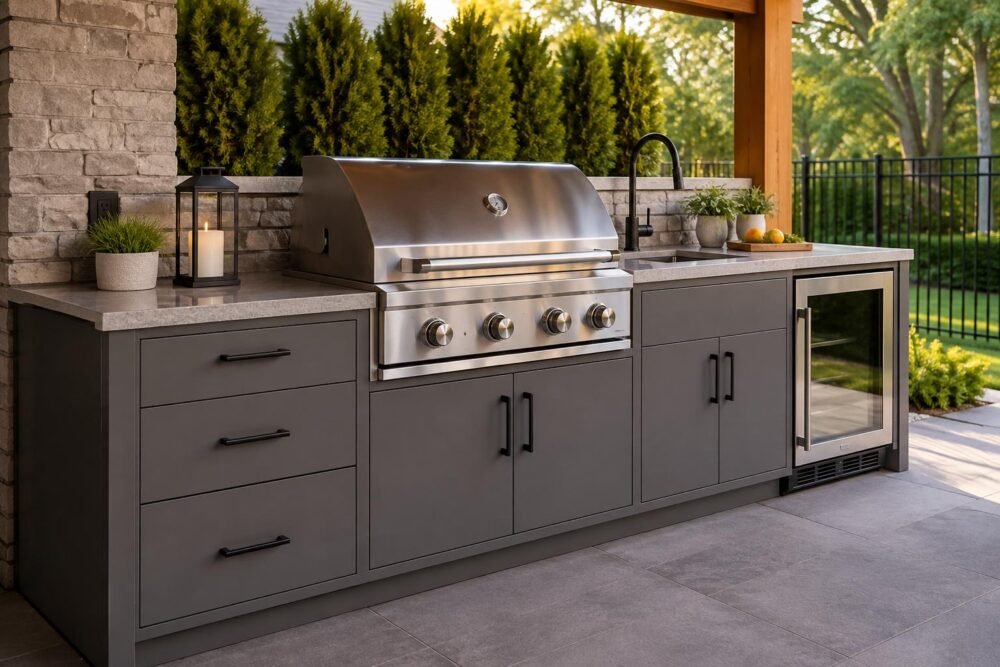
Outdoor kitchens face conditions that indoor cabinets never deal with, so material choice matters even more here. Outdoor cabinets need to handle:
- UV resistance to prevent fading and cracking from sunlight
- Moisture resistance to withstand rain, humidity and damp conditions
- Weatherproof materials like marine-grade polymer or stainless steel for durability
Prefab outdoor cabinets have limits because MDF and standard plywood cannot handle weather exposure. Limited sizes and finishes often make weatherproof custom materials the better choice.
Pros & Cons of Custom Cabinets vs Prefab
Here is an honest look at both sides, no sugarcoating.
Prefab Cabinets
| Pros | Cons |
| Faster to get and install | Limited design choices |
| Lower cost | May not fit odd-shaped rooms |
| Easy to find replacement parts | Lower resale value in high-end homes |
| Consistent quality across units | Can feel generic or less unique |
| Good for tight budgets and quick projects | Harder to match with existing decor |
Custom Cabinets
| Pros | Cons |
| Built to your exact space and design | Higher cost |
| Solves problems standard sizes cannot | Longer wait time |
| Better long-term durability | Requires more planning and decisions |
| Higher resale value in most cases | Mistakes are harder and costlier to fix |
| Full control over material and hardware | Not practical for tight deadlines |
Neither side wins overall. Prefab wins on speed and budget. Custom wins on fit and long-term value. The right choice depends on what your project needs most.
Best Use Cases: When Each Option Makes Sense
- Villas – custom cabinets suit spacious homes with unique kitchens, islands, and built-in storage that match the overall design
- Apartments – prefab works well for standard layouts and tighter budgets, while custom fits unusual or luxury units
- Hotels – prefab works for standard guest rooms, while custom adds impact in lobbies, restaurants, and signature suites
- Offices – prefab handles most functional storage needs, while custom suits reception areas and brand-focused spaces
When Custom (or Prefab) Is a Bad Choice
The decision often comes down to three things: budget, timeline and layout.
If your budget is tight, your timeline is short and your layout is standard, prefab is the better choice. Forcing a custom build under those conditions usually leads to rushed decisions, added stress and cost overruns.
If your layout is irregular, your design has specific requirements, or the space needs to last for years without issue, custom is the more suitable option. Choosing prefab in these cases often means settling for a worse fit just to save time or money upfront.
Common Mistakes When Choosing Between Custom and Prefab Cabinets
After years of working on cabinet projects, these are the mistakes we see most often.
- Comparing only the unit price. Cabinet costs go beyond unit prices — hardware and installation can significantly increase your final project budget if overlooked.
- Choosing the wrong materials for humid climates. High-humidity regions like the Middle East and Southeast Asia require suitable materials. Poor choices can cause swelling, deformation and misaligned cabinet doors over time.
- Overlooking cross-border procurement lead time. International projects require planning for shipping, customs and production times. Poor planning can delay not only cabinet installation but the entire construction schedule.
- Skipping proper measurements before ordering. Ordering cabinets without exact measurements can cause poor fit, costly rework and wasted materials.
What We Consider Before Recommending Custom or Prefab

We recommend custom or prefab cabinets based on your project needs, not just budget. With 20 years of experience and a 30,000 m² Foshan showroom, George’s Furniture helps clients select the right materials.
Our global project experience helps us understand climate, regulations and design needs. Through our one-stop procurement process, we simplify sourcing and coordination, as shown in a Saudi Arabia hotel project combining prefab and custom solutions.
If you are exploring options for your own project, our China kitchen design page shows examples of both prefab and custom work we have completed for clients around the world.
FAQs
Are prefab cabinets cheaper than custom?
Yes, prefab cabinets are usually cheaper because standard factory sizes reduce material and labor costs. Custom cabinets cost more because they are built to your exact space and design.
What is the real cost difference between custom cabinetry and prefabricated cabinetry?
On average, custom cabinetry costs 2 to 4 times more than prefabricated cabinetry per linear foot, depending on material. The gap narrows on large commercial orders, where prefab production efficiencies matter less than fit and durability requirements.
What are the different storage options for custom kitchens?
Custom kitchens offer features like pull-out drawers, spice racks, corner storage, hidden bins and dividers. Since they are built to order, storage can match your specific needs.
How do you maintain and clean prefab cabinets?
Clean cabinets with a soft cloth and mild soap, avoiding harsh chemicals or abrasives. Keep MDF cabinets dry, as they are more moisture-sensitive than plywood or solid wood.
Is prefab Shaker style good quality?
Yes, Shaker cabinets can be durable with quality materials. Their lifespan depends more on the core material, such as plywood or MDF, than the style itself.
Do custom cabinets last longer than prefab?
Custom cabinets often last longer due to better materials and construction. Prefab cabinets can also be durable but may wear faster in high-use areas.
Can you mix custom and prefab cabinets in the same project?
Yes. Many projects use prefab for standard rooms and custom for feature areas like kitchen islands or hotel lobbies. Working with one supplier for both keeps materials and finishes consistent.
Conclusion
Choosing between custom cabinets vs prefab depends on your budget, timeline and space. Prefab is best for standard layouts, quick installation and lower costs. Custom is better for unique spaces and specific designs.
If your project is still in the planning stage, the safest next step is to get your layout reviewed before ordering either option — a wrong call here is expensive to undo. George’s Furniture works with homeowners, designers and builders on both custom and prefab cabinetry, sourced and coordinated through a single showroom in Foshan. Get a project consultation or explore our china kitchen design page to see completed examples before you decide.