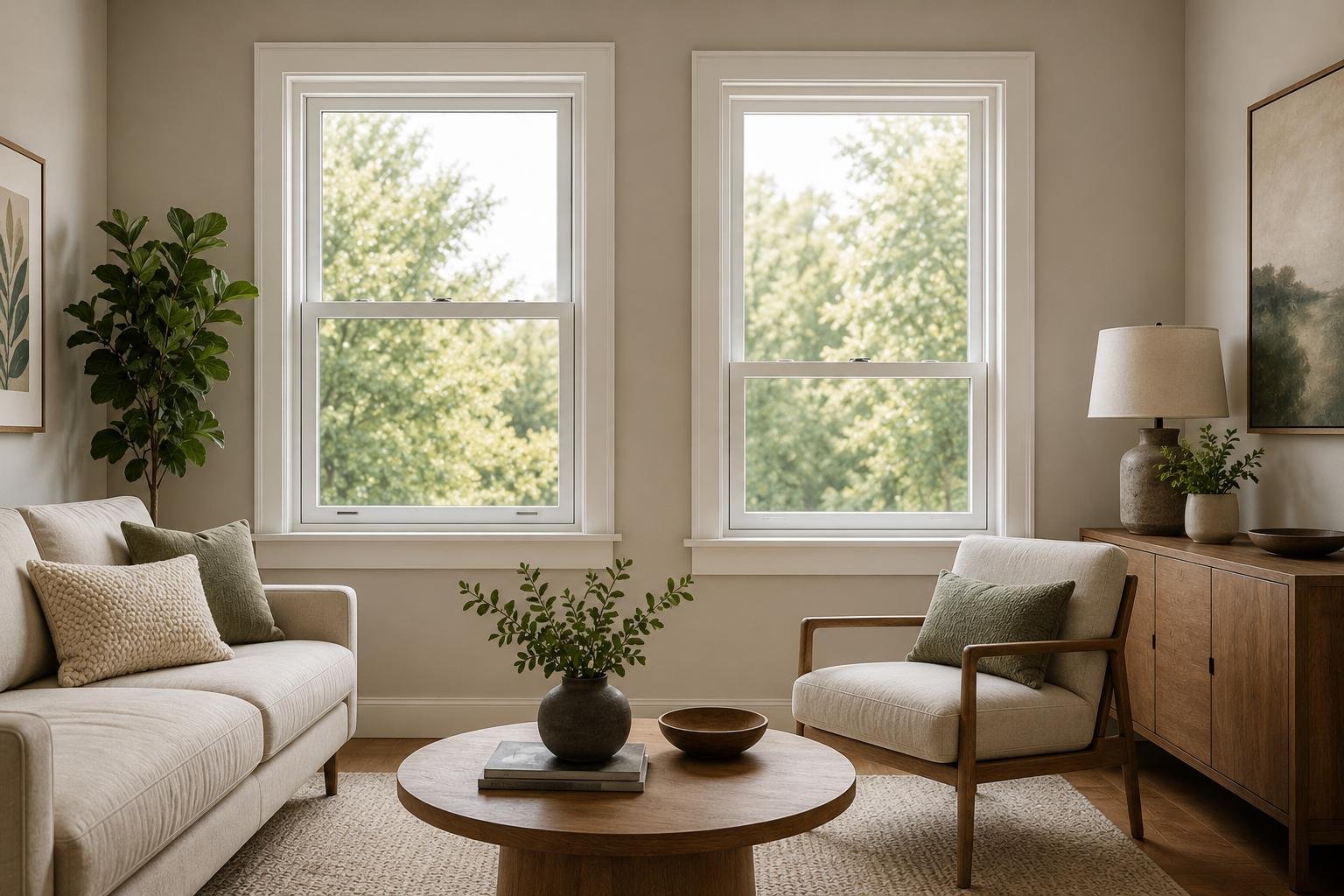
Choosing the wrong window type doesn’t just cost you upfront — it can cost you again every year in cleaning, maintenance, and repair calls. Single-hung and double-hung windows look similar from the street, but they behave very differently once you own them, especially past the ground floor.
This guide breaks down the real differences in cost, airflow, and upkeep based on actual project experience, so contractors, property managers, and homeowners can pick the right one the first time.
Quick Answer:
Single-hung windows cost less upfront and work well on ground floors or budget projects. Double-hung windows cost more but pay off on upper floors, where easy inside cleaning and better airflow matter more than the extra hardware.
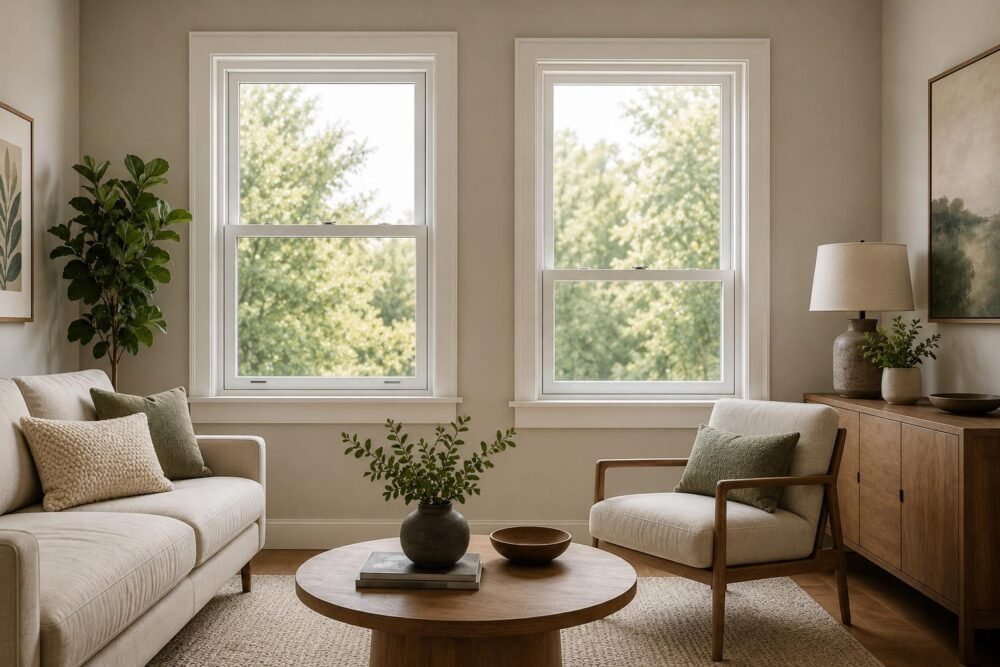
Single-Hung vs Double-Hung Windows: Quick Comparison
Before we know any further information, here is the side-by-side comparison between the two window types. We can use this table to know the differences fast.
| Feature | Single-hung | Double-hung |
| Cost | Lower upfront cost | Higher upfront cost |
| Cleaning | Bottom sash cleans inside, top sash needs outside access | Both sashes tilt in for easy cleaning |
| Ventilation | Airflow from the bottom only | Airflow from top and bottom, better air movement |
| Maintenance | Less to maintain, fewer moving parts | More parts need occasional care |
| Installation | Faster install | Slightly more complex, takes a bit longer |
| Energy Efficiency | Good seal, since top sash is fixed | Good seal too, if hardware is well maintained |
| Lifespan | Long-lasting, fewer parts to wear out | Long-lasting, but hardware may need replacing over time |
| Best For | Ground floors, budget projects | Upper floors, homes that need better airflow and easy cleaning |
Contact Us for a Project Consultation
Why pay more? At Georg’s Furniture, we cut out the middlemen to bring you premium furniture, flooring, doors, windows,marble and tiles and more—all at prices up to 40% below retail. With 20+ years of experience and 600 consultants, we provide complete, custom project solutions, from initial design to final delivery.
What is a Single-Hung Window?
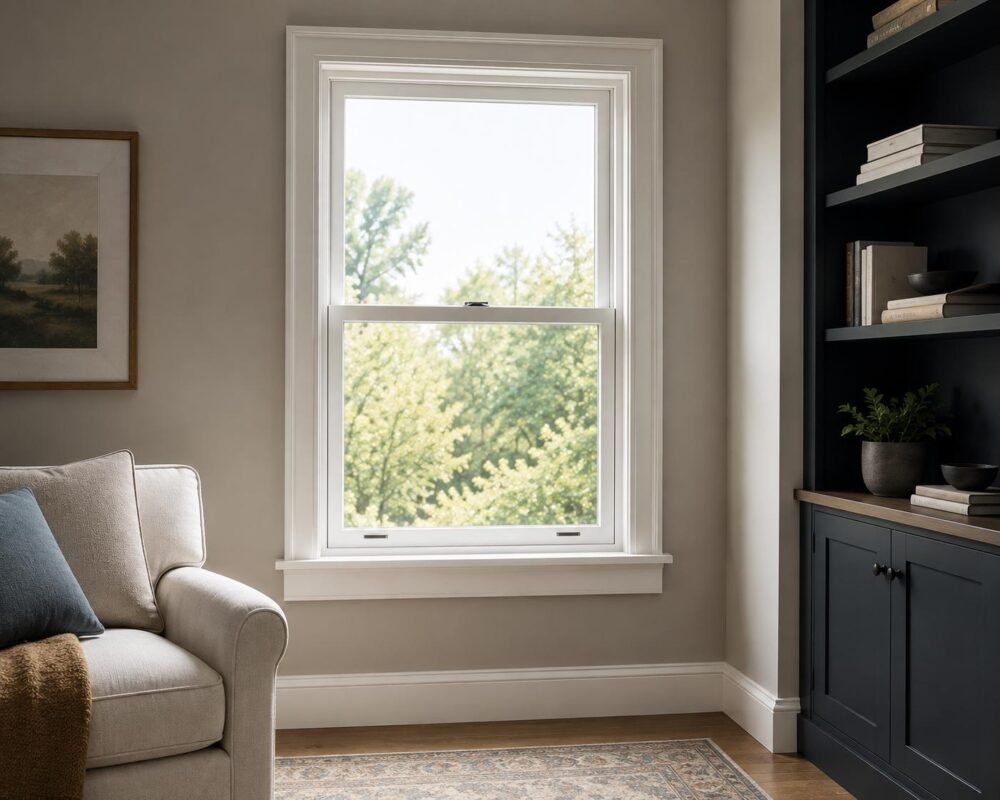
A single-hung window has two sashes, but only the bottom one moves — the top sash stays fixed in place. That simpler design means fewer moving parts, which is exactly why single-hung windows cost less.
The trade-off is airflow and cleaning. Since only the bottom sash opens, air can only move in from below, and the fixed top sash has to be cleaned from outside.
Single-hung windows tend to make the most sense for budget-friendly homes, Craftsman-style houses, and rental properties, where keeping costs down matters more than airflow or easy top-sash access.
What is a Double-Hung Window?
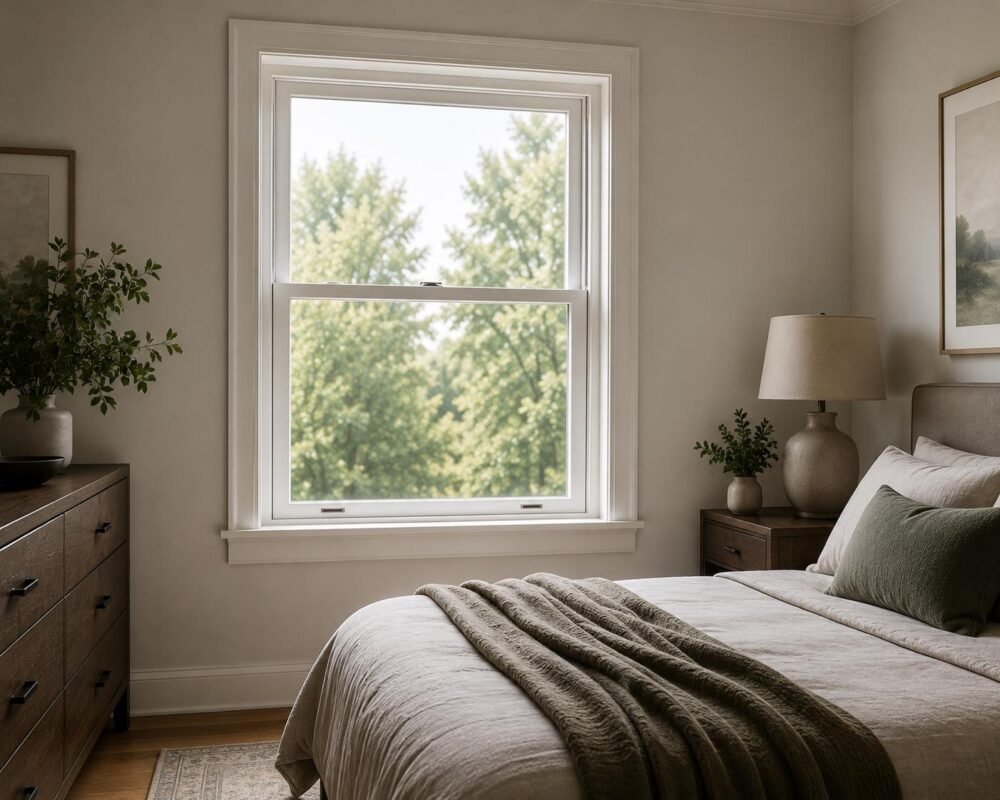
A double-hung window has two sashes that both move, so you can open the window from the top, the bottom, or both at once. That improves airflow, and it also means both sashes can be cleaned from inside — even on upper floors.
Many homeowners choose double-hung windows specifically to solve the upper-floor cleaning problem, and because the style fits everything from Colonial to modern homes. For anyone who spends a lot of time at home, better airflow tends to outweigh the extra cost.
Contact Us for a Project Consultation
Why pay more? At Georg’s Furniture, we cut out the middlemen to bring you premium furniture, flooring, doors, windows,marble and tiles and more—all at prices up to 40% below retail. With 20+ years of experience and 600 consultants, we provide complete, custom project solutions, from initial design to final delivery.
Cost Comparison:
Comparing sticker price alone doesn’t tell the full story. Here’s where the cost actually shows up over time.
| Cost Factor | Single-hung | Double-hung |
| Window Price | Lower | Higher |
| Maintenance | Lower, fewer parts | Lower, fewer parts |
| Replacement | Lower, one sash | Higher, two sashes |
| Long-Term Cost (upper floors) | Higher, due to cleaning access | Lower, easier self-cleaning |
- Window price varies by material, size, and region, but single-hung windows are generally cheaper simply because they have fewer moving parts.
- Installation costs are close for both, though double-hung windows can take slightly more labor.
- Maintenance is lighter on single-hung windows; double-hung hardware needs occasional adjustment.
- Replacement costs run higher for double-hung windows since both sashes are subject to wear.
- Long-term cost is where the story flips: single-hung windows on upper floors often need professional cleaning, which adds up. Double-hung windows cost more at purchase but usually save money over time through easy DIY cleaning.
What We’ve Learned From Residential Window Projects
Over 20 years, we’ve found that window satisfaction has less to do with price and more to do with how easy the window is to live with — cleaning, maintenance, airflow, and where it’s installed.
The right window for a space depends on the available layout, the climate, and how the property is used. On a luxury villa project in Qatar, for example, the client needed custom windows built around the local climate and the home’s design — proof that there’s no single “correct” window type across every project.
That’s why floor level, climate, and daily use should shape the decision before price does.
Ventilation: Which Window Performs Better?
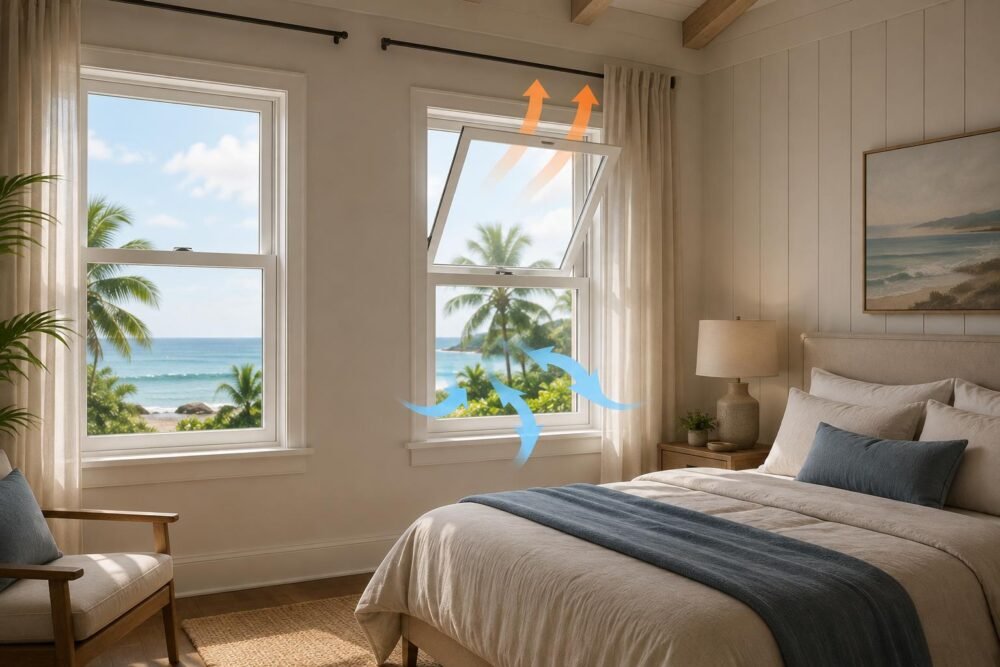
Double-hung windows generally win on airflow, since both sashes can open. Cool air enters from the bottom while warm air escapes through the top, creating steady circulation. Single-hung windows only open at the bottom, which limits airflow.
On a coastal villa project, we recommended double-hung windows for the upper-floor bedrooms specifically because summer heat needed somewhere to escape — something single-hung windows couldn’t manage on their own.
If airflow is a priority, particularly in humid climates, double-hung is the stronger choice.
Cleaning & Maintenance: Which Is Actually Easier?
This is where the two window types diverge the most, especially above the ground floor.
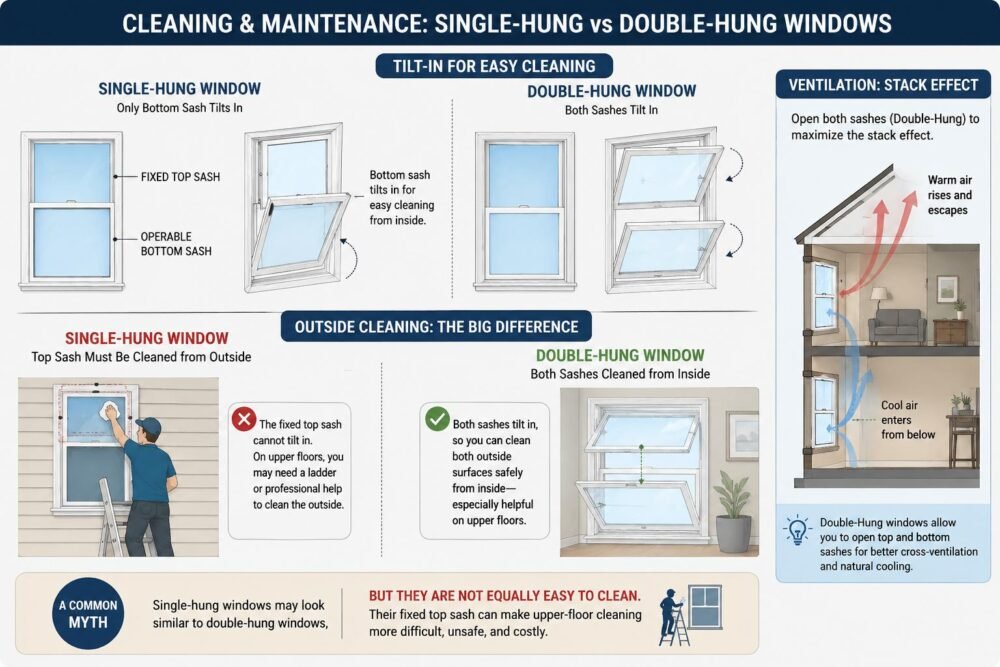
Both window types can have tilt-in sashes, but double-hung windows tilt in on both the top and bottom, while single-hung windows only tilt in at the bottom. That means the fixed top sash on a single-hung window can only be reached from the outside — a ladder for a second story, or a professional crew for anything higher.
Double-hung windows solve that problem entirely: both sashes tilt inward, so the whole window can be cleaned from inside the house, on any floor.
It’s a common misconception that both window types are equally easy to maintain because they look nearly identical from the outside. In practice, the fixed top sash on single-hung windows is exactly where upper-floor cleaning costs start to add up.
A Common Mistake We Often See
A family chose single-hung windows to save money on a two-story home, then ended up paying for professional cleaning twice a year because the fixed top sashes were out of reach. We’ve seen the same pattern in apartment renovations, where third- and fourth-floor units needed specialized equipment just to clean the exterior.
Before choosing a window type, it’s worth asking one simple question: who is going to clean this, and how are they going to reach it?
Energy Efficiency: Is There a Difference?
Window style matters less for energy efficiency than material and seal quality do.
- Material: Vinyl offers good insulation, is budget-friendly, and resists moisture. Fiberglass holds up better in extreme temperatures. Wood provides natural insulation but needs more upkeep in humid climates to prevent warping.
- U-factor: This measures how well a window holds in heat — the lower the number, the better the insulation. U-factor varies by manufacturer and glass type, so it’s worth asking your supplier for the specific value and comparing it against the typical range for your climate.
- Across climates: Material choice should follow the climate, not the other way around. Hot, cold, and humid regions each place different demands on seals and hardware.
Pros & Cons of Single-Hung vs. Double-Hung Windows
Single-Hung Windows
Pros:
- Lower upfront cost
- Fewer moving parts, so less can go wrong
- Simple installation
- Good fit for ground-floor rooms
Cons:
- Top sash does not open, so airflow is limited
- Top sash cannot be cleaned from inside
- Harder and costlier to maintain on upper floors
Double-Hung Windows
Pros:
- Both sashes open, giving better airflow
- Both sashes tilt in for easy cleaning
- Better fit for upper floors
- Works well in humid or warm climates
Cons:
- Higher upfront cost
- More hardware, which means more parts to maintain
- Slightly longer installation time
Popular Home & Building Styles for Each Window Type
Single-hung windows show up most often in rental units and budget-focused residential builds. They’re also a natural fit for Craftsman-style and historic homes, where the simpler look matches the traditional design.
Double-hung windows are more common in commercial and hospitality projects — hotels, multi-story apartment buildings — where easy cleaning and airflow matter across dozens or hundreds of units at once.
When Single-Hung or Double-Hung Is the Wrong Choice
Here is when to avoid each window type.
Skip single-hung windows if:
your budget allows for more, your windows sit on upper floors, and cleaning access is difficult. In that case, the lower upfront cost isn’t worth the cleaning headaches down the line.
Skip double-hung windows if:
your budget is tight and the windows are on the ground floor. Paying extra for a tilt-in feature you don’t actually need adds cost without a real benefit.
The right call comes down to matching the window to your budget, floor level, and how easily it can be accessed for cleaning.
Common Mistakes When Choosing Between Single-Hung and Double-Hung Windows
Comparing only by sticker price. A cheaper window can end up costing more over its lifetime once cleaning frequency and repair costs are factored in — especially in high-rise buildings, where single-hung windows are the hardest to reach.
Ignoring climate. Heat, humidity, rain, and cold all affect windows differently. Skipping this step tends to lead to faster wear and higher maintenance costs down the line.
Matching materials to the local climate — not just picking a window style — is what actually improves durability and cuts down on repairs. Our guide to choosing window and door materials by climate covers this in more detail if you’re sourcing for multiple regions.
What We Consider Before Recommending Single-Hung or Double-Hung
Choosing between single-hung and double-hung isn’t really about style. We weigh floor level, cleaning access, local climate, and budget, based on 20 years of hands-on project work across the US, Europe, the Middle East, Russia, Saudi Arabia, and Australia. Dry heat, extreme cold, and humid coastal air all place different demands on seals and hardware, and we factor that into every recommendation — you can see how this plays out across our windows and doors collection.
Our 30,000-square-meter showroom in Foshan also lets us handle windows, doors, building materials, and hardware from a single source. On a 60-unit apartment development in Dubai, that meant we could specify window types by floor — double-hung on the upper levels, single-hung lower down — and source everything in one shipment. If you’re managing a similar multi-unit project, our one-stop building material sourcing service is built for exactly this kind of floor-by-floor specification.
For projects that also need custom interior planning around window placement, our 3D design service can help map out layout and daylight before materials are ordered.
FAQs
Are single-hung windows cheaper than double-hung?
Yes. With fewer moving parts and simpler hardware, single-hung windows typically cost less upfront to buy and install.
Do the double-hung windows roll in on themselves for cleaning?
Yes. Both sashes tilt inward, so the entire window can be cleaned from inside the house — even on upper floors.
Do single-hung windows let in less air than double-hung windows?
Yes. Since only the bottom sash opens on a single-hung window, airflow is more limited compared to a double-hung window, where both sashes can open.
Can single-hung and double-hung windows be used in the same project?
Yes. It’s common to mix them — single-hung on lower floors to save cost, double-hung on upper floors for easier cleaning and airflow.
Which window type is more energy efficient?
Material and seal quality matter more than window style. Both types can perform well if installed correctly with the right materials for the climate.
What’s the better window type for a two-story house?
Double-hung is usually the better fit, since both sashes tilt in for cleaning — which matters more once you’re above the ground floor.
How long do single-hung and double-hung windows last?
With proper maintenance, both types typically last 20–30 years. Double-hung windows have more hardware, so they tend to need more upkeep along the way.
Conclusion
If budget is the priority and the windows are within easy reach, single-hung windows are the more cost-effective choice. If the windows are on an upper floor or airflow matters more, double-hung windows cost more upfront but tend to pay for themselves in easier cleaning and better ventilation. The right call comes down to your budget, floor level, and local climate — not price alone.