Many buildings have high ceilings, but much of that vertical space goes unused. A mezzanine floor helps turn that unused height into functional space without major structural changes. Whether it’s your home, studio, small business, or construction plant, it can benefit you.
That’s why we have come up with this guide. In this guide, we will explore mezzanine floors in detail. From when it works best, to materials, design ideas, cost, and common mistakes to avoid, you will learn all about it. Let’s begin with a quick overview table.
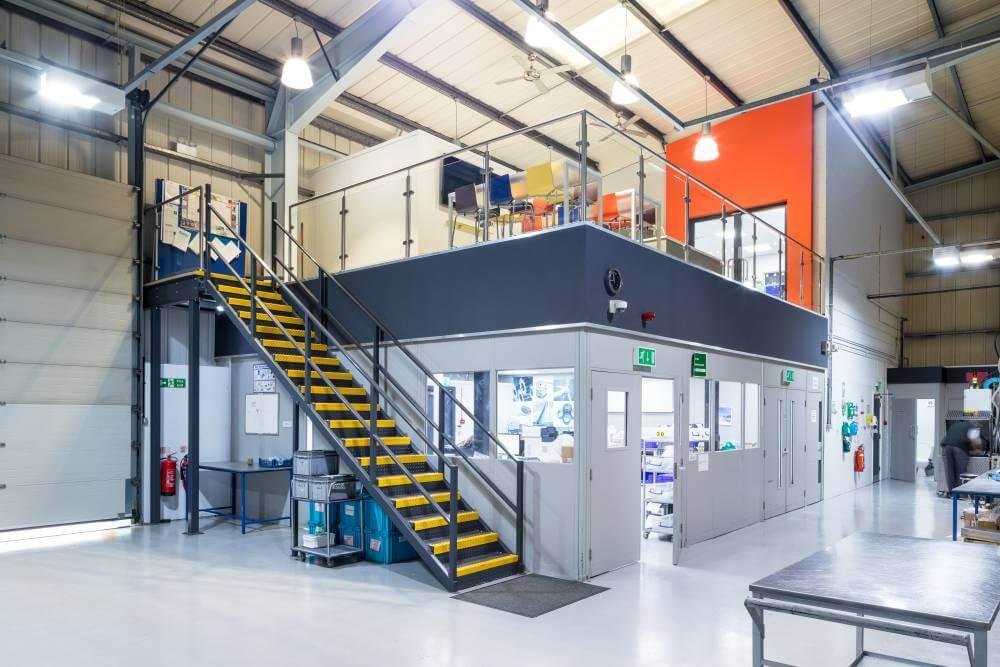
Table of Contents
Quick Overview Table
| Feature | Description |
| What is a Mezzanine Floor | An intermediate floor level built between two main floors to increase usable space |
| Primary Purpose | Maximize vertical space without expanding the building footprint |
| Common Materials Used | Steel, wood, and concrete for different load and design needs |
| Typical Applications | Mezzanine floors in homes, warehouses, retail stores, and industrial buildings |
| Access Options | Staircases, ladders, or alternating tread stairs depending on space |
| Design style | Open mezzanine architecture with views of the lower level |
Introduction to Mezzanine Floor
A mezzanine is a partial floor constructed between two main stories of a building or the floor and heightened ceilings. The name is derived from the Italian word mezza, meaning middle.
From our experience, mezzanine architecture is one of the most practical ways to use vertical space. It is especially effective in multi-level interiors. Many clients initially overlook this option until proper planning shows how much usable area it can create.
You’ll commonly see mezzanines in places such as:
- Warehouses with tall ceilings
- Retail stores that need more display space
- Industrial facilities where workers need access to machinery
- Many contemporary homes incorporate mezzanine-style lofts to create additional living space.
Some homeowners even design a mezzanine house plan, where the mezzanine is used as a bedroom or office space above the main living space.
Key Features
These include:
- Open view to the lower level
- Structural support columns or beams
- Stair access instead of elevators
- Guardrails for safety
- Flexible design depending on the building use
Mezzanine Floors Materials
Different environments will require different mezzanine materials. The choice depends on building requirements, load capacity, and intended use.
Steel Mezzanine
The most widely used in industrial buildings are steel mezzanines. Steel is very strong and can support heavy equipment, storage racks, or production systems.
Another benefit is flexibility. Many steel mezzanines are modular, meaning they can be installed in existing buildings without major structural changes.
Concrete Mezzanine
Concrete mezzanines are typically used when durability and weight capacity are important. They have good characteristics for heavy loading and for minimizing vibration and noise.
Due to their strength, concrete systems are typically used in factories or production plants where machines operate on the surface.
Rack-supported Mezzanine
This mezzanine form uses storage racks as the primary support. The platform is supported directly by the shelving system instead of separate columns. It helps save space and costs. It is also usually prevalent in warehouses that require multi-level storage systems.
At George Living, we usually recommend selecting the mezzanine structure based on load requirements and long-term use rather than just installation cost. The right material choice makes a major difference in durability, safety, and long-term maintenance.
Contact Us for a Project Consultation
Why pay more? At George Living, we cut out the middlemen to bring you premium furniture, flooring, doors, windows,marble and tiles and more—all at prices up to 40% below retail. With 20+ years of experience and 600 consultants, we provide complete, custom project solutions, from initial design to final delivery.
Mezzanine Floor Types Based on Usage
The type of mezzanine floor designs you choose depends on the type of space you are going to use it for, like whether it’s an office, factory, a retail outlet, or something else. Let’s check it out in detail below.
Storage Mezzanine
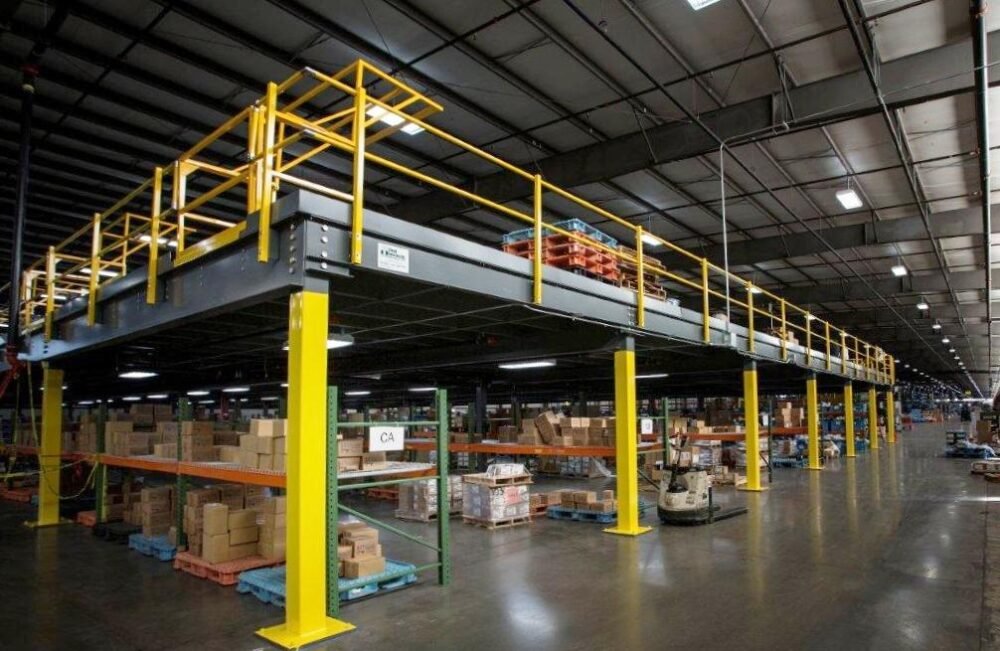
It is among the most widespread applications. These mezzanines are common installations in warehouses to store inventory, supplies, or equipment. Instead of expanding the building footprint, companies build upward to create additional space.
Office Mezzanine
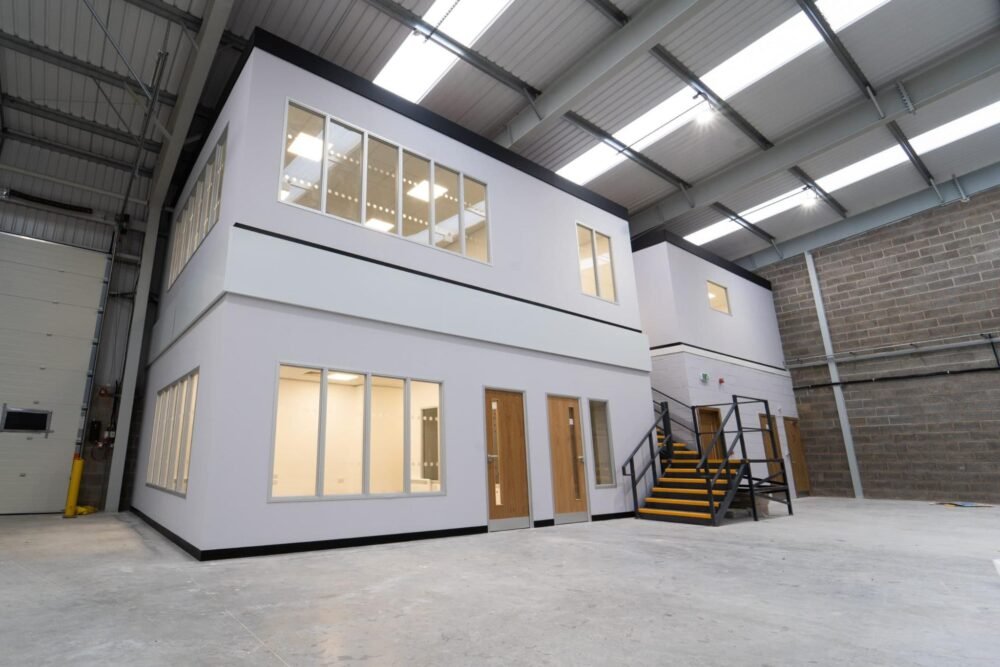
Office mezzanines are normally incorporated in factories and production plants within the same building. The engineers or supervisors will be able to work near the operations and still be isolated from the main production floor.
Retail Mezzanine
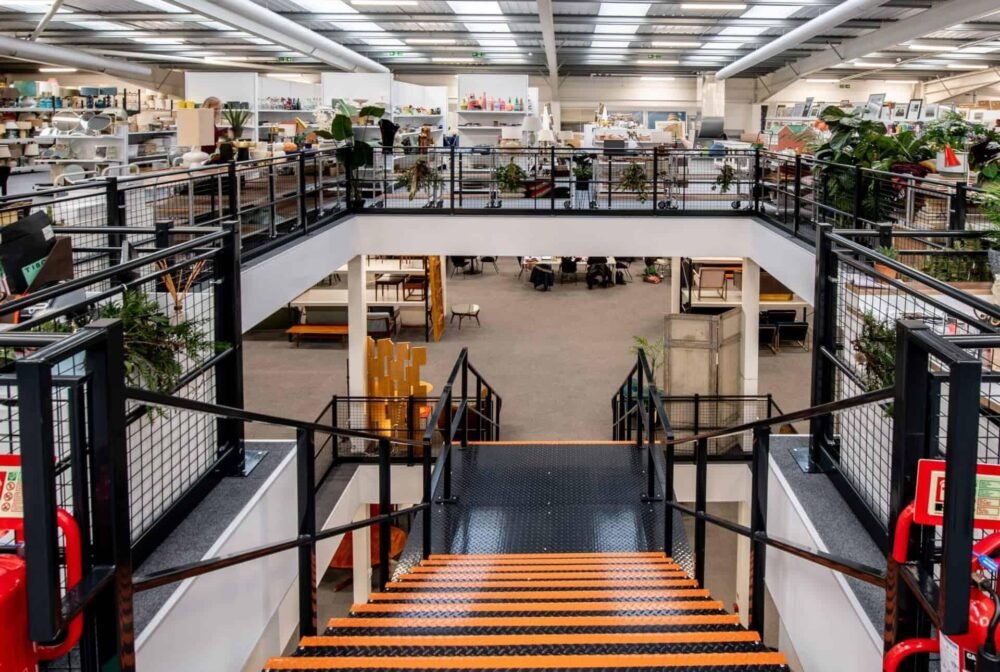
Retail stores often use mezzanine levels for displays, storage, or cramped office space. The design can even be a visual characteristic of the outlets or boutiques to attract customers.
Work Platform Mezzanine
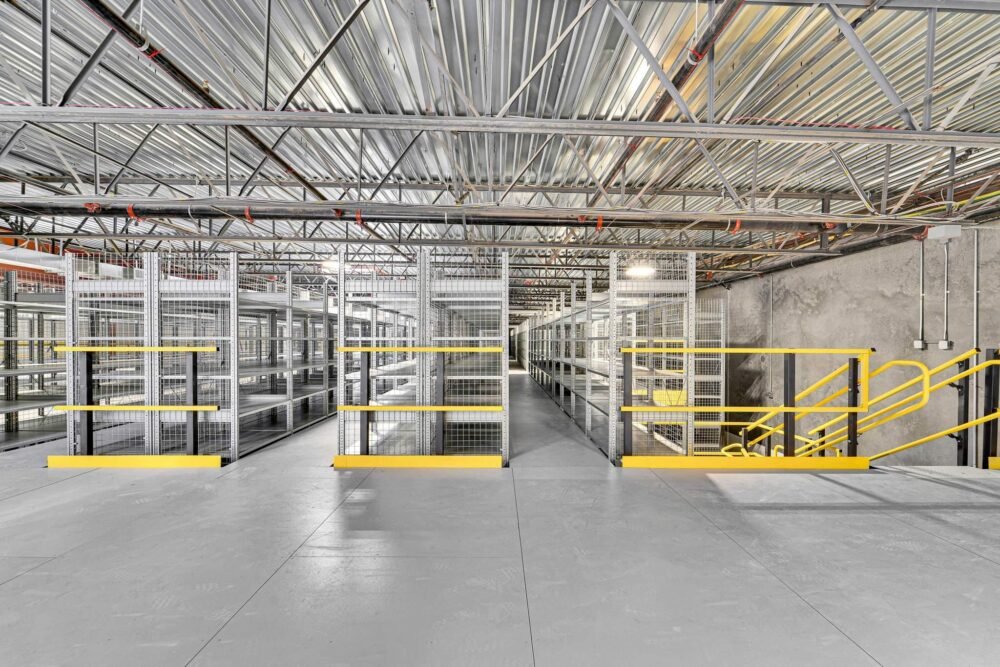
These mezzanines are built to be used in manufacturing plants. These provide easier access to machinery, conveyors, and maintenance areas.
Contact Us for a Project Consultation
Why pay more? At George Living, we cut out the middlemen to bring you premium furniture, flooring, doors, windows,marble and tiles and more—all at prices up to 40% below retail. With 20+ years of experience and 600 consultants, we provide complete, custom project solutions, from initial design to final delivery.
Portable Mezzanine
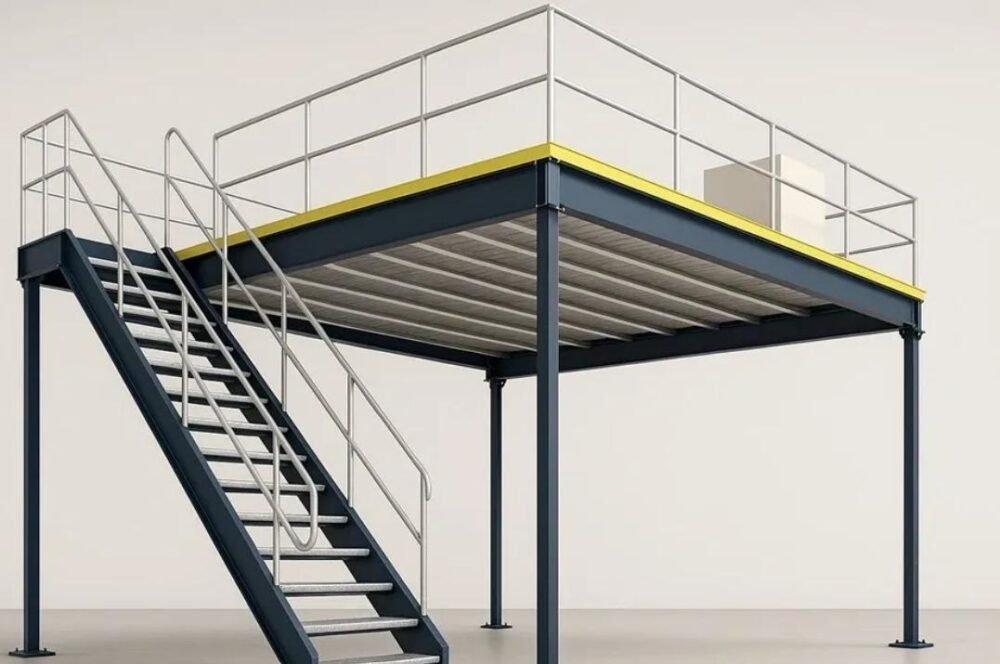
There are smaller movable mezzanines. Such small units can be moved around when storage capacity changes or when firms change venues.
Mezzanine Floor Parts and Structure
Although mezzanines may seem plain, they require multiple structural elements to operate. The platform usually includes:
- Support columns
- Structural beams
- Decking or flooring panels
- Guardrails
- Stair access
Builders select the floor surface based on the required strength. The typical steps leading to construction would include designers starting with an elaborate mezzanine plan that defines structural loads, access, and safety mechanisms.
Common Additions of A Mezzanine Platform
A mezzanine rarely functions alone. Additional components are needed to make the space safe and practical. These additions might include:
- Guardrails and handrails
- Safety gates
- Staircases
- Access ladders
- Protective barriers
Finishes also matter. In many projects, the rails or stairs are powder-coated or finished with stainless steel to improve durability and appearance.
Mezzanine Guardrails
Guardrails are essential for safety. Since the mezzanine is above the level, there must be fall protection at the edges of the platform.
The majority of building codes require guardrails to be approximately 42 inches high, with a small toeboard at the bottom to prevent objects from falling.
In practice, guardrails must always be installed the same way, to enable them to support daily use whilst permitting a view of the whole way across.
Mezzanine Stairs
In many building codes, mezzanines are treated as an occupied level. That typically includes installing a special staircase that meets IBC code requirements.
The staircase should serve as a safe way out; the size, handrails, and the distance between them are all important. To better understand it, we recommend reading this guide to the parts of a staircase.
Contact Us for a Project Consultation
Why pay more? At George Living, we cut out the middlemen to bring you premium furniture, flooring, doors, windows,marble and tiles and more—all at prices up to 40% below retail. With 20+ years of experience and 600 consultants, we provide complete, custom project solutions, from initial design to final delivery.
Alternating Tread Stairs at the Mezzanine
Traditional stairs might not fit in a tight space. In such cases, alternating tread stairs can be used.
These stair systems are staggered with the steps that make the footprint smaller. They are frequently permitted in small mezzanines that serve a few residents or serve as subsidiary entry points.
They are small, yet they can provide safe movement between levels when designed accordingly. If you are looking to buy them, most people trust George Living flooring solutions. They manufacture and supply high-quality and safe stairs for all spaces.
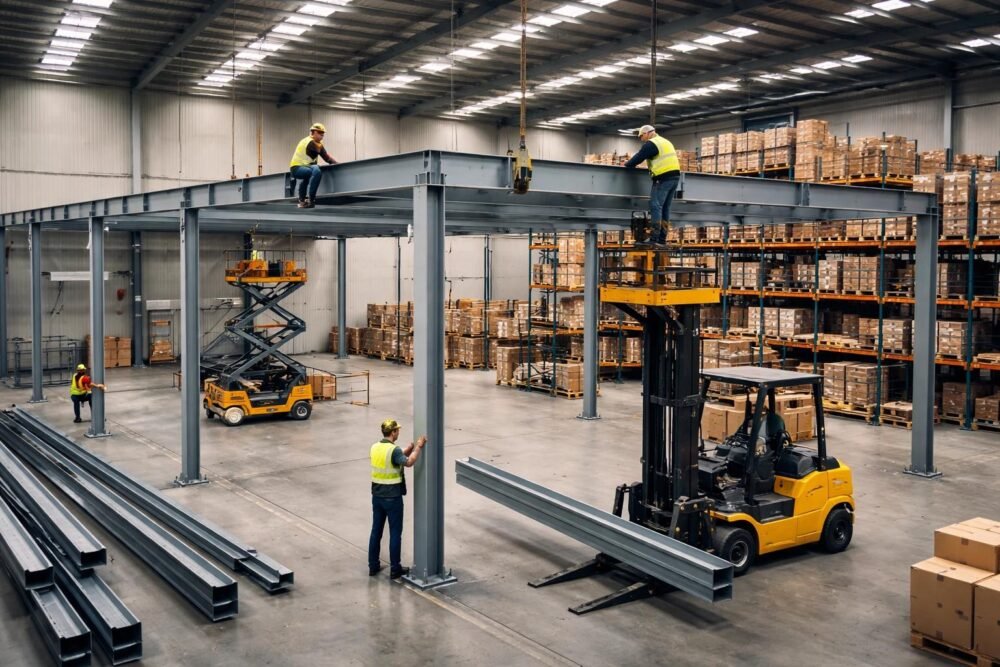
Mezzanine Floor Cost Overview
Most mezzanine projects cost between $75 and $200+ per sq m. This wide range depends on several key factors:
- Size of the platform
- Structural load requirements
- Materials used
- Staircases and safety features
- Installation complexity
Based on our experience with floor and stair installations, careful planning at the start usually prevents expensive design changes later.
What We Consider Before Designing a Mezzanine Floor?
At George Living, planning always comes before construction. Before installing a mezzanine floor, we typically evaluate a few practical factors.
- First is ceiling height. There must be sufficient vertical space to provide comfortable headroom above and below the platform.
- Second is structural load. Different weight capacities are needed for storage spaces, machinery, and living areas.
- Third is circulation. The position of stairs, walkways, and stair stringers affects how smoothly people can move around the mezzanine.
- Lastly, the design. It should look natural, instead of looking like a forced addition in the building.
Common Mistakes When Installing a Mezzanine Floor
Although mezzanines look easy, a few common mistakes can cause major problems.
- Violations of building codes are a common problem. Guardrails, stair design, and load limits must follow safety standards.
- Underestimation of weight loads is another error. A platform intended for light storage can break when heavy equipment is stored on it in the future.
- Surprisingly, the poor location of staircases is also prevalent. When the stairs hinder workflow or take up too much space, the mezzanine will be inconvenient to use.
- Lastly, many people overlook lighting and ventilation. Since a mezzanine is situated between two floors, it can easily form dark or narrow passages without proper design planning.
Loft vs Mezzanine Floor vs Balcony
These three design elements may appear equivalent at first glance, yet they serve different functions in a building.
Feature | Loft | Mezzanine | Balcony |
Location | Under the roof | Inside the building (intermediate level mezzanine) | Outside the building |
Primary Function | Living or storage space | Add usable interior floor space | Outdoor relaxation or viewing area |
Primary Function | Full upper interior space | Full upper interior space | Partial floor between levels |
Mezzanine is largely about efficiency. It utilizes the unused vertical space and converts it into functional square feet.
Contact Us for a Project Consultation
Why pay more? At George Living, we cut out the middlemen to bring you premium furniture, flooring, doors, windows,marble and tiles and more—all at prices up to 40% below retail. With 20+ years of experience and 600 consultants, we provide complete, custom project solutions, from initial design to final delivery.
In Which Case Is a Mezzanine Floor not the Right Choice?
Mezzanines do not apply to all buildings, regardless of their advantages.
Indicatively, low-ceiling spaces rarely have the required height to comfortably introduce another level. Such rooms can be crowded by installing a mezzanine that brings the two levels closer together.
Structural constraints may also be a problem. Before a new platform can be built on old buildings, the buildings may need reinforcement.
And lastly, a mezzanine just does not work with certain layouts. The design may cause more trouble than it solves, preventing movement or blocking natural light due to the added level.
FAQs
What is Meant by Mezzanine Floor?
A mezzanine floor is an incomplete floor constructed between the ground floor and the building’s ceiling. It gives additional usable space without generating a complete additional storey.
What is the Difference Between Ground Floor and Mezzanine Floor?
The ground floor is the main level at the street or entrance level of a building. A mezzanine floor sits above it but covers only part of the floor area, not the entire floor.
Is Mezzanine 2nd Floor?
No, a mezzanine is not considered a full second floor. It is a lower intermediate level situated between the ground floor and the subsequent primary floor.
What is Another Name for a Mezzanine Floor?
An intermediate floor or a level mezzanine is also often called a mezzanine floor. Alongside these, some people also call it merely a mezzanine or a half-floor.
Conclusion
The unused vertical space in a building is wasted, but a mezzanine floor makes it worthwhile. You can use it for multiple purposes, e.g., as a storage facility, a mini office, a mini production facility, a mini retail store, or for any other purpose according to your needs. It can make your area more practical without altering the setup.
Once you are ready to install, the next step is to check the ceiling height, structural constraints, and stair location. Proper planning helps you create a safe environment and avoid expensive surprises. Lastly, if you need help building your mezzanine, share your space details and how you plan to use it with us in the comments, and we will provide personalized recommendations.