Have you ever wondered when stairs were invented? Or who first came up with the idea of stacking steps to move upward more easily? It feels obvious today, but it wasn’t always so.
Without stairs, how would early humans have reached higher levels in their homes? And how could ancient civilizations have built monumental structures like pyramids or temples?
While researching the topic, one thing quickly became clear: stairs were not “invented” in a single moment. Instead, they emerged gradually, as practical solutions to everyday problems.
In this article, we’ll trace the history of the staircase—from its earliest, improvised forms in prehistoric settlements to the refined designs we see today. Along the way, we’ll see how stairs evolved from a simple necessity into a symbol of progress, power, and creativity.
Ready to start climbing? Let’s take the first step.
Key points
The earliest known stairs likely appeared during the Neolithic period, over 10,000 years ago.
No single person invented the staircase; it developed independently across different cultures.
Over time, stairs evolved from basic tools for survival into architectural and cultural symbols.
Early staircases were often steep and irregular, while modern designs focus on safety and comfort.
Materials have shifted from wood and stone to steel, glass, and composite structures.
Stairs play a major role in culture, religion, cinema, and architecture—from Jacob’s Ladder to the Rocky steps.
Origins of stairs: when did people start using them?
Before diving into dates and sites, it helps to ask a basic question: how did people move vertically before stairs existed?
Early humans relied on natural slopes, rocks, tree branches, or ladders. Over time, these improvised solutions became more intentional and structured.
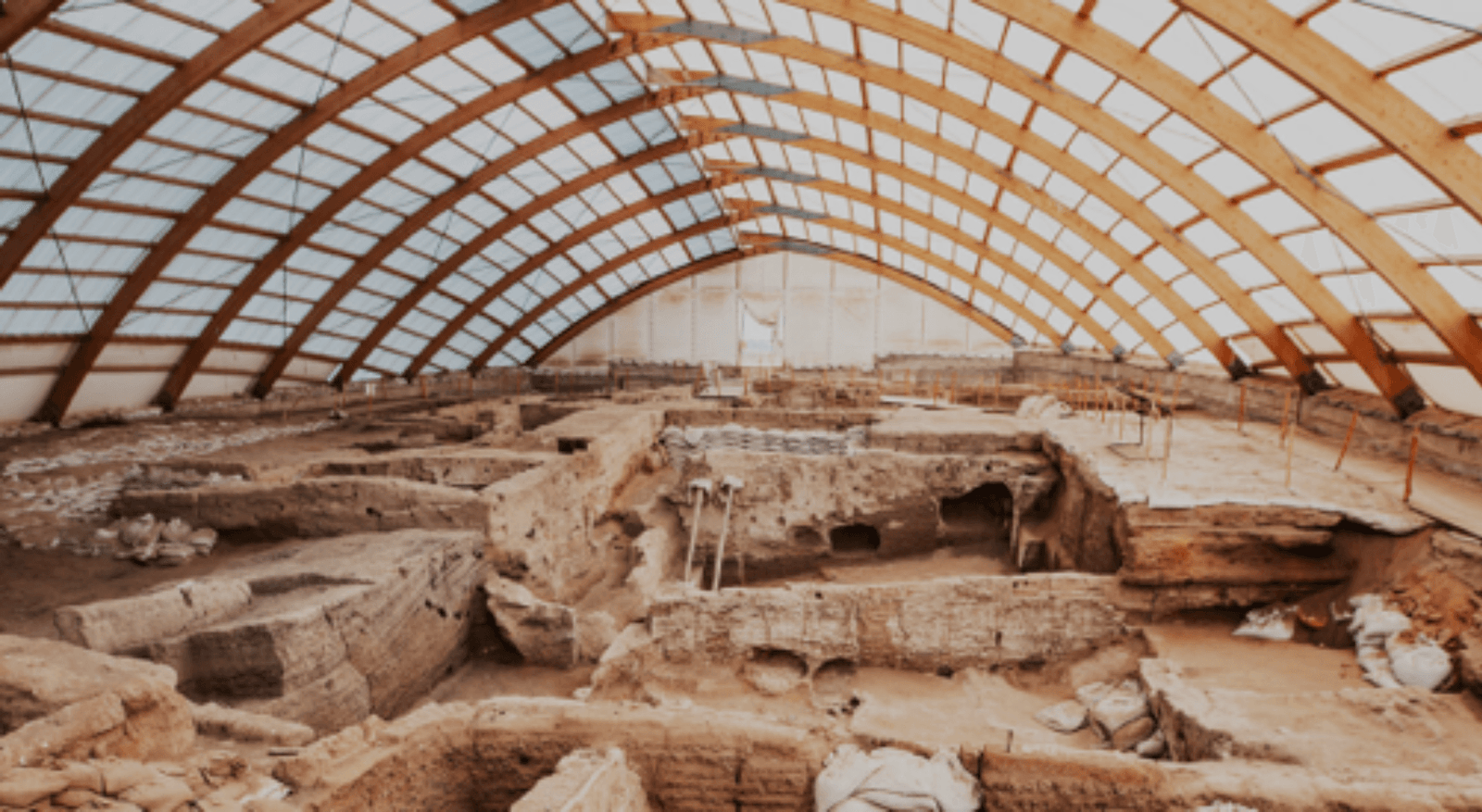
Based on current archaeological evidence, the earliest stepped structures date back roughly 8,000–10,000 years. One frequently cited example is Göbekli Tepe in modern-day Turkey, where stepped stone platforms appear around 10,000 BC. Many researchers believe these were built for ritual use rather than daily living. So while they resemble stairs, whether they functioned like true staircases is still debated.
More convincing residential examples appear at Çatalhöyük, another Neolithic site in Turkey, dating to around 6,000–5,000 BC. During my research, this site stood out repeatedly in academic literature. Homes there were tightly packed and often accessed from the roof. People used simple wooden steps, stacked stones, or carved logs to move between levels.
In such dense settlements, stairs weren’t just convenient—they were essential. Without them, daily life would have been nearly impossible.
Table 1. Evolution of stairs over time
Era | Primary materials | Notable examples |
Prehistory | Wood, stones, earth | Neolithic settlements |
Ancient Civilizations | Carved stone | Ziggurats, Pyramids |
Greece and Rome | Marble, travertine | Theaters, temples |
Middle Ages | Stone | Spiral staircases |
Renaissance | Marble, wood | Bramante Staircase |
Modern Era | Concrete, steel | Subways, buildings |
Contemporary | Glass, composites | Suspended stairs |
First structured stairs: the birth of monumental steps
As societies became more complex, stairs took on a new role. They were no longer just practical tools, but powerful symbols.
Ancient Egypt: The Step Pyramid of Djoser at Saqqara is one of the earliest monumental examples. Its tiered structure symbolized the pharaoh’s ascent toward the divine. From an architectural standpoint, these steps also helped distribute weight more effectively.
Mesopotamia: Ziggurats featured long external staircases leading to elevated temples. These stairs physically and symbolically connected earth and sky.
Mohenjo-Daro: In the Indus Valley, residential buildings from around 2500 BC already included built-in staircases made of terracotta, showing a surprisingly advanced level of urban planning.

What’s striking here is how quickly stairs moved beyond function and became expressions of belief, authority, and engineering skill.
Historical evolution: from antiquity to contemporary design
To better understand how staircases changed over time, it helps to look at their evolution period by period.
Classical antiquity
In ancient Greece and Rome, stair design became more systematic. Architects began thinking in terms of proportion and human movement.
Vitruvius, in De Architectura, described ideal relationships between step height and depth—principles that still influence design today.
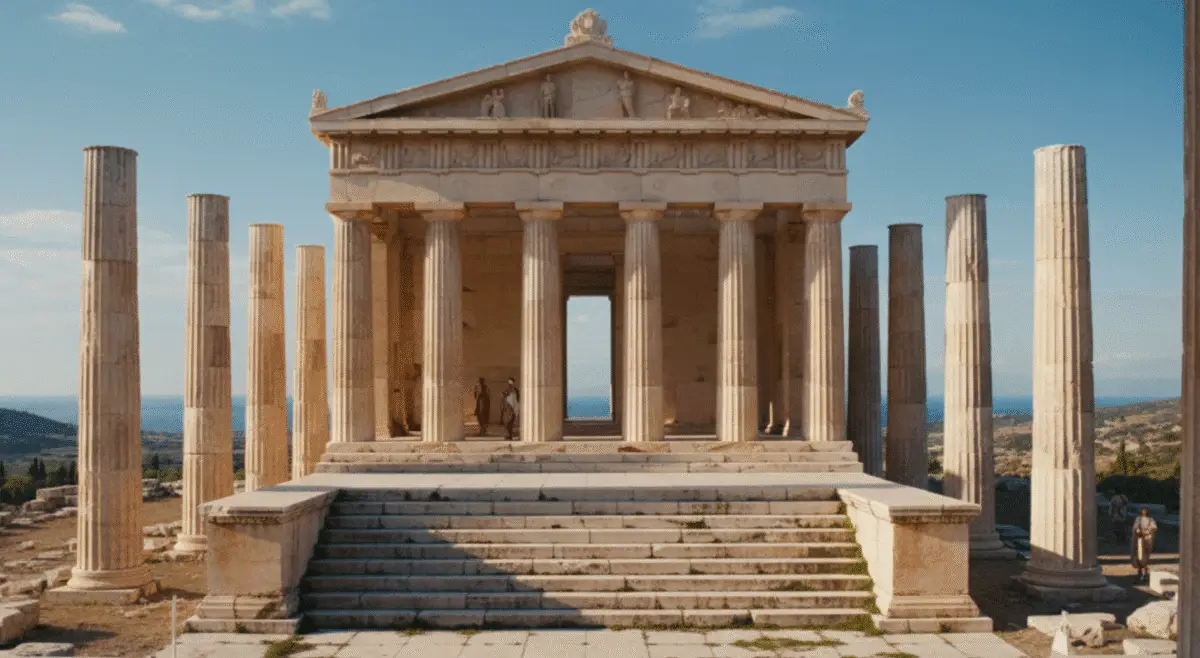
During this era, stairs were central to public life. They shaped theaters, temples, forums, and civic buildings, guiding how people gathered and moved.
Middle Ages and Renaissance
In medieval castles, spiral staircases were common—and for good reason. Their tight, clockwise rotation gave defenders a clear advantage in combat. This wasn’t accidental design; it was strategic thinking carved in stone.
During the Renaissance, however, stairs became something else entirely. They turned into statements of wealth and artistic ambition. A famous example is the Bramante Staircase in the Vatican Museums, which combines mathematical precision with visual harmony.

Modern and Contemporary Era
Today, George’s Flooring continues this legacy by offering furniture and interior design solutions where staircases are fully integrated into modern living spaces. With the use of steel and reinforced concrete, staircases now appear lighter—sometimes almost floating. In minimalist interiors, they are no longer bulky structures but sculptural elements that pair naturally with glass, metal, and clean architectural lines.

Why were stairs so steep in the past?
Anyone who has climbed stairs in an old castle or church knows how challenging they can be. This steepness wasn’t a mistake.
Historically, builders worked with limited materials and tools. Stone and wood were expensive and difficult to transport. To save space and resources, steps were made higher and narrower.
1. Between defensive strategy and demonstration of power
Steep stairs also served symbolic and military purposes. In fortresses, they slowed attackers and protected defenders. In religious buildings, verticality inspired awe and reinforced authority.
In many cases, discomfort was intentional.
2. The transition to contemporary safety standards
For centuries, there were no universal building codes. Design depended on tradition, experience, or personal preference.
Only with industrialization and modern engineering did safety become a priority. Research into human movement led to standardized step dimensions that reduce fatigue and accidents.
3. The perfect synthesis between aesthetics and functionality
Modern staircases reflect a different mindset. Designers now aim to balance beauty, comfort, and safety.
Rather than intimidating the user, contemporary stairs invite movement and interaction.
This shift shows how architecture evolved from survival and power toward human-centered design.
The staircase as a symbol: a bridge between art, spirit, and culture
Beyond their physical function, stairs carry deep symbolic meaning. Artists and writers often use staircases to represent personal growth, ambition, or transition. Going up suggests progress; going down can imply reflection or decline.
In sacred architecture, stairs often mark the path from the human to the divine. Climbing becomes a ritual, not just a physical act.
1. Harmony between design, climate, and local identity
Different cultures adapted stair design to their environment:
Mediterranean style: Decorative tiles and bright colors reflect light and celebrate craftsmanship.
Japanese aesthetics: Minimalist wooden stairs emphasize calm, balance, and natural materials.
Climate adaptation: Hot regions favor heat-dissipating stone, cold areas integrate anti-slip or heating systems, and coastal zones rely on corrosion-resistant metals.
2. The most iconic stairs in history
Some staircases became famous for their engineering or cultural impact:
| Staircase | Location | Architectural uniqueness |
| Double Helix | Château de Chambord, France | Two intertwined staircases that never meet |
| Melk Staircase | Melk Abbey, Austria | A floating Baroque masterpiece |
| Miraculous Staircase | Loretto Chapel, USA | Built without a visible central support |
| Batu Caves | Malaysia | 272 colorful steps leading to sacred temples |
3. Toward the future: between technology and well-being
From Neolithic stone steps to today’s floating designs, staircases continue to evolve. Future stairs are likely to include smart lighting, adaptive materials, and multifunctional spaces beneath them.
In urban design, stairs are increasingly used to encourage physical activity and social interaction. In this sense, the staircase is once again responding to a basic human need—movement.
Frequently asked questions about the history of stairs
Q1. When were stairs invented?
Based on current archaeological evidence, the earliest stairs date back over 10,000 years to the Neolithic period.
Q2. Who invented the staircase?
No single individual. Staircases emerged independently across different cultures as practical solutions.
Q3. What is the history of the staircase?
It evolved from a survival tool into an architectural, cultural, and design element.
Q4. Why were ancient stairs irregular?
They were handmade using local materials, without standardized measurements.
Q5. Why are stairs more comfortable today?
Modern engineering, safety codes, and ergonomic research have transformed stair design.