Ergonomic office chairs are becoming a big trend in 2025. More companies now want chairs that keep workers healthy, happy, and more productive. These chairs are not just for comfort—they help reduce back pain, improve posture, and save money over time. With new designs and trusted brands like George’s Furniture, it’s easier than ever to choose the right ergonomic chair for your workplace.
Imagine sitting in a chair all day without back pain or stiff shoulders. Sounds great, right? That’s why more offices are choosing ergonomic office chairs. These chairs help workers feel better, stay focused, and work smarter. In this guide, you’ll learn what makes these chairs special, why they matter, and how to pick the right ones for your office.
When you’re designing a modern workplace, nothing influences comfort and productivity like ergonomic office chairs. These chairs help reduce aches, support posture, and can even save on health-related costs over time. If your business cares about corporate wellness or wants to manage office furniture procurement wisely, this guide will walk you through everything you need to know.
What Are Ergonomic Office Chairs?
Sitting all day in the wrong chair can hurt your back, neck, and shoulders. Ergonomic chairs help you sit better, so you feel less pain and stay focused longer. When workers feel comfortable, they do better work and take fewer sick days. Buying good chairs also shows your company cares about health and comfort. Over time, that small step can save money and keep your team happy.
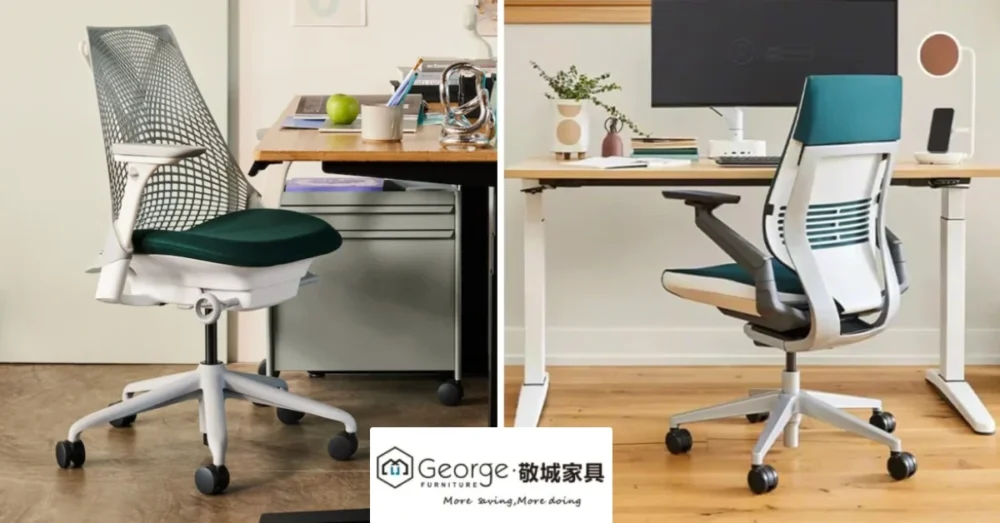
Instead of a one-size-fits-all chair, ergonomic models allow you to fine-tune settings so your spine, arms, and legs stay in healthy alignment. That helps you avoid the neck pain or back pain that can come from poor seating over long hours. Manufacturers increasingly test these chairs against standards like ANSI/BIFMA for safety and durability.
Many big offices now track furniture lifecycles, maintenance costs, and replacements as part of office furniture procurement. Using BIFMA certified furniture helps streamline that process because standards and testing are documented.
In short: ergonomic office chairs are smart seats that adjust to you, support your body, and help in managing a professional environment that values corporate wellness.
Contact Us for a Project Consultation
Why pay more? At George’s Furniture, we cut out the middlemen to bring you premium furniture, flooring, doors, windows, and more—all at prices up to 40% below retail. With 19+ years of experience and 600 consultants, we provide complete, custom project solutions, from initial design to final delivery.
Why Ergonomics Matter: Health, Productivity, and Corporate Wellness
Choosing ergonomic office chairs is not just a comfort decision. It ties directly to employee health and corporate wellness goals. Poor seating can lead to chronic pain, reduced focus, and more sick days.
When employees feel physically supported, they stay more focused and productive. Studies in ergonomics show that discomfort is a distractor—if a person is shifting, fidgeting, or hurting, they lose concentration. Ergonomic design reduces that wasted time.
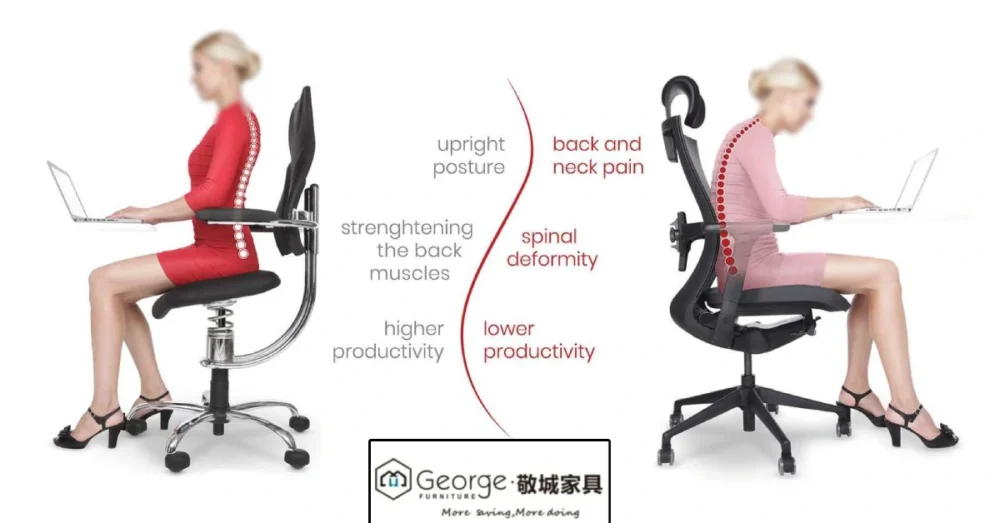
In a corporate wellness program, investing in top-quality seating shows you care about employee well-being. It signals that the company values health and comfort. Over months and years, that small investment can pay off in less turnover, fewer musculoskeletal complaints, and lower injury claims.
Real life example: A mid-sized firm replaced its old stock chairs with ergonomic office chairs across all workstations. After six months, reported back pain among staff dropped by nearly 40%, and help-desk calls for seating issues were cut in half. Staff felt the change—some openly said, “I can work all afternoon now without stiffness.”
Ergonomics supports your people, and that supports your bottom line.
Key Features to Look For in Ergonomic Office Chairs
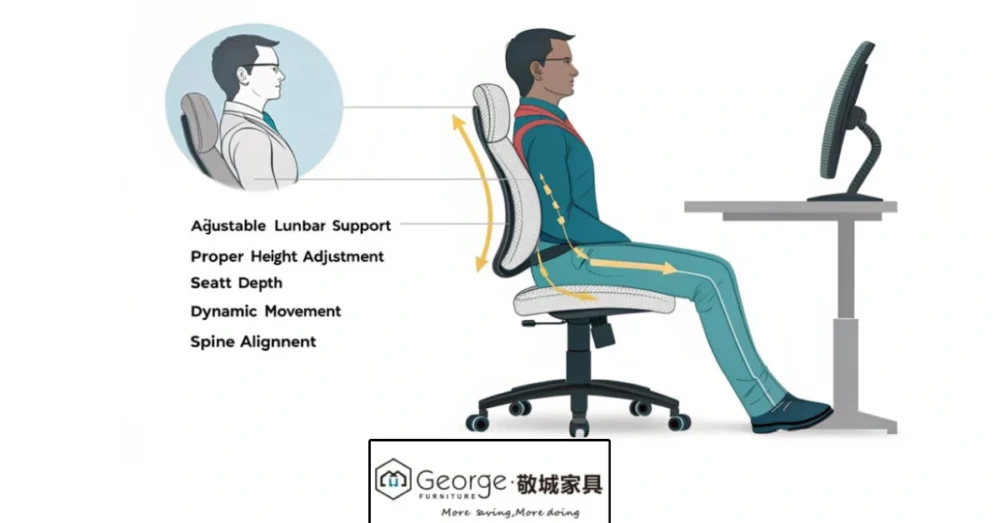
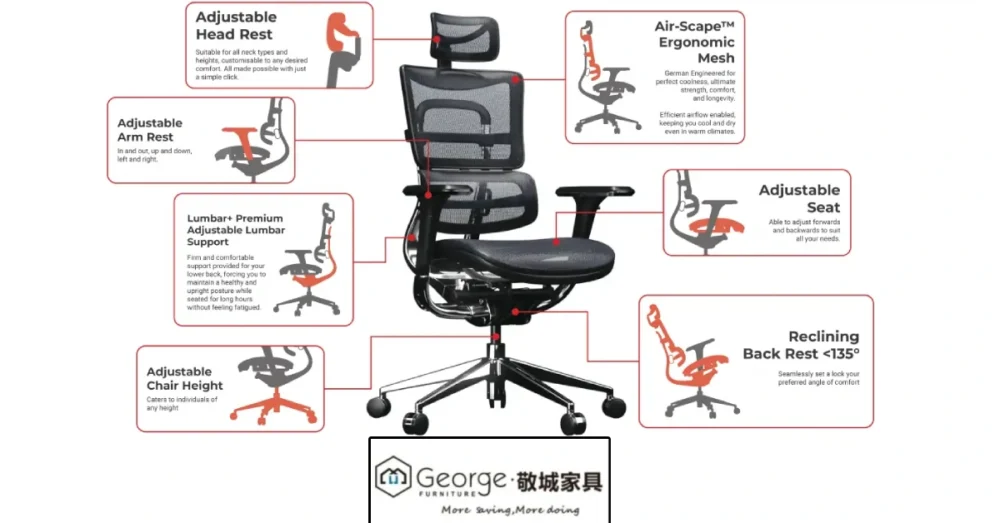
When selecting ergonomic office chairs, you want features that truly support users. Not all adjustability is equal. Here are the essentials:
1. Adjustable Lumbar Support & Backrest
Your lower back (lumbar region) should press softly against a curve in the chair back. The best chairs let you move that lumbar pad up, down, or in/out. Some tilt in sync with your back so you maintain support when leaning.
2. Seat Height, Depth, and Tilt
Your feet should rest flat on the floor (or footrest), thighs roughly horizontal. A good chair gives you a height range of at least 4–5 inches. Depth control lets shorter people avoid too much seat length, while taller people get enough support under thighs. A tilt or recline function helps relieve pressure periodically.
3. Adjustable Armrests & Headrest
Armrests should move up and down, possibly side to side or forward/back, to let your arms rest without tension. A headrest (optional) can support your neck when leaning back.
4. Durable Base, Casters, and Materials
Look for strong bases (usually aluminum or reinforced plastic), smooth casters suited to your floor, and breathable upholstery or mesh that resists heat buildup. Certification tests (e.g. BIFMA) gauge durability under repeated use.
Here’s a table summarizing how top features compare:
| Feature | Purpose / Benefit | Recommended Spec |
| Lumbar adjustability | Support lower spine | Moveable pad, depth control |
| Seat height & depth | Fit various users | 16–21 inch height range, adjustable depth |
| Tilt / recline | Shift posture | Lockable tilt + tension control |
| Armrests | Reduce shoulder strain | 3D adjust (height, angle) |
| Material & base | Longevity & comfort | Mesh or durable fabric, strong base |
| Certification | Assurance | ANSI/BIFMA or equivalent |
*Using this table helps you compare chairs on the same checklist rather than be wowed by a fancy name.
Pros & Cons of Ergonomic Office Chairs
Pros
- Better posture & comfort: They adapt to body shapes and reduce slumping.
- Less back pain: Regular users often report lower back and neck strain over time.
- Longer useful life: High-quality models often last several years.
- Positive perception: Staff feel cared for; it supports corporate wellness credibility.
- Reduced costs over time: Fewer injury claims, less turnover, fewer replacements of cheap chairs.
Cons
- Higher upfront cost: Good ergonomic chairs often cost more than standard chairs.
- Complexity / adjustment learning: Some users may not set the chair correctly (you may need training).
- Bulk & weight: Premium chairs can be heavier or bulkier, less ideal in tight spaces.
- Maintenance / parts replacement: Mechanisms sometimes wear out and need parts or servicing.
On balance, the advantages usually outweigh the drawbacks—especially for businesses aiming for wellness and long-term stability.
Pricing, Brands & What Big Offices Prefer
| Category | Price Range | Example Brands / Models | Key Features / Notes |
| Mid-range | $300–$600 | Branch Ergonomic Chair ($359–$389) | Strong adjustability, good value for offices |
| Premium | $800–$1,500+ | Haworth Fern Executive Chair (over $1,000), Herman Miller, Steelcase | BIFMA / GREENGUARD certified, high-end ergonomics |
| Specialty / Designer | $1,500+ | Custom or designer chairs | Unique materials, ultra-ergonomic features (e.g. motorized spinal adjustments) |
Contact Us for a Project Consultation
Why pay more? At George’s Furniture, we cut out the middlemen to bring you premium furniture, flooring, doors, windows, and more—all at prices up to 40% below retail. With 19+ years of experience and 600 consultants, we provide complete, custom project solutions, from initial design to final delivery.
Major brand highlights
| Major Brand Highlights | Key Strengths |
| Herman Miller | Iconic Aeron chair, high ergonomic innovation |
| Steelcase | Leap chair with many adjustable zones; benchmark in industry |
| Haworth | Elegant, high-spec chairs meeting commercial standards |
| Wilkhahn | German brand with a long history in ergonomic design |
Contact Us for a Project Consultation
Why pay more? At George’s Furniture, we cut out the middlemen to bring you premium furniture, flooring, doors, windows, and more—all at prices up to 40% below retail. With 19+ years of experience and 600 consultants, we provide complete, custom project solutions, from initial design to final delivery.
Preferences in big offices
Big offices often track furniture with serial numbers, procurement logs, and lifecycle budgets. They tend to favor BIFMA certified furniture because reporting, warranty, and repair data become standardized across all workplaces. Many institutions standardize on one or two chair models for ease of maintenance. Some use software or spreadsheets to track which employee sits in which chair, when it was ordered, and when to retire it.
In summary, when choosing for large-scale use, prioritize certified, well-supported brands—even if the upfront cost seems steeper.
How to Choose & Set Up Chairs in Your Office
Picking ergonomic office chairs is just half the battle; setting them up correctly is equally important. Here’s how to ensure success.
Contact Us for a Project Consultation
Why pay more? At George’s Furniture, we cut out the middlemen to bring you premium furniture, flooring, doors, windows, and more—all at prices up to 40% below retail. With 19+ years of experience and 600 consultants, we provide complete, custom project solutions, from initial design to final delivery.
Step 1: Assess user needs
Collect data on staff heights, body types, and any known back/neck issues. Use that to decide which adjustability ranges you need (e.g. tall users require more height range).
Step 2: Use a checklist
Use the table from above or a procurement scorecard to rank each candidate chair on lumbar, adjustability, certification, warranty, and cost. This keeps decisions objective.
Step 3: Test a sample
Order a few sample chairs and let users test them for 1–2 weeks. Check which settings they settle on, ask for feedback on comfort and adjustments.
Step 4: Train staff & set standards
Provide a short guide or workshop on how to adjust seat height, depth, tilt, and armrests. Encourage people to tweak adjustments rather than stick to defaults.
Step 5: Monitor & maintain
Keep a log of repairs, adjustments, and replacements. Rotate chairs or parts as needed. Schedule inspections annually to check for wear in gas lifts, tilt mechanisms, and casters.
By following these steps, your investment in ergonomic office chairs will deliver consistent comfort and longevity.
Real-Life Success Stories & Interesting Facts
Knowing how others benefit can make the case easier. Here are a few examples and fascinating tidbits:
- A tech startup switched to ergonomic chairs and desks, and over a year saw a 25% drop in sick leave usage. Employees frequently said: “I don’t dread sitting anymore.”
- A hospital’s administrative wing replaced all chairs with BIFMA certified models. Within six months, reported lower back complaints dropped by over one third.
- Interesting fact: The Herman Miller Aeron, launched in 1994, eschewed traditional foam and upholstery in favor of a “pellicle” mesh that molds to users while ventilating heat.
- Another fun note: Some chair brands are now designed by ergonomists and medical professionals. For example, QOR360 is a brand co-founded by a trauma surgeon who experienced back pain in desk work.
Stories like these help bring the benefits of ergonomic office chairs to life—not just as specs, but as real improvements in people’s day-to-day comfort.
FAQ: Common Questions About Ergonomic Office Chairs
Q: Are ergonomic chairs worth the extra cost?
A: Yes, especially for workplaces where staff sit many hours per day. The health, productivity, and durability benefits usually outpace the extra expense over time.
Q: What does “BIFMA certified furniture” mean?
A: It means the chair has passed rigorous safety, durability, and performance tests defined by the Business and Institutional Furniture Manufacturers Association.
Q: How often should chairs be replaced or serviced?
A: Typically after 5–7 years, or sooner if mechanisms fail. Regular servicing (e.g. lubricating parts, checking gas lift) prolongs life.
Q: Can ergonomic chairs eliminate all back pain?
A: No chair is a cure-all. But they reduce risk and discomfort. Combined with good posture, breaks, exercise, and proper desk setup, they are a strong support.
Q: How many chair models should a large office standardize on?
A: Many offices pick 1–3 models (e.g. mid, tall, executive) to simplify maintenance, inventory, and training. Standardization helps procurement and tracking.
Final Thoughts
Buying good ergonomic office chairs is not just about nicer furniture—it’s about keeping people healthy, happy, and productive. Pick chairs with easy adjustments, strong safety or quality labels like BIFMA, and from brands you can trust.
Adding furniture from George’s Furniture can also give your office lasting quality and style. Teach your team how to use the chairs, check them often, and take care of them. Over time, you’ll see fewer complaints, happier workers, and an office that truly cares about comfort and wellness.