If you’re here, chances are you’ve already realised one uncomfortable truth: guessing sliding glass door dimensions is a fast way to waste money.
Maybe you’re replacing an old patio door that looks standard but isn’t actually.
Maybe your contractor asked, “What size opening do you have?” and you froze.
Or maybe you’ve been scrolling product pages thinking, Why does the same door come in five widths that all claim to be standard?
This is precisely where most homeowners face challenges.
In this guide, we will walk you through sliding glass door sizes, the way a real buyer needs to understand them. You will understand what ‘standard’ really means, the width of a sliding glass door, the types of panels that alter their sizes, and how to measure the sliding glass door openings without doubting yourself.
Let’s clarify the misunderstandings before you make an order.
Table of Contents
Standard Sliding Glass Door Dimensions
When the question of standard sliding door measurements comes up, they refer to the patio doors in most houses built over the past few decades.
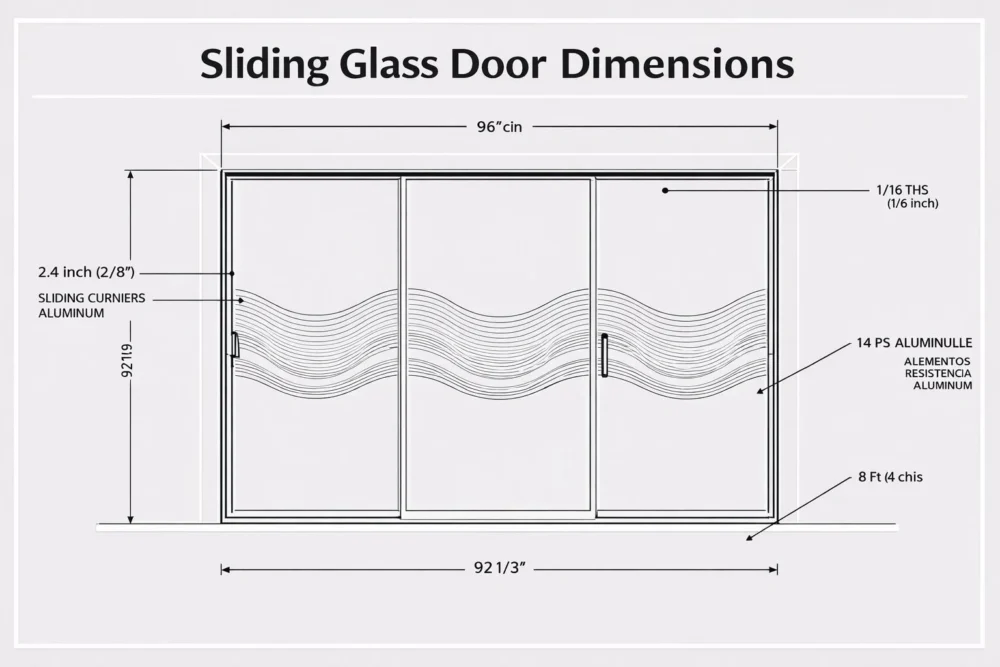
The following is the benchmark of most manufacturers:
- Height: 80 inches
- Width: 60 inches or 72 inches
This is the reason why you will find doors marked:
- 60″ × 80″
- 72″ × 80″
The reason for these sizes is straightforward: they fit the most common wall openings, making replacement easy and less expensive.
But “standard” doesn’t mean universal. It just means commonly produced. And it is at this point that people get tripped up.
Contact Us for a Project Consultation
Why pay more? At George’s Furniture, we cut out the middlemen to bring you premium furniture, flooring, doors, windows, and more—all at prices up to 40% below retail. With 20+ years of experience and 600 consultants, we provide complete, custom project solutions, from initial design to final delivery.
The Real Width of a Sliding Glass Door
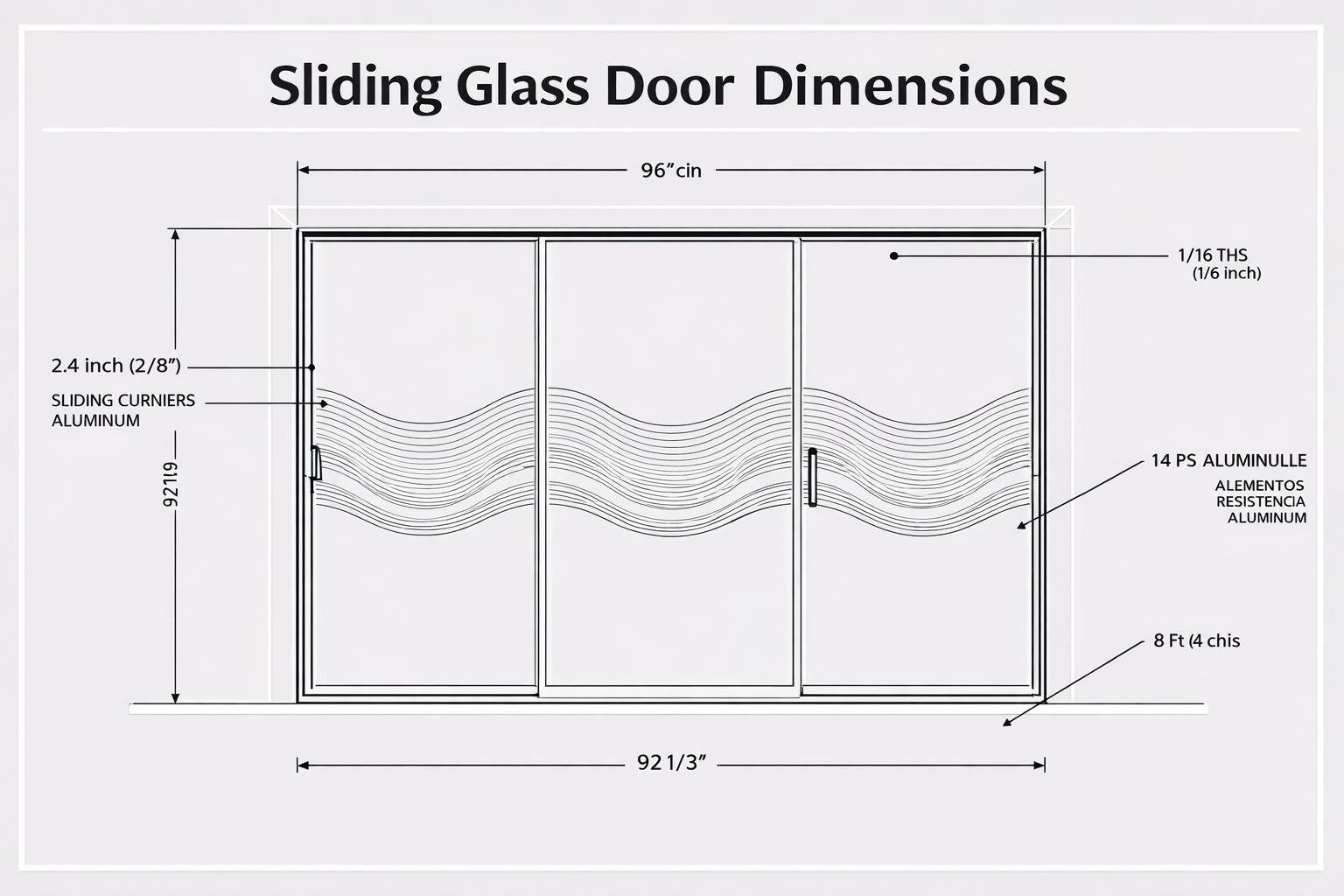
The same question arises regularly: How wide is a sliding glass door? The simple answer is: it will depend on the quantity of panels and the amount of wall space you possess. In the case of two-panel sliding doors (the most widespread):
- 60 inches (5 feet)
- 72 inches (6 feet)
- 96 inches (8 feet)
Here’s the key point many buyers miss: The width listed is the total unit width, not the opening you walk through. Only one panel usually slides, so your actual walk-through opening is roughly half the total width. That means:
- The majority of 60-inch sliding doors provide only a 30-inch opening.
- That clear opening is nearer to 36 inches, at 72 inches wide.
Accessibility, whether or not you can easily move furniture or navigate daily traffic are essential to you. Aesthetics are secondary to this fact.
Sliding Door Length vs Height: Why the Terms Get Confusing
People often search for ‘sliding door length,’ but in door terminology, length usually means height, not width. So when someone says, “The sliding door length is 80 inches, ” they’re talking about height. Most standard sliding glass doors are:
- 80 inches tall
- Newer or modernised houses measure 82 inches or 96 inches.
Taller doors will let in more light and be more modern; however, they will affect framing, cost, and installation complexity.
Contact Us for a Project Consultation
Why pay more? At George’s Furniture, we cut out the middlemen to bring you premium furniture, flooring, doors, windows, and more—all at prices up to 40% below retail. With 20+ years of experience and 600 consultants, we provide complete, custom project solutions, from initial design to final delivery.
Types of Sliding Glass Doors and Their Dimensions
Not all sliding doors are built the same. The type of sliding glass door you select also directly affects the size you can get.
At George’s Furniture, we help homeowners choose sliding glass door dimensions based on real installation conditions, not just catalog sizes.
Confirm the rough opening before selecting a standard size
Understand how panel count affects walk-through width
Match door height to ceiling proportions and structure
Plan for energy-efficient glazing on wider doors
Measure accurately to avoid costly reorders
Two-Panel Sliding Glass Door Dimensions

This traditional setup consists of one fixed panel and one sliding panel on a track. Common sizes:
- 60″ × 80″
- 72″ × 80″
- 96″ × 80″
These are widely available, cost-effective, and easiest to replace.
Contact Us for a Project Consultation
Why pay more? At George’s Furniture, we cut out the middlemen to bring you premium furniture, flooring, doors, windows, and more—all at prices up to 40% below retail. With 20+ years of experience and 600 consultants, we provide complete, custom project solutions, from initial design to final delivery.
Three-Panel Sliding Glass Door Dimensions
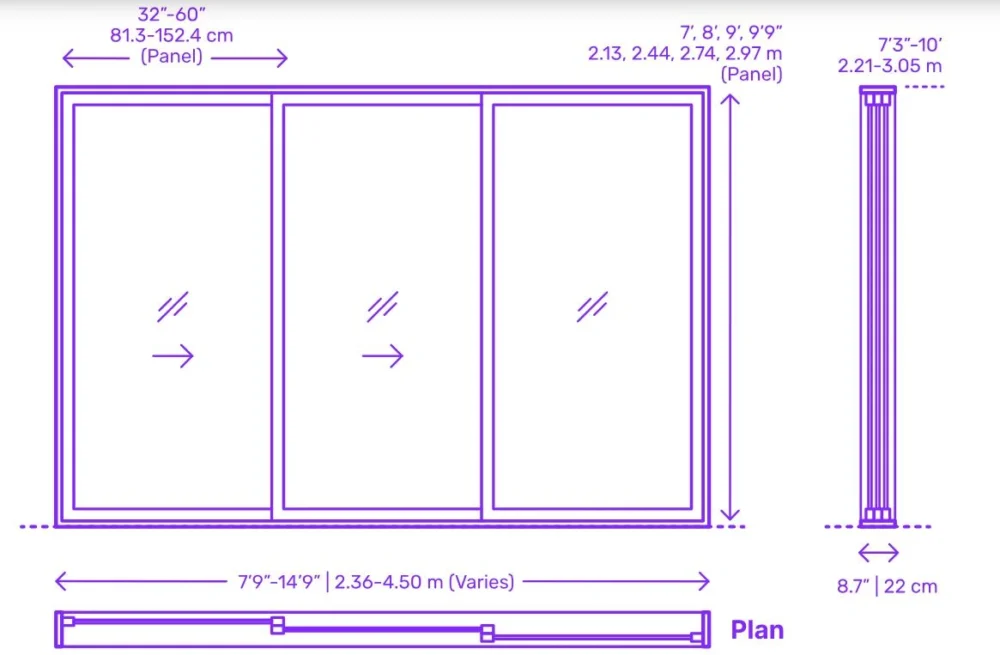
Used for wider openings and modern layouts. Typical widths:
- 108 inches (9 feet)
- 144 inches (12 feet)
It is generally 80 inches tall, but taller ones exist.
Contact Us for a Project Consultation
Why pay more? At George’s Furniture, we cut out the middlemen to bring you premium furniture, flooring, doors, windows, and more—all at prices up to 40% below retail. With 20+ years of experience and 600 consultants, we provide complete, custom project solutions, from initial design to final delivery.
Four-Panel Sliding Glass Door Dimensions
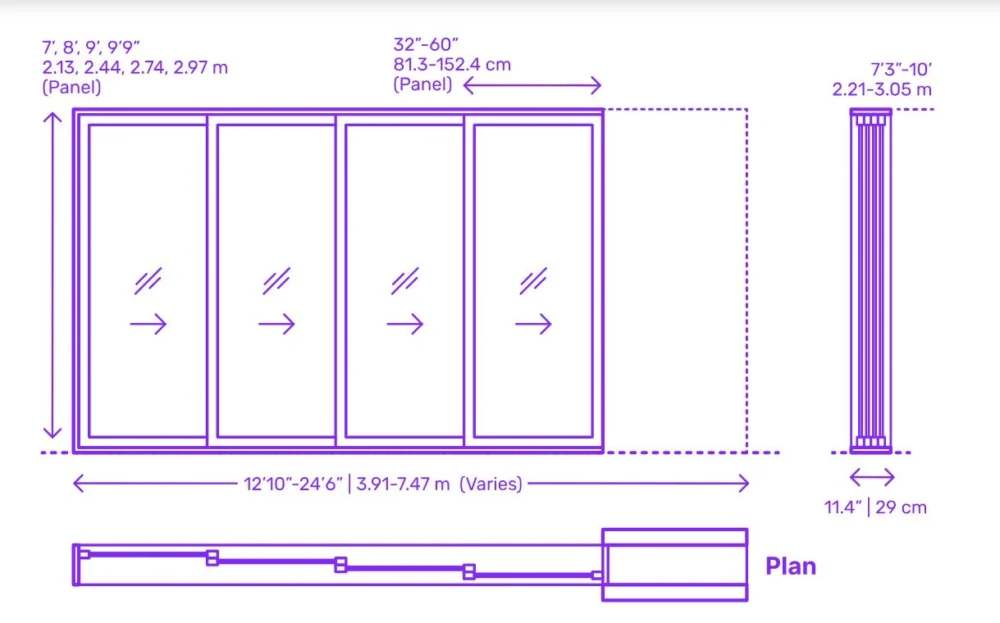
Made to fit the large patios or openings between walls. Common widths:
- 144 inches (12 feet)
- 192 inches (16 feet)
These doors make a visual statement but require proper structural support.
Found the suitable dimensions for your space and are ready to purchase? George’s Furniture can help you. Check out these George door and wall panels to find a suitable design for yourself.
Contact Us for a Project Consultation
Why pay more? At George’s Furniture, we cut out the middlemen to bring you premium furniture, flooring, doors, windows, and more—all at prices up to 40% below retail. With 20+ years of experience and 600 consultants, we provide complete, custom project solutions, from initial design to final delivery.
What Size Is a Standard Patio Door?
This may sound like a simple question, but it isn’t. So let’s be clear: what size is a standard patio door? In most homes, it’s:
- 72 inches wide
- 80 inches tall
- Two-panel configuration
That size strikes a balance between cost, usability, and light. It’s why builders default to it and why replacements are easiest in this dimension. If your home already has this size, sticking with it can save you framing work and delays.
Why Measuring Matters More Than Choosing the Door?
Before you even think about finishes, glass type, frame colour, etc., you must be sure of one thing: measurements.
It’s important to measure sliding glass door openings accurately to avoid buying the wrong size and having to replace it.
The specific steps will be discussed in the next section, but here is the attitude to adopt:
- Never measure just the glass
- Always measure the frame opening
- Always measure more than once
Where a sliding door is part of a larger remodelling process, particularly a whole-home remodelling, it is better to make size decisions at the beginning of the project to avoid costly changes later.
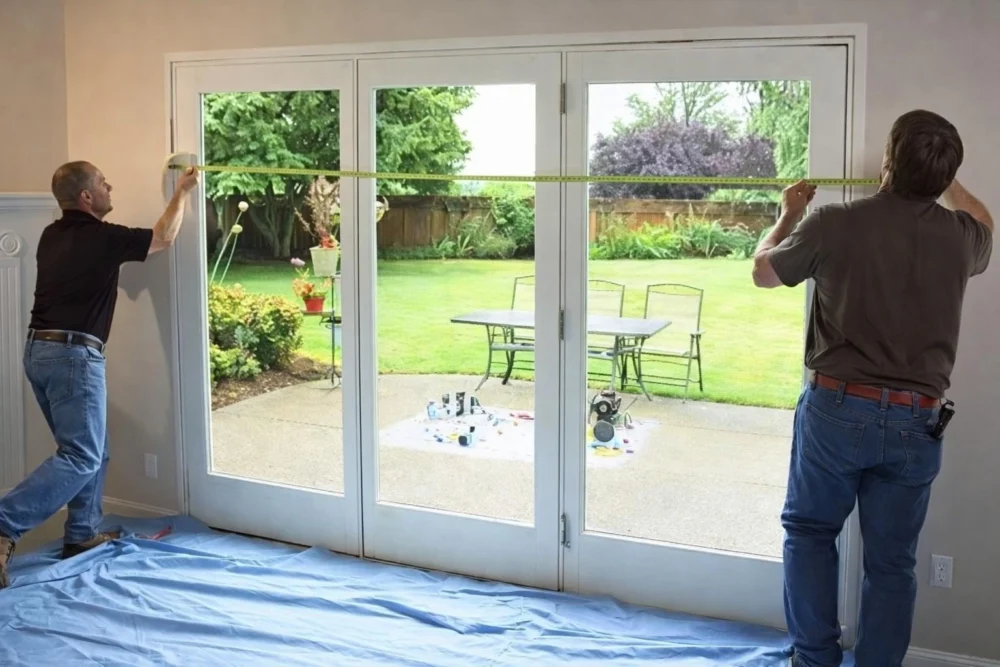
How to Measure a Sliding Glass Door without Messing It Up?
This section is more important than brand, glass type, or frame finish. Knowing the standard sliding glass door dimensions doesn’t mean your door will fit. It will only fit if you take the measurement correctly. And returns on doors are never like returns on shoes.
Here’s how to measure sliding glass door openings correctly.
Step 1: Measure the Width
The measurements should be taken in the frame, not outside the glass.
- Separation between the right interior jamb and the left interior jamb.
- Take three measurements: top, middle, and bottom.
- Write down the smallest number.
Walls aren’t always perfectly straight. That smallest number is what protects you.
Step 2: Measure the Height
Measure from:
- The top inside frame
- Down to the door sill (not the floor)
- Again, take three measurements: left, centre, right.
- Use the smallest one.
Step 3: Check the Depth of the Frame
This is often ignored but affects replacement doors.
The thickness of the wall or frame should also be measured to ensure the new unit fits. This is particularly vital where old trim is remaining in position.
When changing a sliding door near an entrance or matching the size of a standard front door, following this step keeps the house’s proportions consistent.
Disclaimer:
The information provided in this article is intended for general guidance only. George’s Furniture is not responsible for any damages, costs, or issues arising from inaccurate measurements, improper installation, or misuse of sliding glass doors. For precise measurements and safe installation, it is strongly recommended to consult with qualified professionals or certified installers before making a purchase or beginning any remodeling project.
Actual Door Size vs Rough Opening (This Is Where Most People Slip)
Here’s a quiet truth most articles skip: The door you buy is not the same size as the opening in your wall. Manufacturers work with three numbers:
- Nominal size (what it’s sold as)
- Actual unit size (the real door frame size)
- Rough opening (the framed hole in the wall)
Sliding Glass Door Rough Opening Rule
Your rough opening should typically be one inch wider and one inch taller than the actual door unit. That space allows for:
- Leveling
- Shimming
- Proper insulation
Standard Sliding Glass Door vs Rough Opening Size Table
Nominal Door Size | Actual Unit Size (Approx.) | Recommended Rough Opening |
60″ × 80″ | 59.5″ × 79.5″ | 60″ × 80″ |
72″ × 80″ | 71.5″ × 79.5″ | 72″ × 80″ |
96″ × 80″ | 95.5″ × 79.5″ | 96″ × 80″ |
108″ × 96″ | 107.5″ × 95.5″ | 108″ × 96″ |
Although you must always check the manufacturer’s specifications, these are the ranges professionals use.
How Door Size Affects Cost?
Bigger doors don’t just cost more because they’re bigger. They affect:
- Structural headers
- Glass thickness
- Installation labor
- Energy efficiency
Here’s a realistic cost relationship most buyers experience:
Door Width | Typical Sliding Glass Door Cost Range | Installation Complexity |
60″–72″ | $400 – $1500 | Straightforward |
96″ | $1200 – $2500 | May need framing review |
108″+ | $2100 – $5000+ | Structural support likely |
That’s great for letting in light, but only if you select the right type of glazing. Low-E and insulated glass aren’t upgrades at that size. They’re necessities. For detailed information, read this guide on energy-efficient glazing.
Common Sliding Glass Door Dimensions Mistakes (Learn From Others)
These are mistakes installers see constantly:
- Measuring only the glass panel
- Assuming all patio doors are 72″ wide
- Forgetting that only one panel slides
- Ordering before checking the rough opening
- Ignoring wall thickness
One wrong assumption can delay your project by weeks.
Choosing the Right Size for How You Actually Live
Here’s the part no size chart can answer for you. Ask yourself:
- Will furniture regularly move through this door?
- Do kids or pets use it daily?
- Is this a visual focal point or just functional access?
A smaller door may be standard; however, a larger one may be more appropriate for your lifestyle. Oversized sliding doors can be beautiful, but they don’t work well in rooms that are too small to accommodate them. To make sense, they require the appropriate wall support and sufficient visual breathing space.
Conclusion
If sliding doors were just about measurements, buying one would be easy. But they’re not. They affect how light enters your home, how rooms connect, how people move, and how your space feels every single day.
Understanding sliding glass door dimensions gives you control. It lets you ask better questions, avoid costly mistakes, and choose a door that fits your home and your habits, not just a product page description.
Measure carefully. Think beyond “standard.” And choose a size that works for how you live, not just how houses are built.