You’ve probably seen a sofa in a showroom priced at $6,000, then flipped the tag and found “Made in China.” The furniture didn’t get six times more expensive on the trip over — it passed through importers, wholesalers, and retailers, and each one added their margin. Buy closer to the source and you can get the same build quality for a fraction of that price.
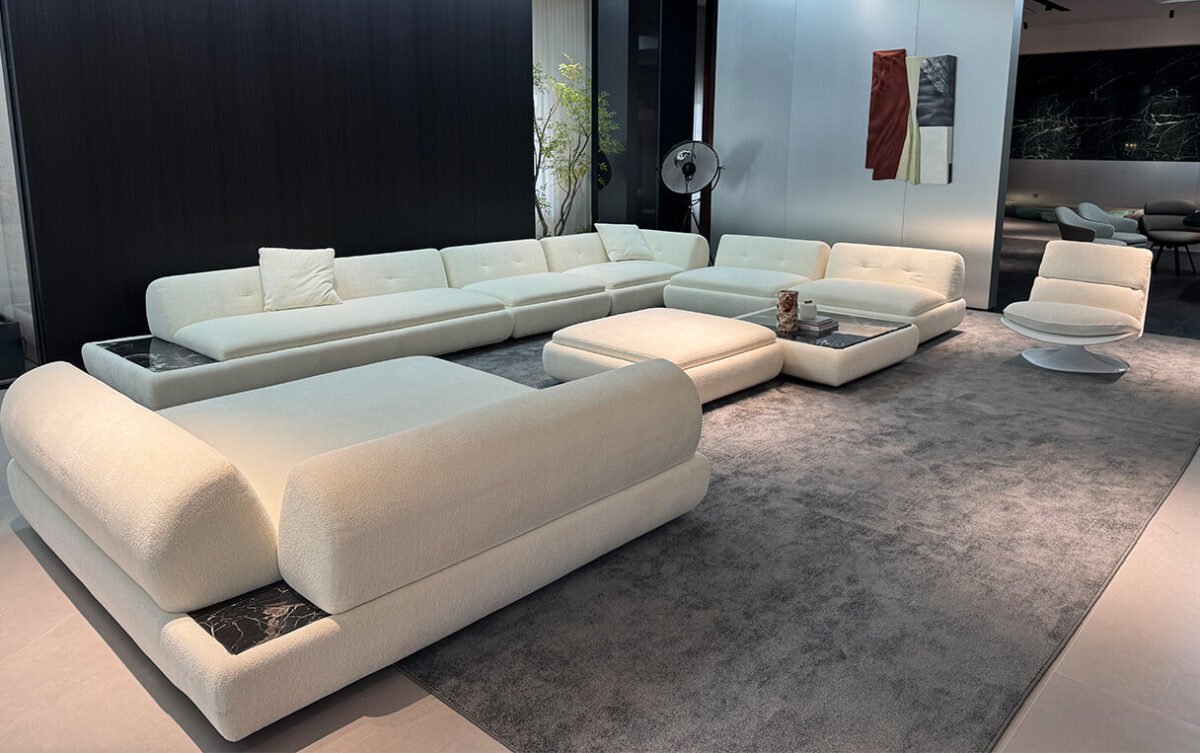
The catch is that “buying from China” isn’t one method. Sourcing a single accent chair looks nothing like furnishing a 40-unit hotel, and picking the wrong method for your order size is where most first-time buyers lose money. This guide breaks down the four real ways to buy furniture from China, what actually drives your landed cost, and the mistakes that turn a good deal into a delayed, mismatched shipment.
Table of Contents
Quick Answer: Is Buying Furniture From China Worth It?
For one or two pieces, Taobao or Alibaba with an agent will get you the best price. For a full villa, hotel, or renovation, a one-stop supplier who handles furniture and building materials together is almost always cheaper and faster than managing five separate factories yourself — you’re paying for one container and one point of accountability instead of five.
Contact Us for a Project Consultation
Why pay more? At Georg’s Furniture, we cut out the middlemen to bring you premium furniture, flooring, doors, windows,marble and tiles and more—all at prices up to 40% below retail. With 20+ years of experience and 600 consultants, we provide complete, custom project solutions, from initial design to final delivery.
Which Sourcing Method Fits Your Order?
The right way to buy depends almost entirely on order size, not on which platform has the lowest sticker price.
Order Furniture from Alibaba
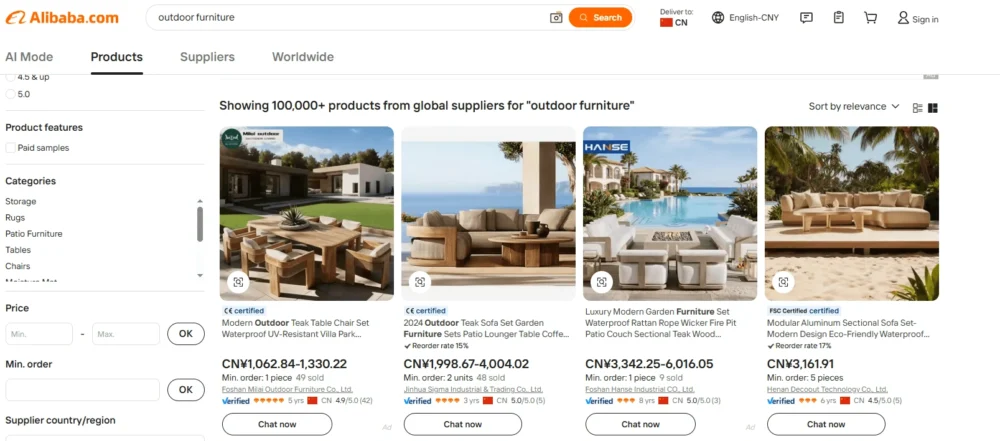
Alibaba is the standard B2B platform for bulk orders, and you’ll find both real factories and trading companies listed side by side. Factories tend to price lower and give you more control over materials; trading companies communicate faster and can bundle products from multiple factories into one order. Alibaba’s Trade Assurance covers your payment if the order doesn’t match what was agreed.
Buy Furniture from Taobao
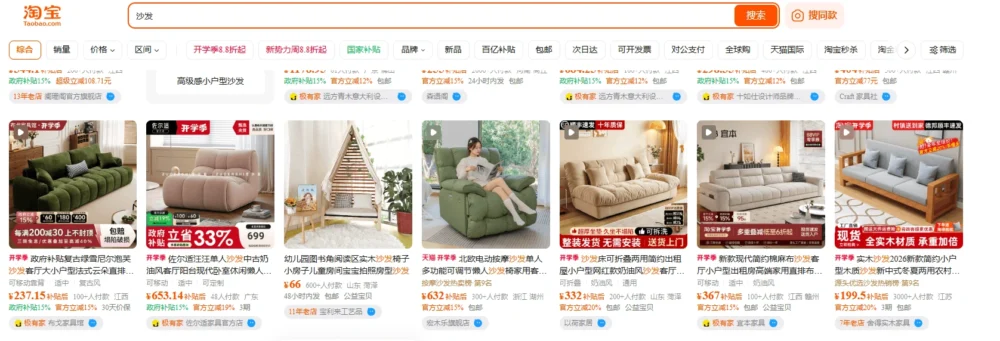
Taobao works best for single pieces or small accent orders. You can upload a photo and often find the exact item, or something close, straight from the factory that makes it. The catch: Taobao doesn’t ship internationally, so you’ll need a forwarding agent to consolidate and ship your order out of China.
Buy Furniture from JD.com
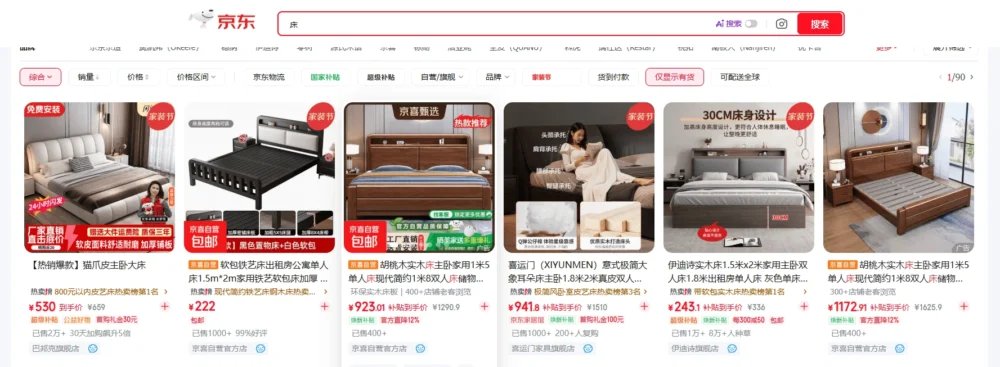
JD.com is another solid option for individual pieces, known for tighter quality control and more branded inventory than Taobao. Like Taobao, you’ll need a forwarding agent for international shipping.
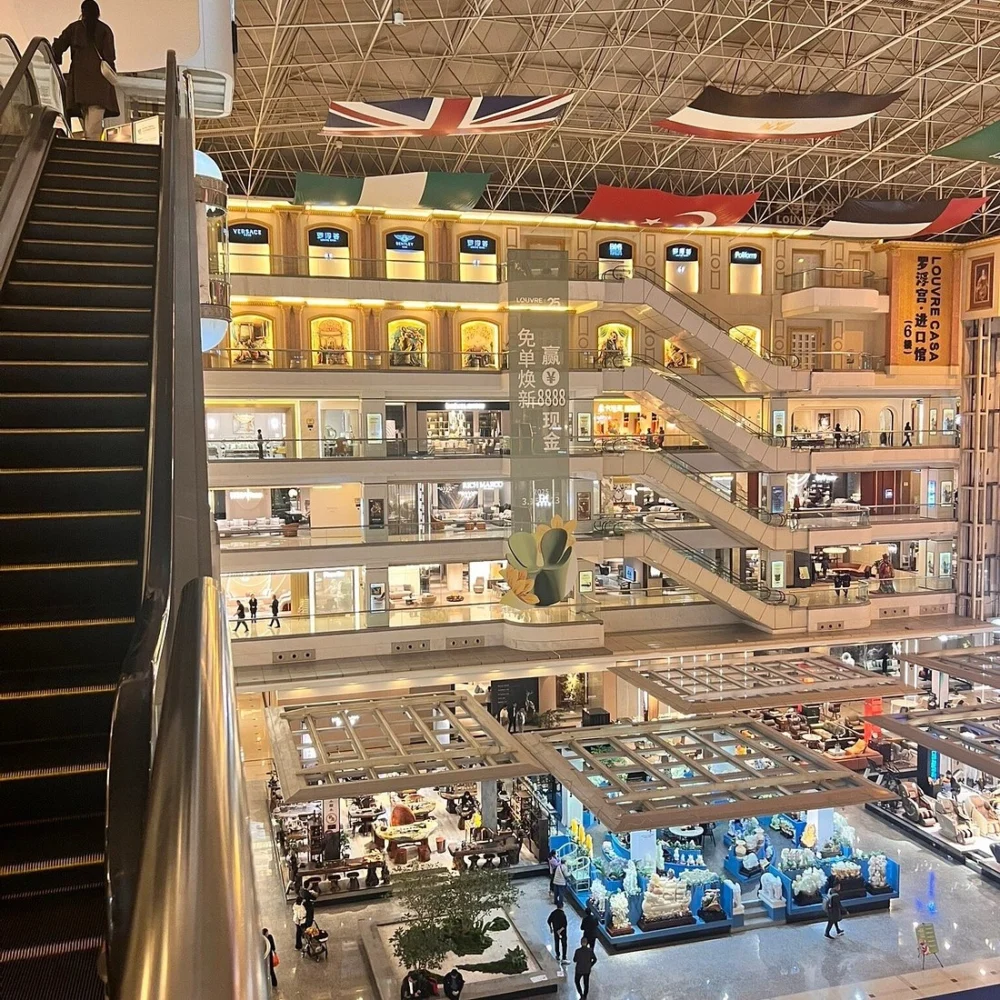
Visit the Foshan Furniture Market in person
Foshan is one of the largest furniture markets in the world, and it’s the right call for large orders where you want to inspect quality and negotiate face to face before committing.
| Platform | Best For | Order Size | Ships Internationally? | Needs an Agent? |
| Alibaba | Bulk, B2B buyers | Medium–large | Often yes | Optional |
| Taobao | Single/accent pieces | Small | No | Yes |
| JD.com | Branded, QC-checked items | Small–medium | No | Yes |
| Foshan Market (in person) | Large, full-container orders | Large | N/A (self-arranged) | Recommended |
Contact Us for a Project Consultation
Why pay more? At Georg’s Furniture, we cut out the middlemen to bring you premium furniture, flooring, doors, windows,marble and tiles and more—all at prices up to 40% below retail. With 20+ years of experience and 600 consultants, we provide complete, custom project solutions, from initial design to final delivery.
Work with a One-Stop Furniture & Building Material Supplier

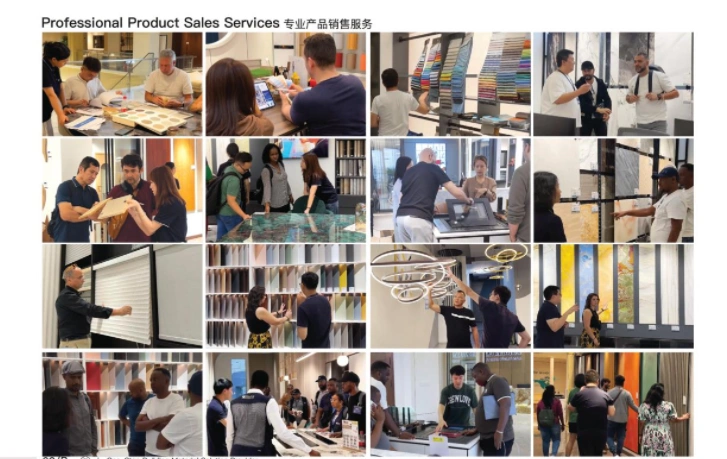
Once an order grows past a handful of pieces, coordinating ten-plus individual factories stops being a cost-saving move and starts being a full-time job. Different factories mean different lead times, different QC standards, and different shipping schedules — and if one factory runs late, your whole container waits.
A one-stop supplier gives you a single point of contact for sourcing, quality control, and shipping. That’s the model George’s Furniture runs for villa, hotel, and full-renovation clients: one team, one showroom, one shipment, instead of five separate negotiations happening in five different time zones.
Foshan: China’s Furniture Capital
Foshan is the country’s largest furniture hub, home to the well-known Lecong Furniture Market along with hundreds of factories and showrooms within a short drive of each other. Buyers who come in person negotiate directly with sellers and often combine several product types into a single container, so they’re not paying to ship a half-empty box.
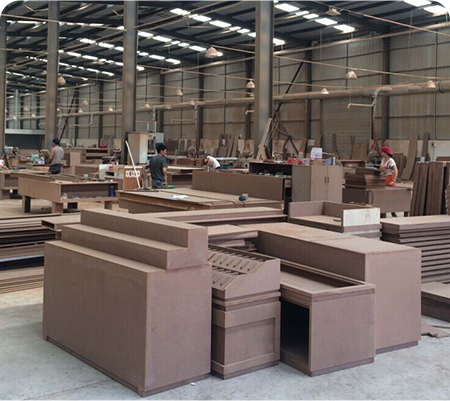
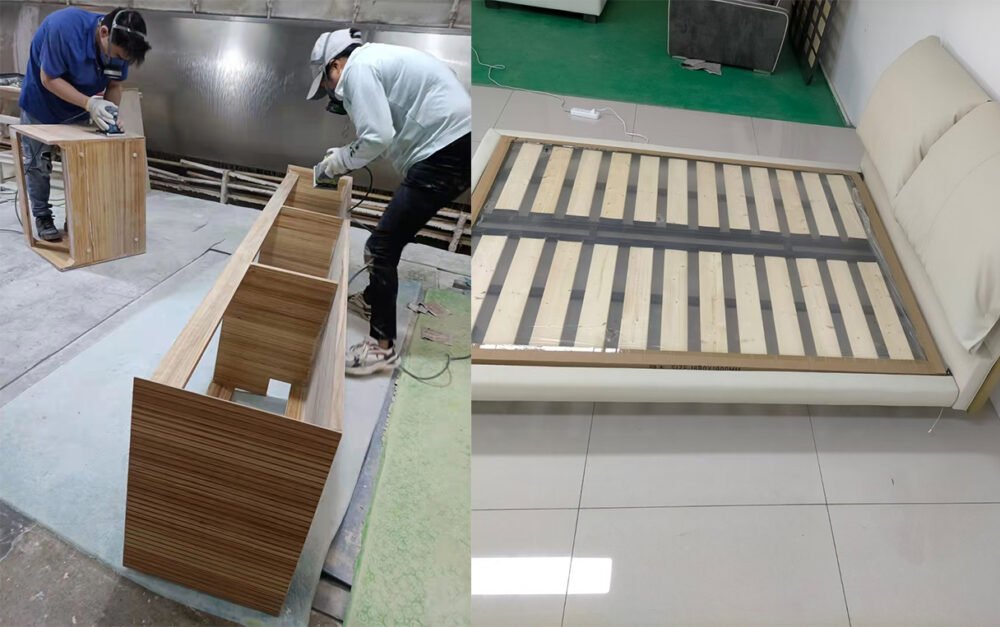
A genuine factory usually specializes in one category or material — solid wood, upholstery, or stone, for example — rather than claiming to make everything. Real factories are also far more willing to show you their production floor, either in person or on a live video call, than a reseller working off someone else’s catalog.
George’s Furniture runs a 30,000-square-metre showroom in Foshan where buyers can walk through furniture, cabinetry, stone, and lighting in one afternoon, instead of driving between ten separate factories to see the same range of products.
Factory vs. Trading Company: Who Are You Actually Buying From?
Not every seller on Alibaba, or every booth at a trade show, is a manufacturer. Plenty are trading companies that buy from various factories and resell under their own name. That’s not automatically a red flag, but it changes your price, your control over specs, and who’s accountable if something goes wrong.
| Factory | Trading Company | |
| Who they are | Owns and runs the production line | Buys from factories and resells |
| Price | Usually lower, no middleman markup | Usually higher, includes their margin |
| Product range | Narrow — one material or category | Wide — can source almost anything |
| Communication | Can be slower, less fluent English | Often faster, English-speaking sales teams |
| Control over materials | High — you can request specific specs | Lower — depends on what the factory allows |
| Video tour of production floor | Usually available | Often not possible — they don’t own the floor |
To tell them apart, ask directly whether they manufacture in-house or source from another factory, then check their Chinese business license: manufacturers list “production” or “manufacturing,” while resellers list “trading,” “import,” or “export.”
How to Verify a Supplier Before You Send Money
A polished Alibaba storefront tells you nothing about who’s actually behind it. Check these before placing a deposit:
- Company registration. Get the business license number and verify it through China’s National Enterprise Credit Information System.
- Factory address. Confirm it matches both the license and the map location — not just a warehouse or office.
- Live factory tour. Ask for a live video call, not pre-recorded footage. Look for real machinery, raw materials, and workers on the floor.
- Certifications. Confirm they hold the standards your market requires — CARB or EPA for the US, BS/EN for the UK and EU.
- Export experience. Ask how long they’ve shipped to your country and whether they know its import and labeling rules.
- Past projects. Request photos from previous villa or bulk orders, not just catalog shots.
- A sample. Always order and inspect a sample before committing to a bulk run.
- Recent, unedited photos or video. Reused stock images are one of the clearest signs of a reseller posing as a factory.
- Production capacity. Confirm their monthly output can handle your order without quietly subcontracting it out.
- Quality control process. Ask exactly what they check during production and before packing — a vague answer is itself an answer.
Contact Us for a Project Consultation
Why pay more? At Georg’s Furniture, we cut out the middlemen to bring you premium furniture, flooring, doors, windows,marble and tiles and more—all at prices up to 40% below retail. With 20+ years of experience and 600 consultants, we provide complete, custom project solutions, from initial design to final delivery.
What We’ve Seen Go Wrong on Villa and Hotel Orders
After 20 years sourcing out of Foshan, the projects that go badly rarely fail because of the factory price. They fail because the buyer is coordinating five factories on five schedules, and one of them slips.
We’ve watched a villa order arrive with the living room sofas landing three weeks before the bedroom furniture, because two separate suppliers quoted “8-week production” without ever comparing notes on the shared delivery date. We’ve also seen matching finishes — two walnut tones that looked identical on screen — turn up half a shade apart in person, because each factory sourced its veneer from a different batch. Neither supplier did anything wrong on their own; nobody was managing the two of them together.
That’s the practical case for a one-stop supplier on anything beyond a handful of pieces: it’s not just about price, it’s about someone owning the whole timeline and the whole finish palette, not just their piece of it.
Villa & Whole-House Furniture Packages

A full furniture package covers everything from living and dining room pieces to bedroom furniture, wardrobes, and kitchen cabinets, ordered and shipped together. This works well for a new build or a full renovation where you need the whole property furnished at once.
Buying as a package keeps the style consistent property-wide, and it collapses what would be several shipments, several QC processes, and several points of contact into one. George’s Furniture also offers 3D design support to lay out the home before a single piece goes into production, so you know exactly where the sofa, the dining table, and the wardrobes will sit before they’re built.
For projects at this scale, a villa furniture package is usually the simplest and most reliable way to furnish an entire property from China. For sourcing structural materials alongside the furniture — stone, cabinetry, doors — see our guide on importing building materials from China.
Cost, Shipping & Landed Price Breakdown
The number a factory sends you first is not the number you’ll actually pay. It changes at several points before the furniture reaches your door.
The pricing chain: Factory Price → FOB Price → Shipping Cost → Import Costs → Landed Cost
- Factory Price. What it costs to make the piece, before it leaves the factory.
- FOB Price. Factory price plus getting the goods to the Chinese port, loaded onto the ship. This is the number most Alibaba listings quote.
- Shipping Cost. Ocean freight from the Chinese port to your destination port.
- Import Costs. Duties, tariffs, and port handling fees at your destination.
- Landed Cost. Everything above, plus inland transportation and installation if the piece needs it. This is the number to actually budget against — not the factory price.
The cheapest quote isn’t always the cheapest order. A rock-bottom factory price can be hiding thinner boards, weaker hardware, or minimal packaging — all of which show up later as damage, repairs, or early replacement. Compare landed cost, not factory price, across every quote you get.
What else moves your final number:
- Material. Solid wood costs more than engineered wood; real leather costs more than PU; marble costs more than laminate.
- Customization. Custom sizes, shapes, or finishes cost more than a factory’s standard catalog design.
- MOQ. Ordering below the factory’s minimum usually means a higher price per unit.
- Packaging. Stronger cartons, foam corners, and moisture wrap cost more upfront but cut down on damage and replacement costs.
- Container utilization. A full container brings the per-piece shipping cost down; a half-empty one means you’re still paying for space you didn’t use.
- Shipping method. Ocean freight is cheaper but slower. Air freight costs far more and is usually only worth it for small, urgent orders.
- Destination port. Congested ports or ports without direct routes usually mean higher freight and longer wait times.
- Tariffs and duties. These vary by country and product category — check your local import rules before committing to an order.
- Inland transportation. Moving goods from the destination port to your home, warehouse, or job site.
- Installation. Built-in wardrobes, kitchen cabinets, and other large pieces often need on-site assembly, which adds to the total after the furniture has already arrived.
Quality Control Checklist Before You Approve an Order
A photo on a listing tells you almost nothing. Before you sign off on production, check these:
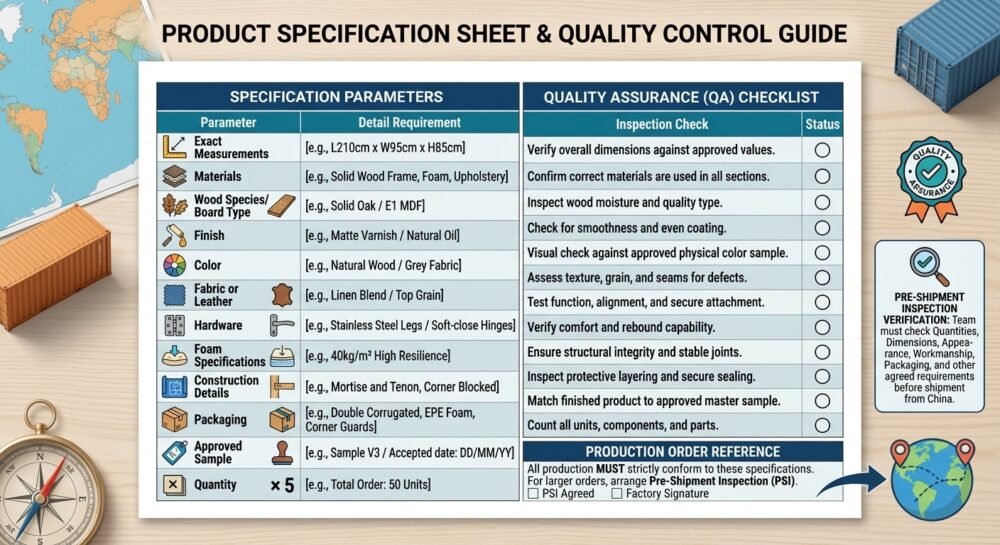
Structure and materials
- Confirm whether it’s solid wood, plywood, MDF, or particleboard — each has a different price and lifespan.
- Check that panels are thick enough not to bend or sag under weight.
- Check veneer thickness and how well it’s glued; poor veneer peels and bubbles over time.
- Make sure edges are properly sealed — loose edges wear out fast.
- Ask whether drawers use dovetail joints or dowels, versus just staples and glue.
Surface and finish
- Ask for close-up photos in natural light to spot scratches or uneven paint.
- Check that wood grain or marble pattern matches across panels — a poor match makes good material look cheap.
- Confirm doors and drawers sit straight with even gaps.
Hardware
- Ask for the brand of hinges, drawer slides, and handles — known brands hold up longer.
- Check how many hinges or slides are used per door or drawer; too few reduces durability.
Fabric and cushioning
- Ask for the rub count on upholstery. Don’t accept “durable” as an answer on its own.
- Check foam density — higher density holds its shape longer.
Packaging and shipping protection
- Confirm the box is rated for the item’s weight.
- Check for corner guards, foam padding, and moisture protection around the actual product.
- Make sure wood furniture has a moisture barrier for long ocean transit.
- Confirm assembly instructions and all screws, bolts, and connectors are included.
For wood furniture, ask for the moisture content — kiln-dried wood should sit around 8–12%. On large orders, a third-party inspection (SGS or similar) before shipping is worth the cost.
Mistakes First-Time Buyers Make When Sourcing from China
Skipping a written sample agreement. Without a clear note stating “bulk order must match sample exactly,” some factories quietly substitute cheaper materials or finishes on the full production run once the sample has already been approved.
Managing too many suppliers alone. Splitting a villa order across five factories to chase the lowest price on each item often costs more in the end — mismatched finishes, staggered delivery windows, and no single party accountable when something ships wrong.
Judging suppliers on photos instead of process. A clean listing photo says nothing about veneer thickness, hinge count, or moisture content. Buyers who only ask “does it look good” find out about build quality after the container has already left port.
Comparing factory prices instead of landed costs. A supplier quoting 15% below everyone else is usually cutting something — board thickness, hardware, or packaging — and that difference shows up as damage or early wear, not on the invoice.
Assuming no reply means no problem. Slow, vague answers to specific questions about capacity, certifications, or timelines are one of the most reliable early signs of a reseller, not a real manufacturer.
FAQs
What’s the difference between Alibaba, Taobao, and visiting Foshan in person?
Alibaba suits bulk B2B orders, Taobao suits single accent pieces, and visiting Foshan in person works best for large orders where you want to inspect quality and negotiate directly.
Do I need to visit China to place an order?
No. Video calls, samples, and photos cover most orders. A factory visit is mainly worth it for large or high-value orders where in-person inspection matters.
Do I need an import license to buy furniture from China?
Most individual buyers don’t need a license for small orders, but larger commercial imports may require one depending on your country’s regulations.
How long does it take to receive furniture ordered from China?
Most orders take about 2.5 to 3 months total, covering production time plus ocean freight.
How much should I order — what’s a typical MOQ?
It depends on the factory. Many require 10–50 units per design; ordering below that minimum usually raises the price per unit.
Can I furnish an entire villa or hotel through one supplier?
Yes. A one-stop supplier can handle furniture and building materials together under a single order and shipment, which is usually cheaper and faster than coordinating several factories separately.
The Bottom Line
For a single piece or two, Taobao or Alibaba with a reliable agent will get you a good price without much complexity. For a villa, hotel, or full renovation, a one-stop supplier is almost always the more reliable route — one shipment, one QC standard, and one team accountable for the whole timeline instead of five.
If you’re ready to see the range in person, contact us to book a showroom tour at our 30,000-square-metre facility in Foshan.