Interior design trends for 2026 continue to favor natural materials, especially in kitchens where durability, functionality, and long-term appearance matter most. Among hardwood options, natural maple kitchen cabinets remain a practical choice for homeowners and project buyers seeking a balance between light color, structural strength, and finish flexibility.
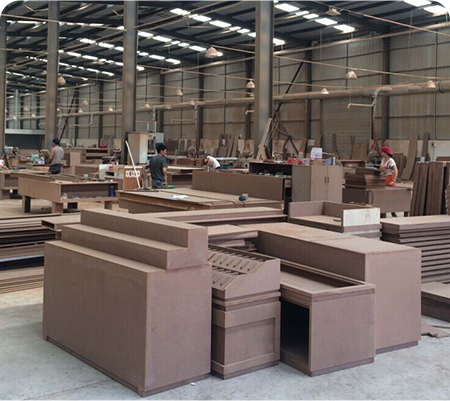
As a direct manufacturer of natural maple kitchen cabinets, George’s Kitchen Cabinets works with homeowners, contractors, developers, and hospitality clients to produce custom maple cabinets for both residential and commercial kitchens. Our experience manufacturing maple kitchen cupboards for different climates and usage scenarios allows us to translate design trends into cabinetry solutions that perform well in daily use, not just in showrooms.
This guide explains how maple wood cabinets perform in real kitchens, how different finishes affect long-term maintenance, and how to choose the right configuration based on your project needs.
What is maple kitchen cabinetry and why is it so in demand?
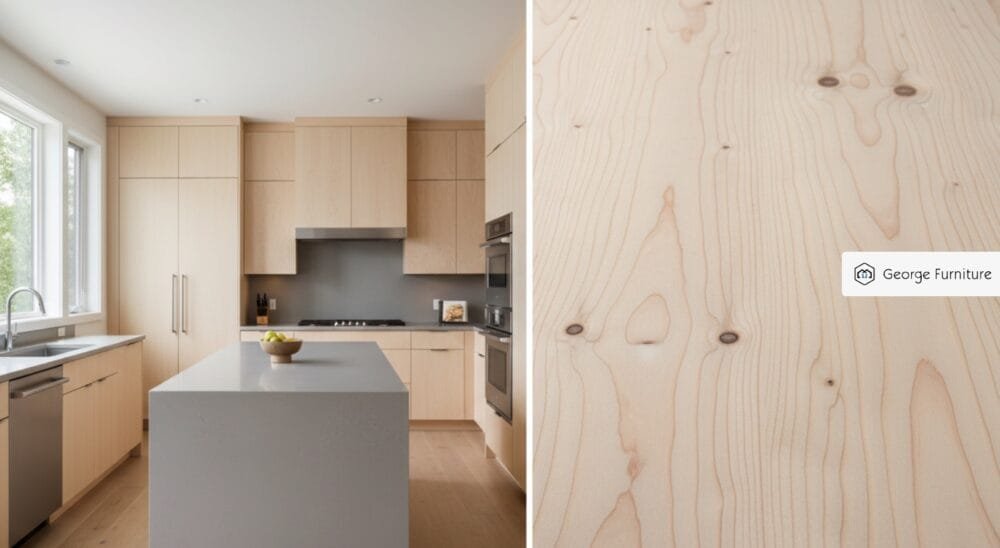
Maple kitchen cabinets are produced using a dense hardwood known for its fine, uniform grain and stable structure. Compared to more porous woods, maple provides a smooth surface that accepts stains, clear finishes, and paint evenly, making it suitable for both natural and customized looks.
From a manufacturing perspective, maple wood cabinets are often selected by clients who want:
A lighter alternative to oak without switching to painted MDF
Cabinets that resist daily wear in high-use kitchens
Consistent color matching across large cabinet runs
In several recent residential projects supplied by George’s Kitchen Cabinets, clients renovating older homes chose natural maple kitchen cupboards to brighten kitchens with limited natural light while avoiding glossy white finishes that show wear more easily over time.
Why choose maple wood cabinets for the home
Choosing maple wood cabinets is often a long-term decision driven by durability and flexibility. Maple’s hardness makes it less prone to denting compared to softer woods, which is especially important for households with frequent cooking activity.
From client feedback, homeowners often choose maple kitchen cabinets because:
The surface remains visually consistent after years of use
Finish options can be updated without replacing cabinet boxes
The material performs well in both dry and moderately humid environments
For families planning to stay in their homes long-term, maple cabinets offer a practical balance between appearance and maintenance effort.
Analysis of the pros and cons for your cabinetry project
Advantages: strength and finish flexibility
The primary advantage of natural maple kitchen cabinets lies in material density and surface quality. Maple is less porous than oak, which makes cleaning easier and improves finish adhesion.
Solid hardwood structure resistant to long-term deformation
Smooth surface suitable for natural, stained, or painted finishes
Cost-effective compared to walnut or cherry cabinets
Suitable for modern, transitional, and traditional kitchen designs
In multi-unit apartment projects, developers often select custom maple cabinets because consistent finishing can be achieved across dozens or hundreds of kitchens.
Disadvantages: maintenance and environmental sensitivity
Like all solid wood cabinets, maple kitchen cupboards respond to environmental conditions. Improper sealing or extreme humidity fluctuations may cause minor movement over time.
Light finishes may show surface scratches more easily
Prolonged sunlight exposure can cause gradual color warming
Less pronounced grain may not suit rustic design preferences
Professional factory finishing and proper installation significantly reduce these risks.
Popular styles and finishes for maple kitchen cabinets
4.1 Modern maple kitchen cabinets
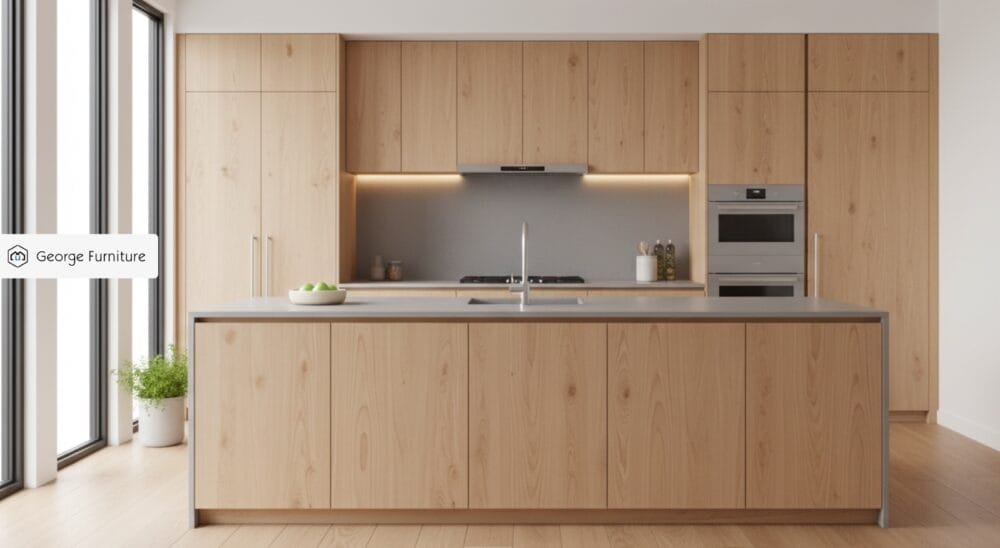
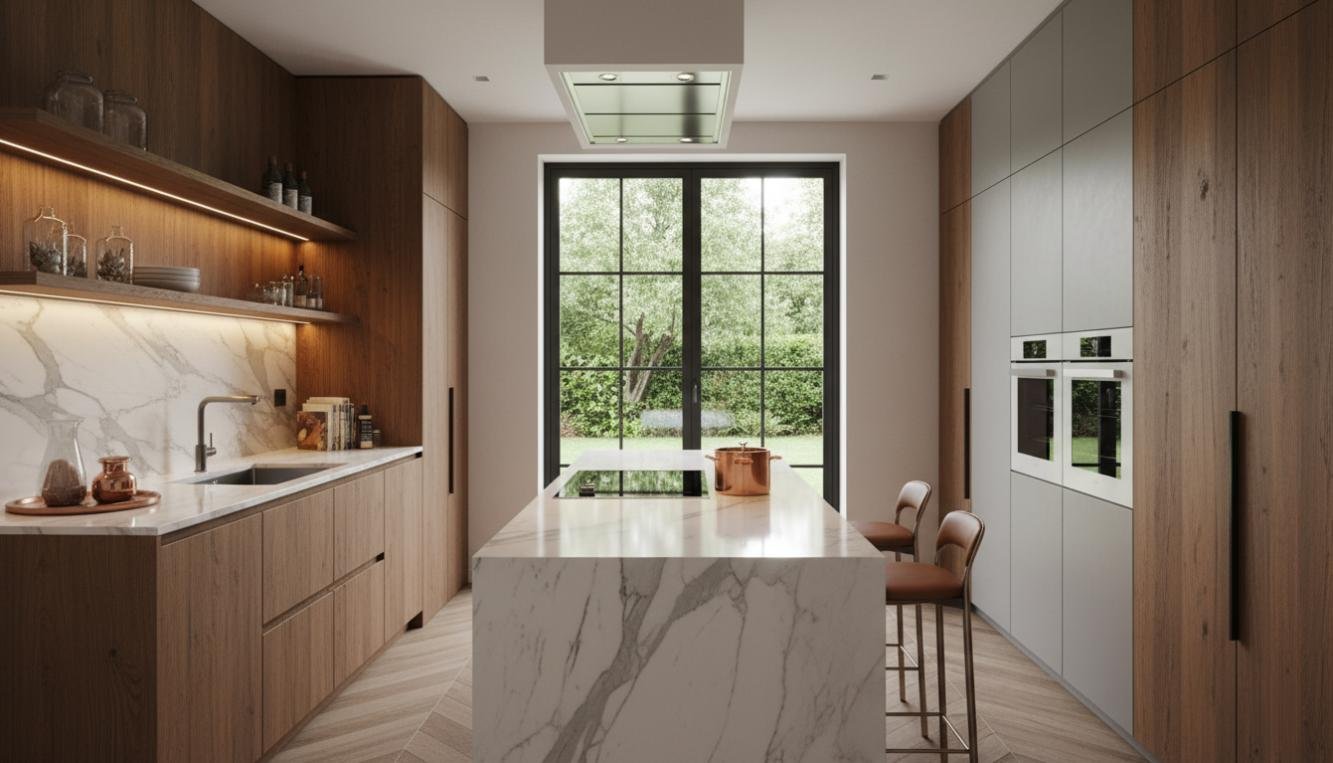
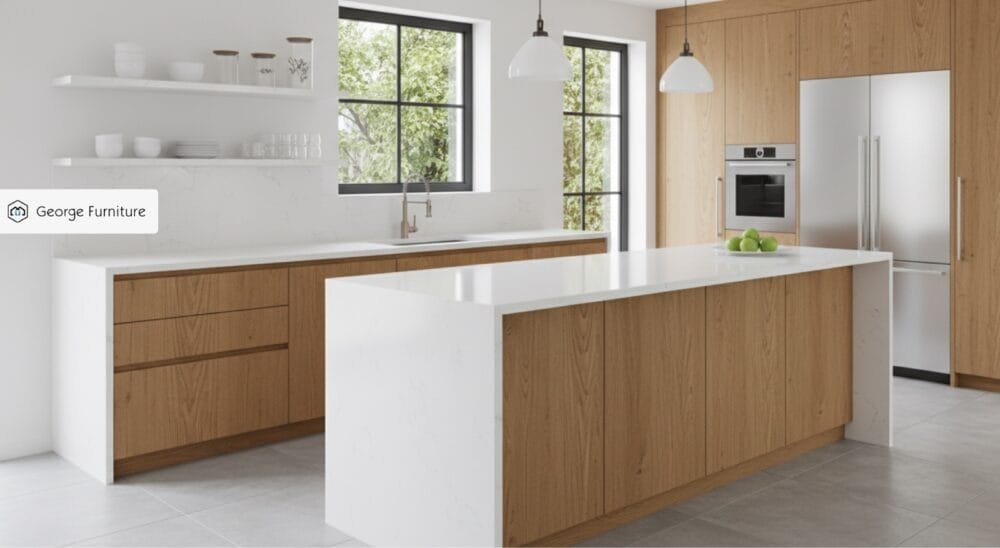
Flat-panel maple kitchen cabinets are widely used in modern interiors. Light stains or matte finishes pair well with quartz or marble countertops, creating kitchens that are easy to maintain and visually uncluttered.
Contemporary maple kitchen cabinets
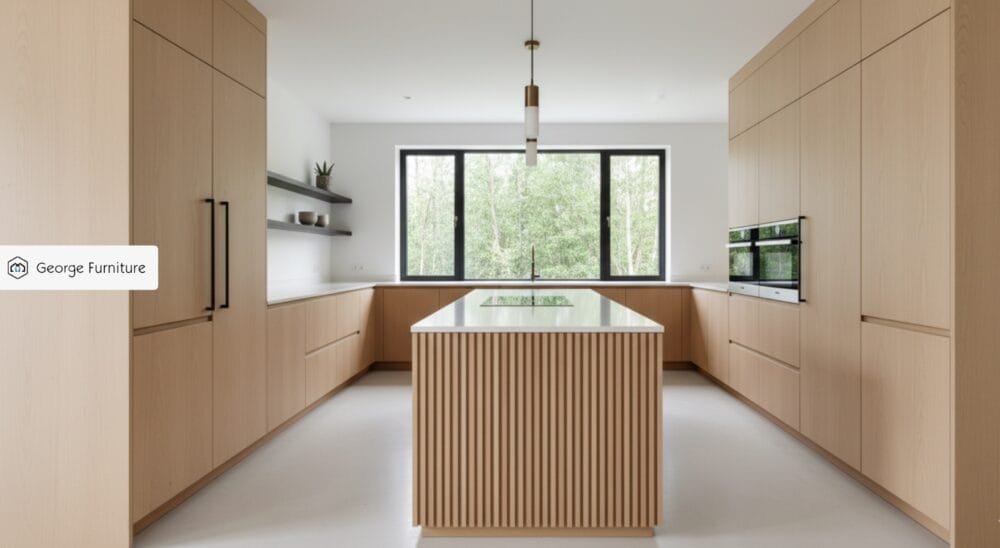
Two-tone maple kitchen cupboards are common in contemporary designs, with natural maple base cabinets and painted upper cabinets. This approach helps reduce visual weight while maintaining wood presence.
Natural maple kitchen cabinets
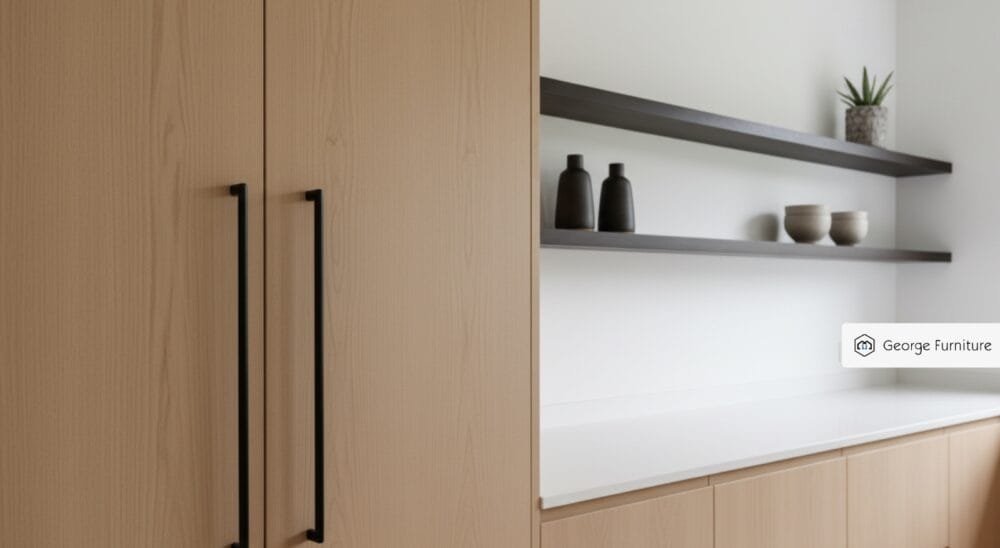
Natural maple kitchen cabinets highlight the wood’s fine grain and light tone. This finish is often chosen by homeowners who prefer visible wood without heavy color alteration.
Light maple kitchen cabinets
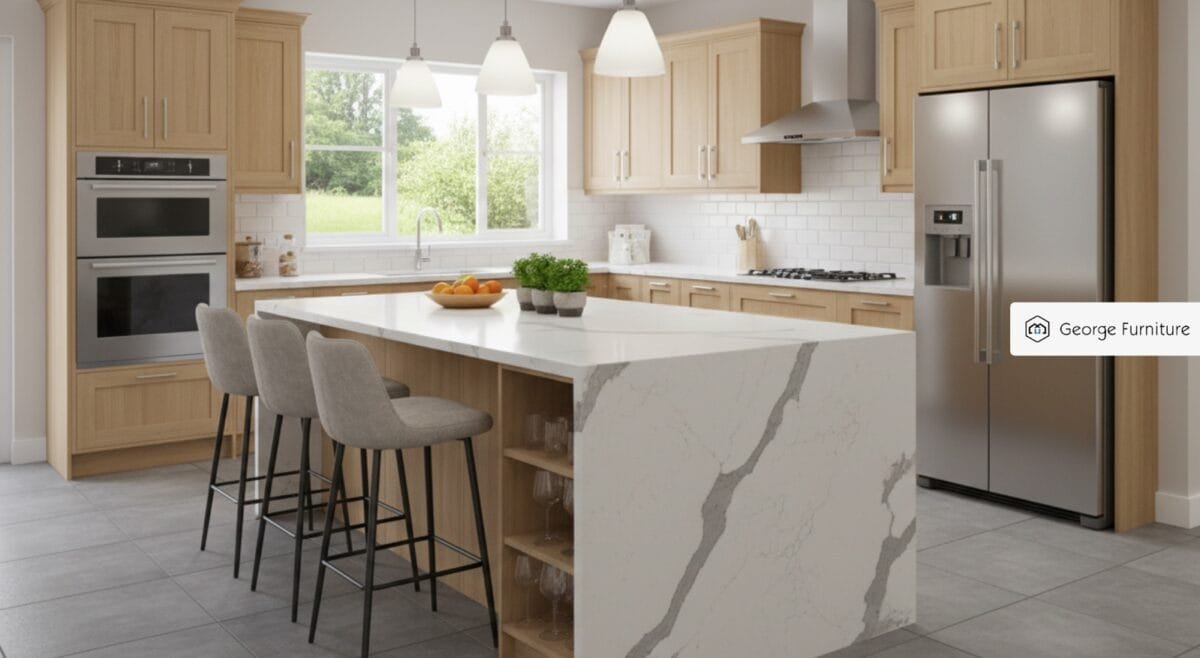
Light maple cabinets reflect available light, making them suitable for smaller kitchens or spaces with limited windows.
Honey maple kitchen cabinets
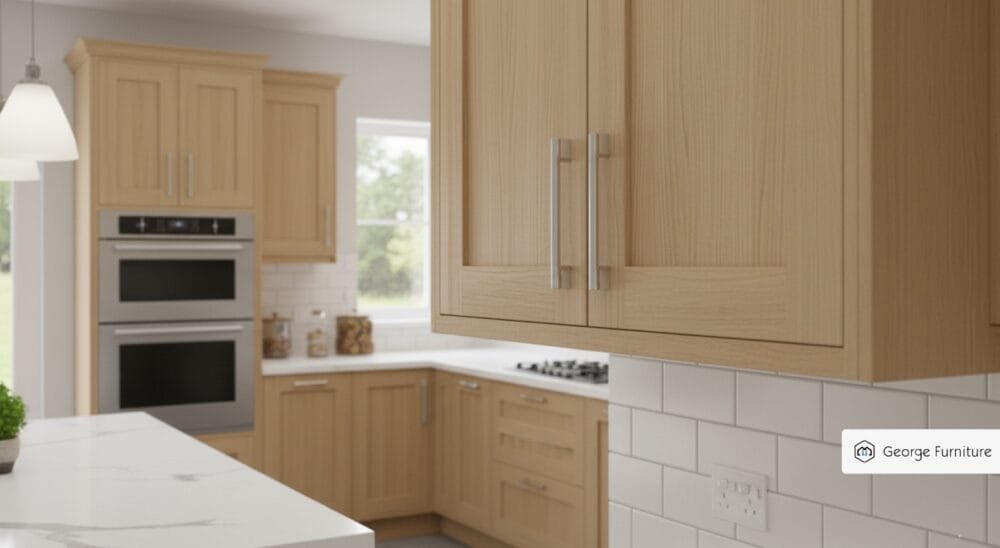
Honey maple cabinets add warmth without becoming visually heavy. This finish is frequently selected for transitional or modern-rustic kitchens.
Shaker maple kitchen cabinets
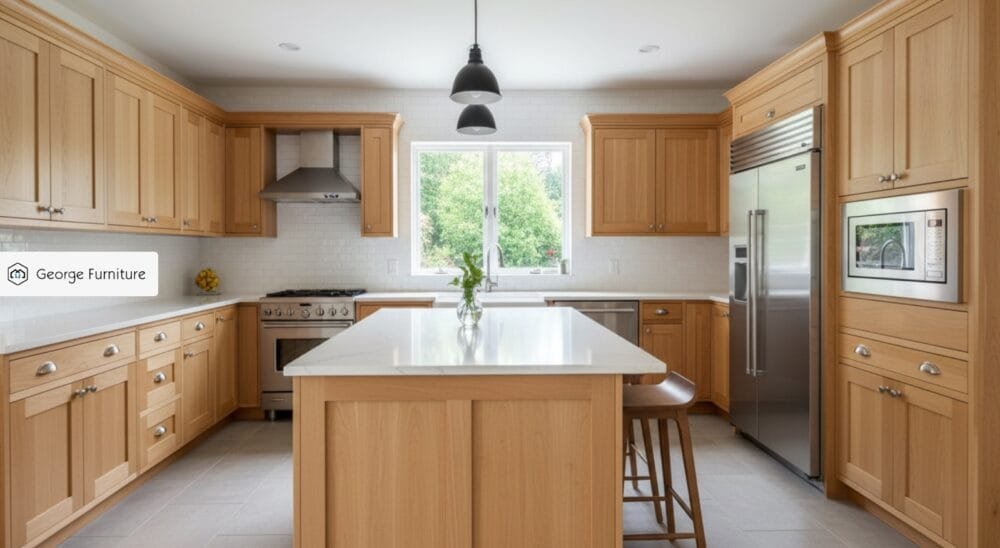
Shaker-style maple cabinets remain one of the most requested configurations for custom maple kitchen cabinets due to their versatility and ease of integration with different hardware styles.
Creative ideas for pairing maple kitchen cabinets
Successful kitchen designs balance cabinetry with countertops, flooring, and hardware. In practice, clients often prioritize durability and cleaning ease over purely decorative choices.
Maple kitchen cabinets with white countertops
Natural maple kitchen cabinets paired with white quartz or marble help maintain a clean, bright workspace while reducing visual contrast.
Maple kitchen cabinets with granite countertops
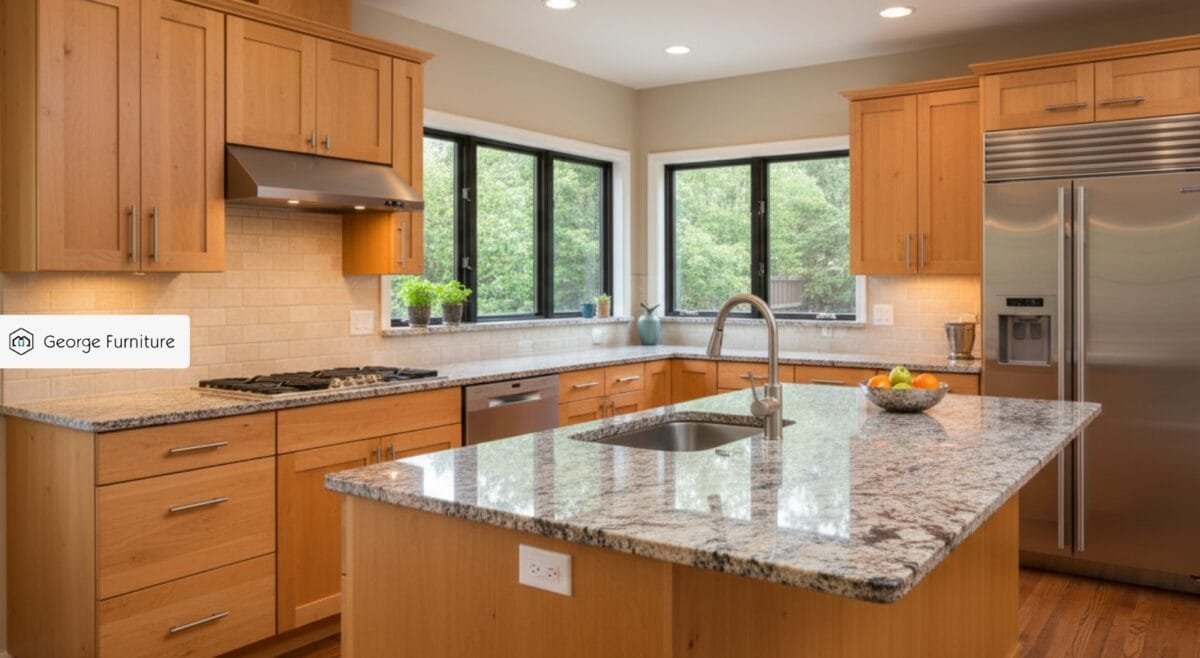
Granite countertops add texture and contrast, complementing the smooth surface of maple wood cabinets.
Maple kitchen cabinets with black hardware
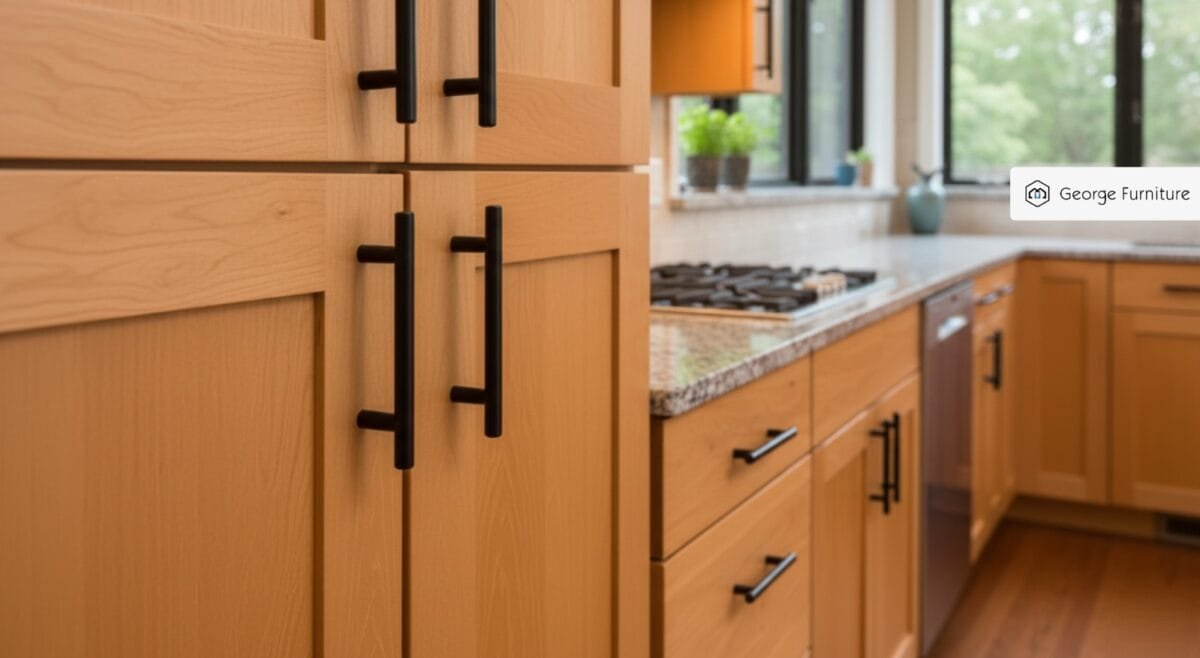
Black hardware improves grip visibility and reduces fingerprint appearance, a practical consideration in busy kitchens.
Material comparison: solid wood, MDF, and particle board
While MDF and particle board are economical solutions for cladding, nothing equals the solidness of maple kitchen furniture made from solid wood or with a high-quality plywood core, both in terms of hinge stability and resistance to residual moisture.
| Characteristic | Solid Maple Wood Cabinets | MDF Cabinets | Particle Board Cabinets |
|---|---|---|---|
| Material Structure | Made from solid maple hardwood or solid frames with plywood panels; commonly used in natural maple kitchen cabinets | Engineered wood fiber bonded with resin under high pressure | Compressed wood chips and resin, often used in low-cost cabinetry |
| Grain & Appearance | Natural, fine, and uniform maple grain; suitable for visible wood finishes | No natural grain; smooth surface ideal for painted cabinet doors | No visible grain; appearance depends on laminate or veneer |
| Finish Options | Clear, stained, honey maple, or painted finishes; excellent finish adhesion | Best for painted finishes; limited for natural wood looks | Mostly laminated or veneered; limited refinishing options |
| Durability & Strength | High strength and impact resistance; suitable for high-use maple kitchen cabinets | Moderate strength; edges may chip under impact | Low strength; prone to swelling and breakage |
| Moisture Resistance | Good when properly sealed; plywood cores improve stability in humid environments | Sensitive to moisture; can swell if exposed to water | Poor moisture resistance; easily deforms when wet |
| Longevity | Long service life; often chosen for custom maple kitchen cabinets and premium projects | Medium lifespan in residential use | Shorter lifespan; best for temporary or low-budget installations |
| Maintenance & Repair | Can be sanded, refinished, or repaired over time | Limited repair options once damaged | Difficult to repair; replacement usually required |
| Cost Level | Higher initial cost but better long-term value | Mid-range cost | Lowest upfront cost |
| Typical Use Cases | Natural maple kitchen cabinets, custom maple cabinets, residential and commercial projects | Painted kitchen cabinets, modern interior cabinetry | Budget kitchens, rental properties, short-term use |
| Best For | Buyers seeking durability, natural wood appearance, and long-term performance | Projects prioritizing smooth painted finishes at moderate cost | Cost-sensitive projects where longevity is not a priority |
For homeowners and developers seeking long-term durability and a natural wood appearance, solid maple wood cabinets or maple cabinets with plywood cores offer better structural performance compared to MDF or particle board alternatives.
Considering White Oak Cabinets as an Alternative?
While natural maple kitchen cabinets are often chosen for their light tone and smooth grain, some homeowners prefer the stronger grain contrast offered by oak. For those comparing materials, natural white oak kitchen cabinets provide a different visual character, with more pronounced texture and a slightly darker appearance.
To explore how white oak cabinets compare in real kitchen designs, including style inspiration and material contrasts, read our dedicated guide:
Natural White Oak Kitchen Cabinets: Inspirations and Contrasts
Custom maple kitchen cabinets by George’s Kitchen Cabinets
As a manufacturer of custom maple kitchen cabinets, George’s Kitchen Cabinets produces cabinetry tailored to project requirements, including cabinet dimensions, internal structures, door styles, and finish systems.
In recent hotel and serviced apartment projects, clients selected maple kitchen cupboards with plywood cores to improve hinge stability and moisture resistance while maintaining a solid wood appearance.
Contact Us for a Project Consultation
Why pay more? At George’s Furniture, we cut out the middlemen to bring you premium furniture, flooring, doors, windows, and more—all at prices up to 40% below retail. With 20+ years of experience and 600 consultants, we provide complete, custom project solutions, from initial design to final delivery.
Direct factory pricing for residential and B2B clients
By manufacturing in-house, George’s Kitchen Cabinets eliminates intermediary markups. This approach benefits private homeowners, contractors, and bulk purchasers requiring consistent quality across multiple units.
Project management for commercial applications
From design coordination to production scheduling, our team supports projects for hotels, offices, and educational facilities, ensuring reliable delivery timelines for maple kitchen cabinets.
2026 trends: Wabi-Sabi finishes and farmhouse influence
The 2026 collections by George’s Furniture interpret maple with a contemporary touch. The Wabi-Sabi line celebrates the natural small imperfections of wood, while the Farmhouse style proposes a return to rural atmospheres reinterpreted in a chic and modern key.
International logistics and global delivery
George’s Kitchen Cabinets ships custom maple kitchen cabinets to over 120 countries, with standardized packaging designed to protect solid wood cabinetry during transit.
Professional Maintenance Guide for Maple Kitchen Cabinets
Proper care helps maple kitchen cabinets maintain their appearance and structural stability over time. Maple is a durable hardwood, but regular, simple maintenance will extend its service life and reduce the need for repairs.
1. Daily Cleaning
Wipe cabinet surfaces with a soft, dry cloth or a slightly damp microfiber cloth. Avoid abrasive sponges and harsh cleaners, as they can damage the finish. For grease or stains, use a mild wood-safe detergent and dry immediately.
2. Moisture and Water Protection
Maple cabinets can be affected by standing water or high humidity. Always wipe spills quickly, especially around sinks and dishwashers. Use protective mats in high-use areas to prevent water damage.
3. Sunlight Control
Direct sunlight can gradually darken or warm the color of maple wood. Use curtains, blinds, or UV-protective window films to reduce prolonged sun exposure and keep cabinet color consistent.
4. Periodic Surface Care
Every 6–12 months, apply a wood-safe wax or maintenance oil if recommended for your cabinet finish. This helps protect the surface, reduce minor scratches, and maintain a consistent appearance.
5. Scratch Prevention
Although maple is a hard wood, light finishes may show scratches more easily. Use drawer liners, cutting boards, and protective pads to reduce surface wear in daily use.
6. Minor Repairs
Small scratches can often be improved with touch-up markers or wood repair wax matched to the cabinet color. For deeper damage, professional repair is recommended to avoid uneven results.
7. Hardware Maintenance
Check hinges, drawer slides, and handles periodically. Tighten screws and lubricate moving parts when needed to ensure smooth operation and prevent long-term stress on cabinet panels.
FAQ
Q1. Why choose maple kitchen cabinets for the kitchen?
Maple kitchen cabinets combine durability with a clean, consistent appearance. The fine, uniform grain of maple allows for smooth finishes, making natural maple kitchen cabinets suitable for both modern and traditional kitchens. Their strength also makes them practical for daily cooking environments.
Q2. What characteristics make natural maple kitchen cabinets practical?
Natural maple kitchen cabinets are valued for their resistance to dents, scratches, and everyday wear. The stable structure of maple wood cabinets allows for precise construction and reliable performance, even in high-use kitchens. This makes them a dependable option for long-term residential and commercial applications.
Q3. Are maple kitchen cabinets more expensive than other wood options?
Compared to some hardwoods, maple kitchen cabinets are moderately priced. While the initial cost may be slightly higher than basic materials, custom maple kitchen cabinets offer better long-term value due to their durability, finish flexibility, and extended service life.
Q4. What kitchen styles work best with natural maple kitchen cabinets?
Natural maple kitchen cabinets are highly versatile. They work well in modern, minimalist, contemporary, and transitional kitchens, and can also adapt to traditional layouts. Their light color and subtle grain make them easy to pair with different countertops, flooring, and hardware finishes.
Q5. How much do natural maple kitchen cabinets cost?
The cost of natural maple kitchen cabinets depends on cabinet size, construction method, door style, finish, and order quantity. As a direct manufacturer, George’s Kitchen Cabinets offers factory pricing without distributor markups. Custom maple kitchen cabinets are typically priced based on project specifications rather than fixed retail rates, providing better value for long-term use.
Q6. Can maple kitchen cabinets be fully customized?
Yes. Custom maple kitchen cabinets can be tailored in terms of dimensions, internal layout, door styles, finishes, and hardware. This flexibility makes maple kitchen cabinets suitable for both residential kitchens and large-scale commercial projects where standard cabinet sizes may not fit architectural requirements.
Q7. What is the production and delivery time for custom maple kitchen cabinets?
Production time for custom maple kitchen cabinets generally ranges from 30 to 45 days, depending on design complexity and order volume. As a manufacturer with established logistics partners, George’s Kitchen Cabinets supports international delivery, with shipping timelines coordinated based on project schedules.