Came here searching for parts of a staircase because you need to fix a damaged stair? Or maybe you are planning a home renovation or building a new house and need to understand how a staircase is constructed. In either case, your search ends here.
Below, we will briefly explain all parts of a staircase and how they work together. Whether you are repairing existing stairs, renovating a home, or building a staircase for a new house, understanding these components will help you make better design and construction decisions. From the structural elements that support the stairs to the parts used for safety and decoration, we will explain them all. Let’s begin!
Anatomy of a Staircase Diagram Explained
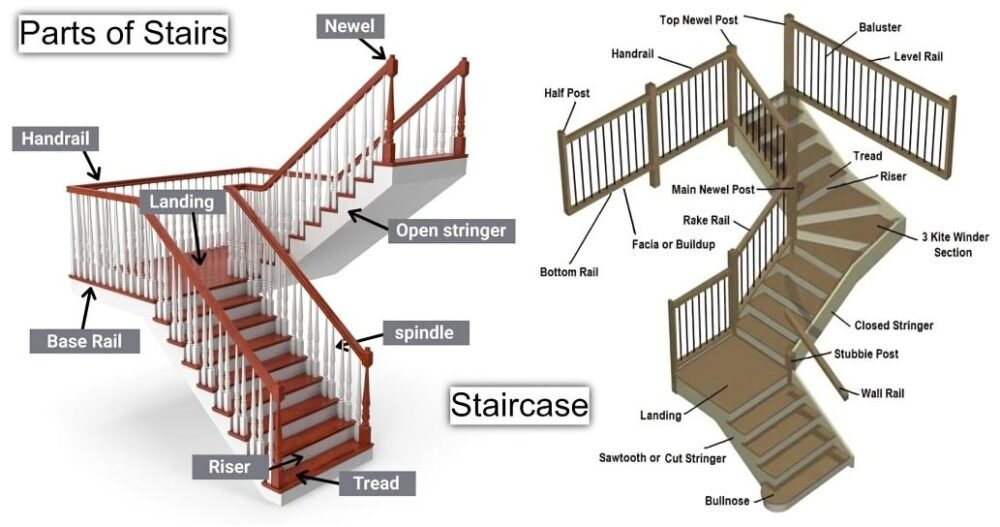
When looking at a staircase diagram, it becomes much easier to understand how the parts work together.
A typical staircase diagram highlights several essential components:
Stringers supporting the entire structure
Treads and risers forming each step
Nosing extending the step edge
Balusters and handrails providing safety
Newel posts anchoring the railing system
Architects often refer to this layout as the anatomy of a staircase because each component plays a specific structural or safety role.
Studying a diagram helps homeowners understand how stairs are built and how repairs or renovations should be planned.
Table of Contents
Quick Overview
A staircase includes main structural parts such as tread, riser, stringers, and nosing; supportive components such as landings, framing, and winders; safety components such as banisters, newel posts, and balustrades; and decorative components such as bullnose, curtail steps, volutes, and finials.
Parts of a Staircase Names List
The most common parts of a staircase names include the following structural, safety, and decorative components:
| Stair Part | Function |
|---|---|
| Tread | Flat step surface you walk on |
| Riser | Vertical board between steps |
| Stringer | Structural support board under stairs |
| Nosing | Front edge extension of a stair tread |
| Landing | Flat platform between stair flights |
| Winders | Triangular steps used for turns |
| Handrail | Rail used for support while walking |
| Baluster | Vertical spindle supporting the railing |
| Newel Post | Large post anchoring the railing |
| Balustrade | Complete railing system |
| Skirt Board | Trim board covering stair edges |
| Bullnose Step | Rounded first step |
| Curtail Step | Decorative extended bottom step |
| Volute | Spiral end of a handrail |
| Finial | Decorative top piece of newel post |
Understanding these stairwell components helps homeowners communicate clearly with builders or contractors.
The Main Structural Parts of a Staircase
To gain any insight into the mechanism of a staircase, it is useful to examine the simplest structural elements that comprise every step.
Contact Us for a Project Consultation
Why pay more? At George Living, we cut out the middlemen to bring you premium furniture, flooring, doors, windows,marble and tiles and more—all at prices up to 40% below retail. With 20+ years of experience and 600 consultants, we provide complete, custom project solutions, from initial design to final delivery.
Tread
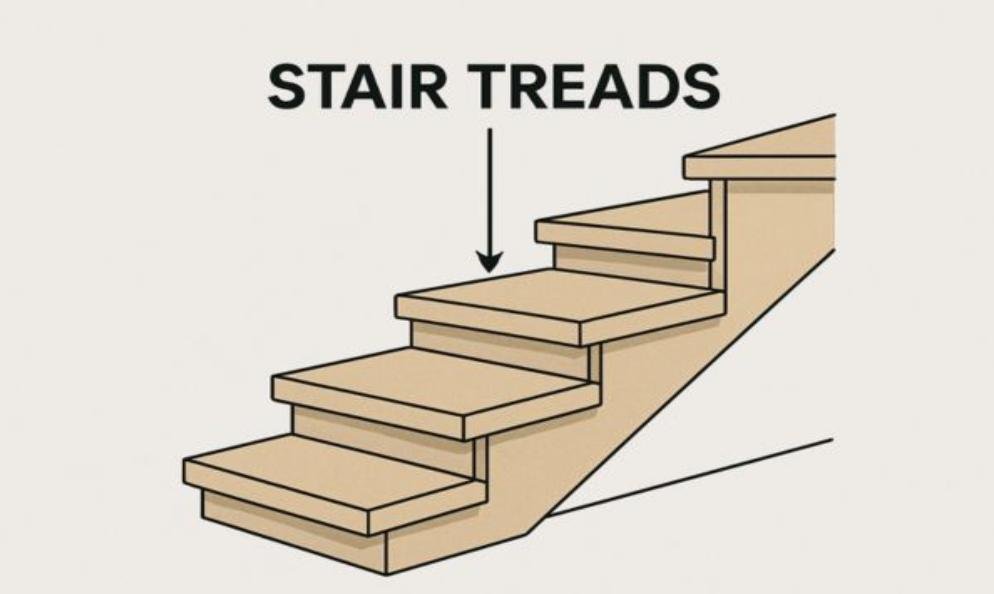
The tread is the horizontal part of the step where your foot lands.
Most residential stair treads are about 10–11 inches deep, allowing comfortable movement up and down the staircase.
Strong and properly sized treads are essential because they support daily foot traffic.
Riser
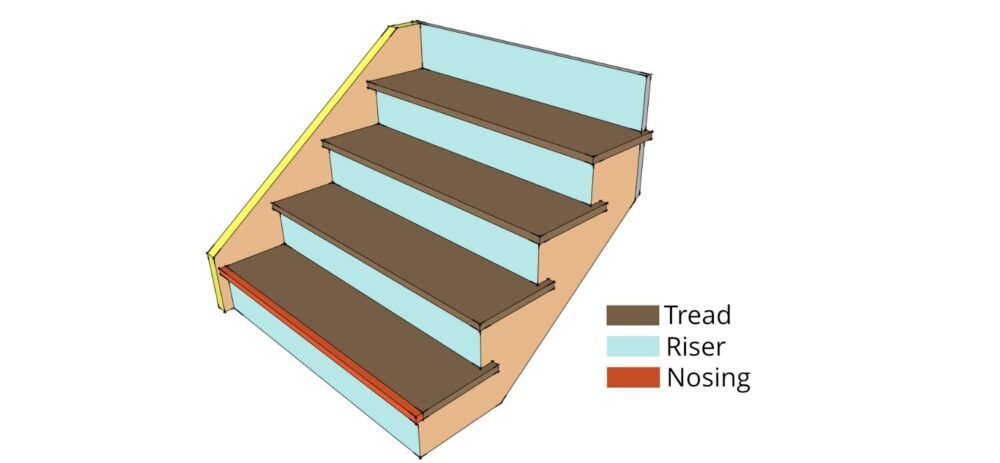
The riser is the vertical board located between two treads.
It determines the height of each step, which is usually around 7–8 inches in residential stairs.
Some modern designs use open riser stairs, where the vertical board is removed. These designs create a lighter visual appearance but may not be ideal for homes with small children.
Stringers
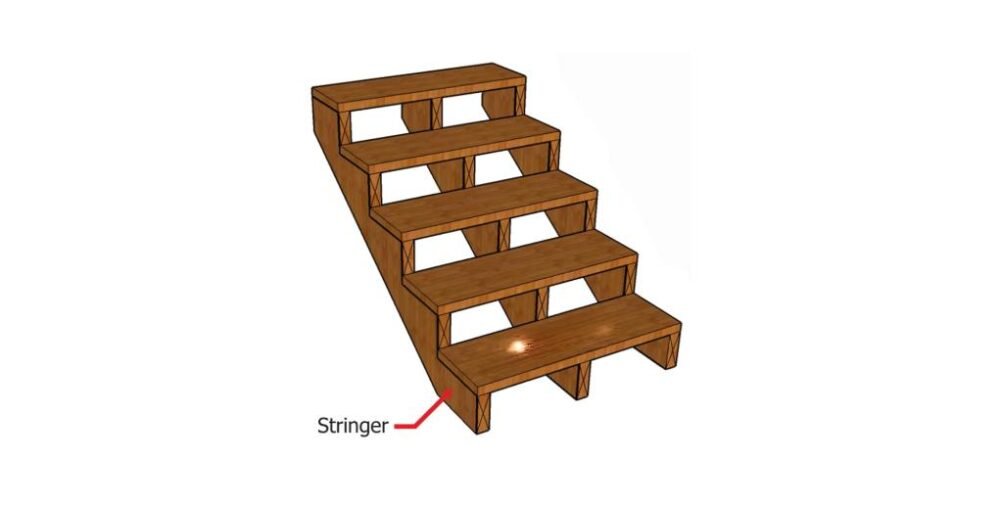
Among all parts of a staircase, the stair stringers carry the most structural responsibility.
These are the long angled boards that support the steps from underneath.
A standard staircase typically includes:
Two side stringers
Sometimes a center stringer for additional support
Without properly installed stringers, the staircase would not safely support weight.
Nosing
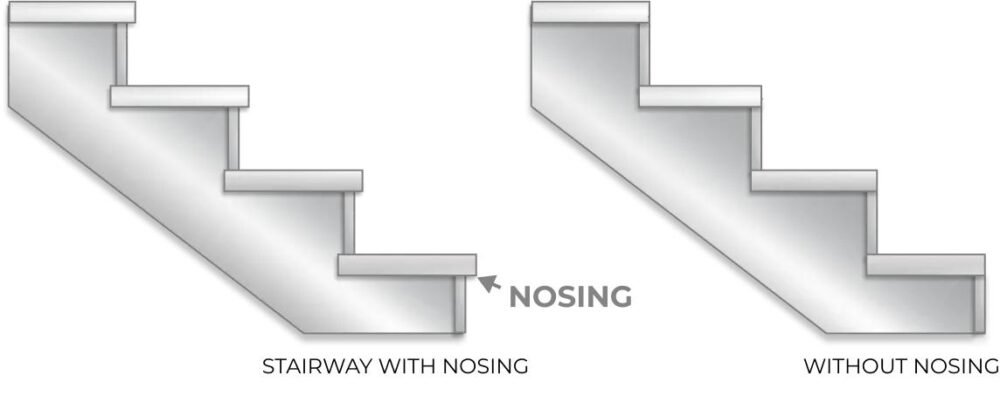
The stair nosing is the slightly extended edge at the front of each tread.
Although it appears small, it plays an important role by:
providing extra foot space
improving grip
reducing wear on step edges
Many building codes require stair nosing to improve stair safety. If you are planning a stair renovation, understanding the right flooring materials is also important. You can explore different options in this guide to Floorboard Types.
Stairwell Components That Support the Structure
Besides individual steps, the stairwell components help hold the entire staircase system in place.
Landing
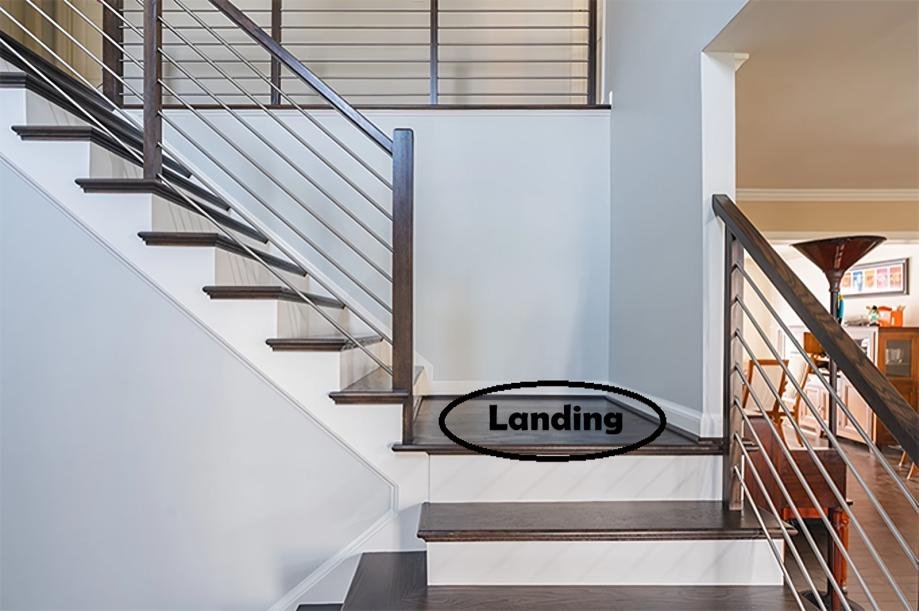
A landing is a flat platform located between two flights of stairs or at the top of the staircase.
Landings serve several purposes:
provide resting points
allow stairs to change direction
improve safety on long staircases
Stairwell Framing
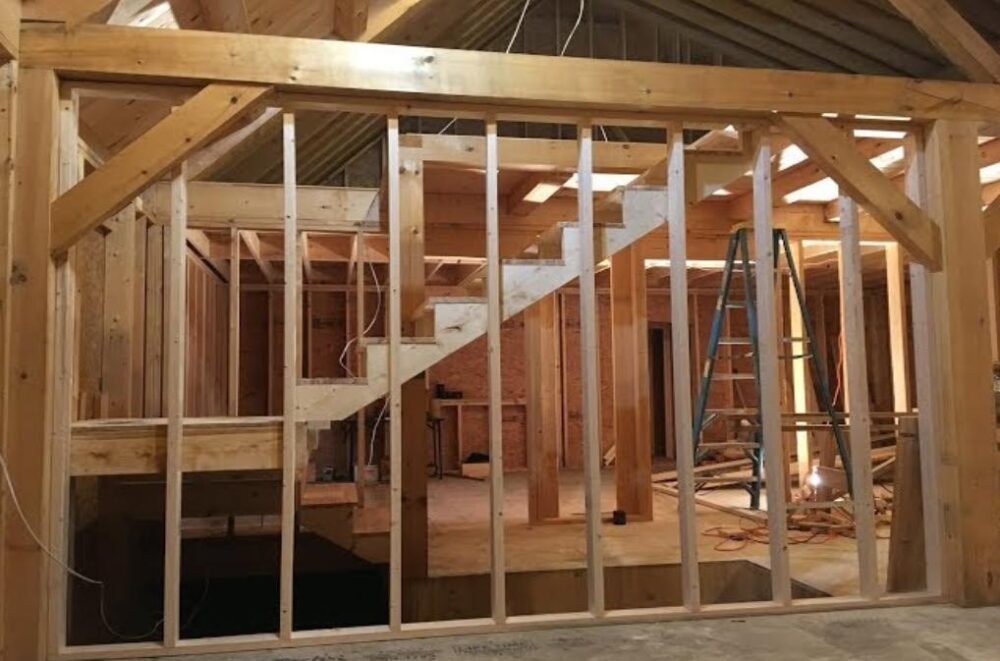
The stairwell is the structural opening that houses the staircase.
Framing around the stairwell distributes weight to surrounding floors and walls. Without proper framing, the staircase could become unstable over time.
Before we check out the remaining parts, if this stair renovation is part of a larger home renovation, contact George Living’s renovation contractor. We will help you plan your renovation from start to finish.
Winders
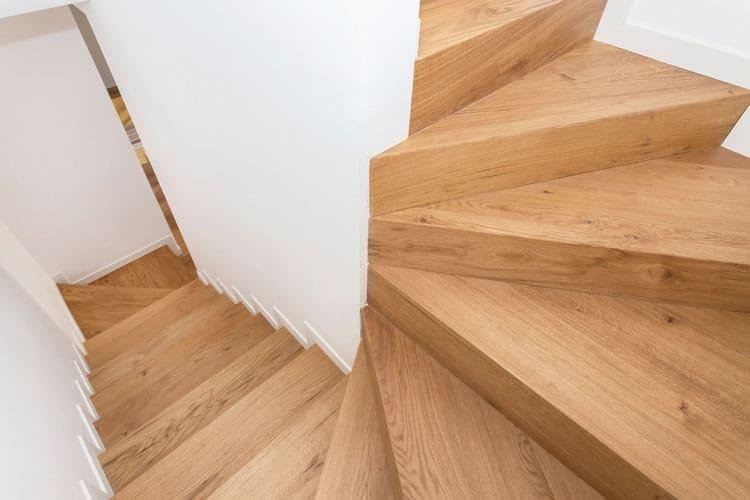
Winders are triangular steps used when a staircase needs to change direction without adding a landing.
They are commonly used in:
small houses
tight floor plans
space-saving staircase designs
Before we check out the remaining parts, if this stair renovation is part of a larger home renovation, contact George Living’s renovation contractor. We will help you plan your renovation from start to finish.
Stair Railing System Safety Components
Several staircase parts are specifically designed for safety.
Bannister / Handrail
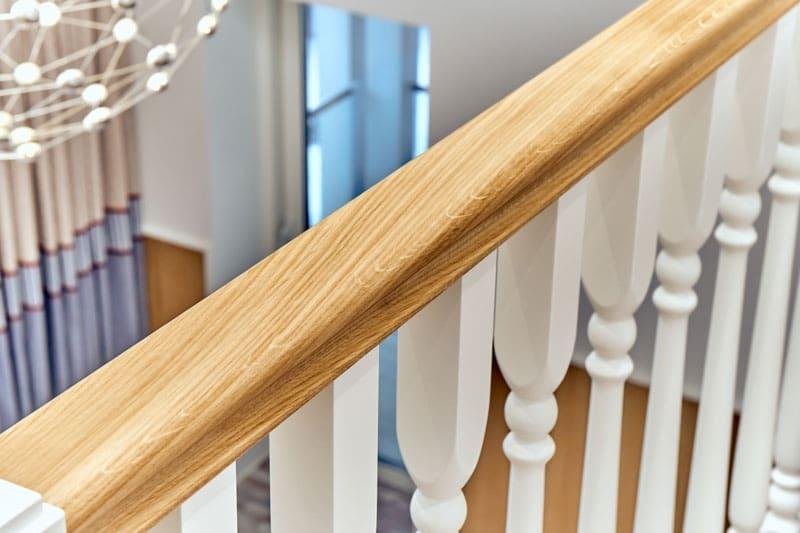
The handrail is the rail people hold while walking up or down the stairs.
It improves stability and helps prevent falls.
The term bannister is sometimes used interchangeably, although technically it refers to the railing system.
Newel Post
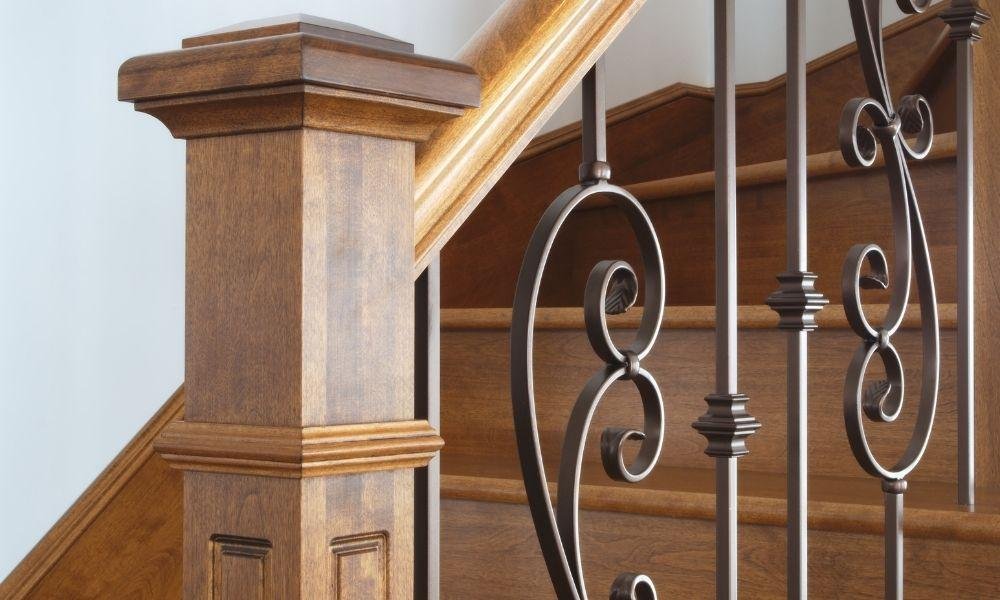
The newel post is the large vertical post located at the bottom or top of a staircase.
It anchors the handrail and provides structural stability for the railing system.
Newel posts are also decorative elements in many staircase designs.
Balustrade
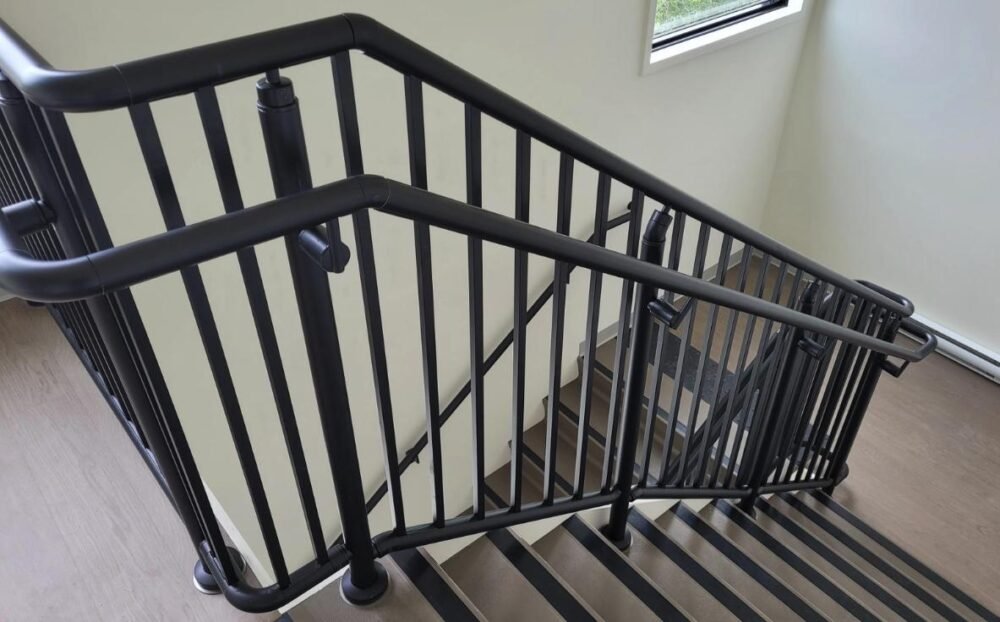
Builders often refer to the entire railing system as the balustrade. It consists of balusters, newel posts, and a handrail. When people talk about replacing a stair railing, they usually mean the entire balustrade system.
When our team at George Living
looks at a staircase design, safety is never treated as a small detail. We carefully check measurements such as tread depth and handrail height because these directly affect how safe and secure your stairs are.
Below is a basic staircase safety checklist our experts created to help keep your stairs safe:
Make sure the steps are deep enough for your whole foot to fit comfortably.
Keep the step height consistent throughout the staircase. Uneven steps can cause people to trip or lose balance.
Install handrails that are easy and comfortable to grip.
Keep the spacing between balusters small to improve safety.
Make sure that stringers are strong and correctly installed.
Install stair nosing or non-slip strips to improve traction.
Ensure your staircase meets local building codes and safety standards.
For a deeper look at stair safety standards, check out this detailed article on residential staircases safety standards.
Staircase Safety Checklist
When evaluating stair safety, professionals often check these factors:
consistent riser height
proper tread depth
strong stringers
safe baluster spacing
properly installed handrails
non-slip stair surfaces
These details directly affect everyday safety.
Standard Staircase Dimensions Guide
Building codes require specific measurements to keep stairs safe and comfortable to use. Below are the most common residential staircase dimensions.
| Stair Component | Typical Size |
|---|---|
| Tread Depth | 10–11 inches |
| Riser Height | 7–8 inches |
| Handrail Height | 34–38 inches |
| Nosing Projection | ¾ – 1¼ inches |
| Baluster Spacing | Less than 4 inches |
| Landing Depth | At least the stair width |
These dimensions ensure that stairs feel natural to walk on and help reduce the risk of trips or falls.
Always check local building codes, since regulations may vary slightly by region.
Trim and Finishing Parts of a Staircase
After structural installation, finishing components complete the staircase appearance.
Stair Skirt Board Trim
The stair skirt board trim runs along the wall beside the staircase.
It covers the joint between the wall and the steps and creates a clean finished appearance.
Base Rail
The base rail runs along the bottom of the balusters and helps hold them securely in place.
It acts as the lower support for the railing system.
Fascia Board
A fascia board covers exposed edges of stair structures or landings.
Although it does not carry structural loads, it protects the staircase edges and improves visual finish.
Decorative Staircase Features You May See
Some parts of a staircase are used for decoration purposes. These include:
Bullnose Step
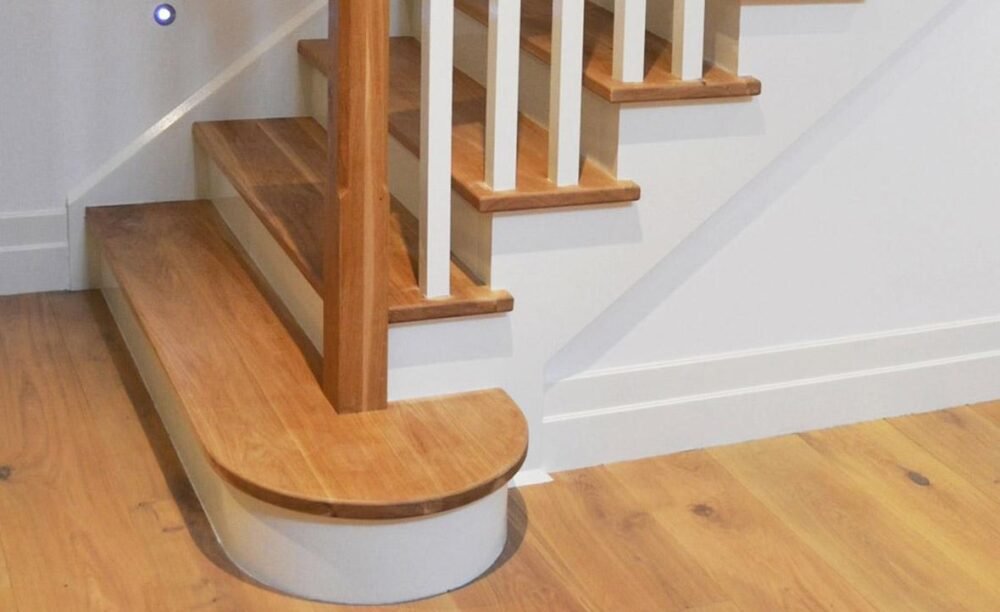
A bullnose step is a rounded step usually placed at the bottom of a staircase.
It softens the staircase entrance and creates a welcoming appearance.
Curtail Step
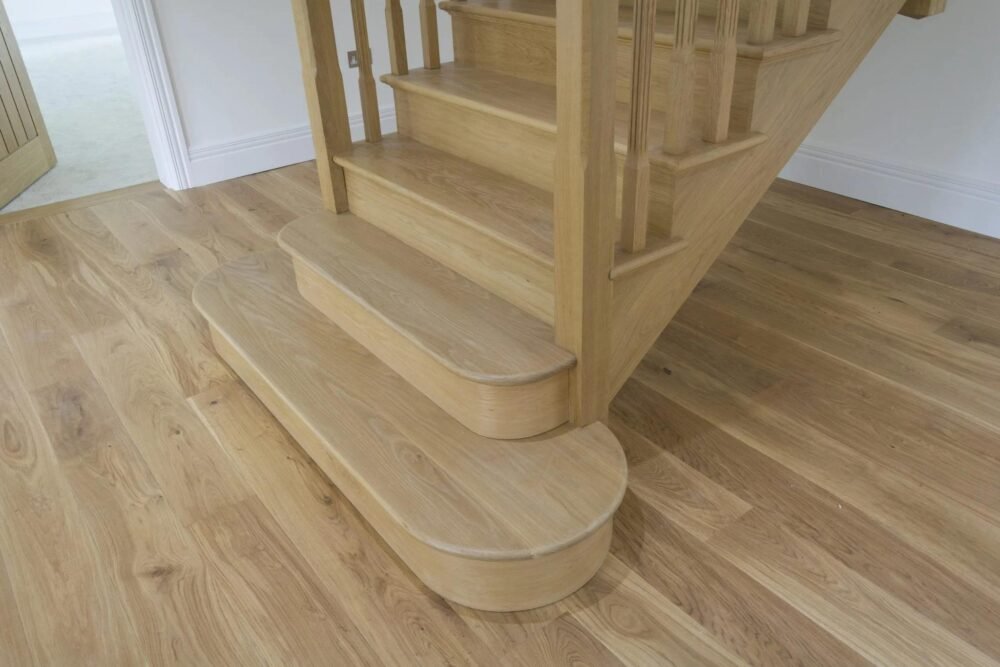
A curtail step is another decorative bottom step often found at the base of a staircase. It is usually supported by a newel post. Curtail steps are commonly used in traditional staircase designs.
Contact Us for a Project Consultation
Why pay more? At George Living, we cut out the middlemen to bring you premium furniture, flooring, doors, windows,marble and tiles and more—all at prices up to 40% below retail. With 20+ years of experience and 600 consultants, we provide complete, custom project solutions, from initial design to final delivery.
Volute
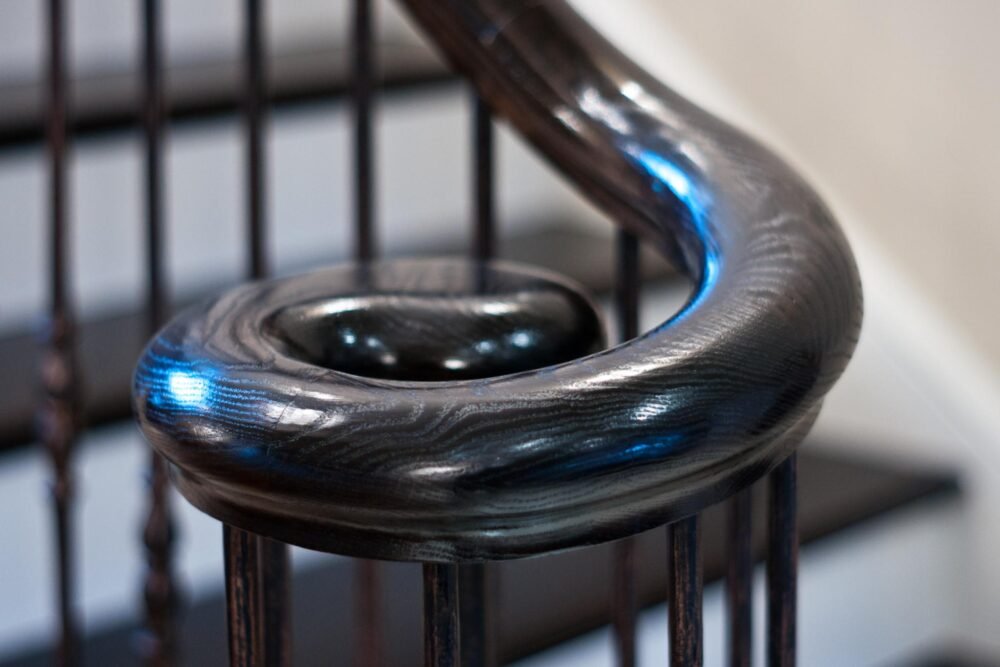
A volute is a spiral design at the end of a handrail.
It adds a classic decorative element to the staircase.
Finial
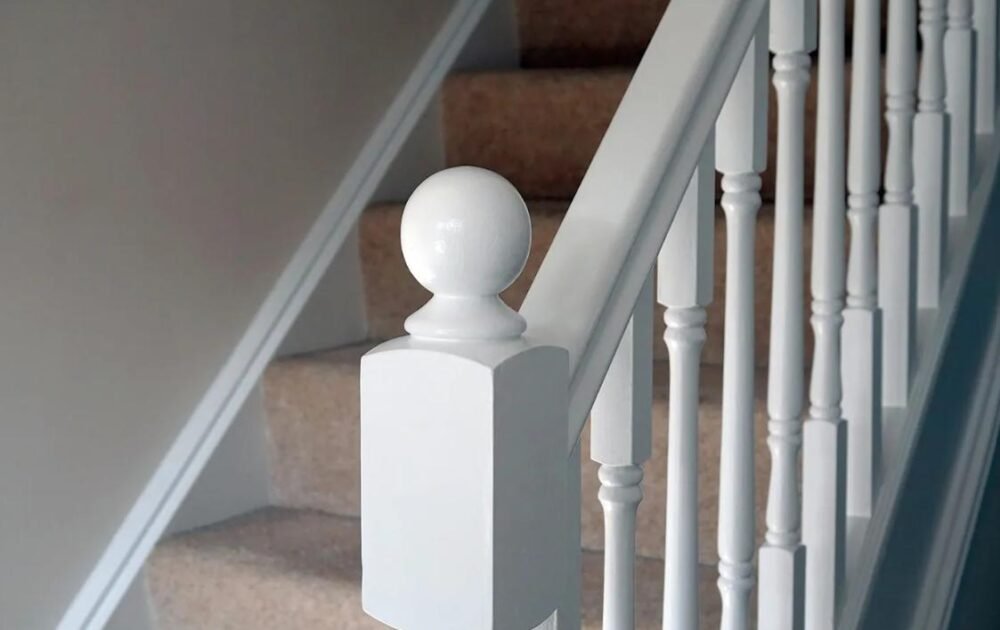
The finial is a decorative piece placed on top of a newel post.
It can be shaped like a ball, carving, or artistic ornament.
Contact Us for a Project Consultation
Why pay more? At George Living, we cut out the middlemen to bring you premium furniture, flooring, doors, windows,marble and tiles and more—all at prices up to 40% below retail. With 20+ years of experience and 600 consultants, we provide complete, custom project solutions, from initial design to final delivery.
How All Staircase Parts Work Together
All parts of a staircase function as a connected system.
Stringers support the entire structure
Treads and risers form the steps
Railings and balusters provide safety
Trim pieces complete the visual design
When these components are installed correctly, the staircase becomes both safe and visually appealing.
Common Mistakes People Make With Stairs
After working on many stair renovation projects at George Living, we have noticed the same staircase mistakes appearing again and again. We have shared them below so you can avoid them.
- Violating building codes is one of the most common pitfalls. There are strict safety rules for step height and dimensions. Some homeowners misunderstand these requirements, and if they are not followed correctly, the staircase may fail safety inspections.
- Another mistake is focusing too much on decoration. Many people pay more attention to railings and finishes than to the stair stringers and structural support, which are actually more important for safety.
- Many people also confuse stair terminology, such as bannister, baluster, and balustrade, and do not know what each term means. It is helpful to learn the differences before making decisions.
- Material selection can also lead to problems. Not all materials perform the same way. Staircases with heavy traffic should use more durable and resilient materials.
- Another factor people often forget is space planning. In smaller homes, designs with winders or compact layouts can be more practical than a standard straight staircase.
- Finally, maintenance is often overlooked. Some finishes require more care than others, and over time this can affect both the performance and appearance of the staircase.
Contact Us for a Project Consultation
Why pay more? At George Living, we cut out the middlemen to bring you premium furniture, flooring, doors, windows,marble and tiles and more—all at prices up to 40% below retail. With 20+ years of experience and 600 consultants, we provide complete, custom project solutions, from initial design to final delivery.
FAQs
What are the Parts of Stairs Called?
There are several parts of the stairs. You have got the tread, which is the flat surface you step on, the riser—that vertical piece between the steps—and the stringer acting as the side support. Other popular parts include handrails, balusters, newel posts, etc.
What is the 27 Rule For Stairs?
Carpenters use the 27 rule by adding the step’s width and height to ensure they total roughly 27 inches. It makes your stairs balanced. You can safely move from one step to another without tripping.
Are Stair Sliding Boards Safe?
Sliding boards on stairs stay safe only when you’ve bolted them down right and keep an eye on things. Even with a good setup, you have to watch children carefully to make sure they don’t take a nasty spill.
What supports the weight of a staircase?
The primary structural support of a staircase comes from the stair stringers. These angled boards run along the sides or center of the stairs and carry the load of the treads, risers, and people walking on them.
What is the difference between a bannister and a baluster?
A bannister usually refers to the handrail system along the stairs. A baluster is the vertical spindle that supports the handrail. Multiple balusters together form part of the balustrade system.
Conclusion
A staircase may appear simple, but understanding the parts of a staircase reveals how many components work together to support structure, safety, and design.
Once you know the anatomy of a staircase, it becomes much easier to plan renovations or discuss improvements with professionals.
Many homeowners choose George Living for flooring and staircase projects because we combine high-quality materials with practical installation expertise.